In a nutshell
- July in Seydisfjordur averages a high of 51°F (11°C) and a low of 43°F (6°C), so a warm mid layer and a windproof, waterproof shell earn their place in your day bag.[1]
- The walk from the Gufufoss car park to the waterfall is no more than 150 meters, takes a minute or two and is completely flat, but the ground around the falls is wet.[2]
- Puffins nest at Hafnarholmi in Borgarfjordur Eystri every year from the middle of April to the beginning of August, the window to aim for on a shore day.[3]
- The Puffin & Gufufoss Waterfall Tour from Seydisfjordur Port runs 5 hours with a live English guide, from US$229 and rated 4.63 from 270 reviews.[4]
- Reserve now and pay later is offered, and free cancellation up to 24 hours in advance leaves room for a change of plan.[4]
- Top choice Puffin & Gufufoss tour from US$229 Rated4.63 from 270 reviews[4]Duration5 hours[4]Guide or hostLive guide: English[4]CancellationUp to 24 hours in advance[4]PaymentReserve now & pay later[4] Check availability
- Studlagil Canyon tour from US$229 Rated4.46 from 336 reviews[5]Duration5 hours[5]Guide or hostLive guide: English[5]CancellationUp to 24 hours in advance[5]PaymentReserve now & pay later[5] See this tour
- Vök Baths entry from US$61 Rated4.69 from 386 reviews[6]Duration1.5 hours[6]Guide or hostHost: English, Icelandic[6]CancellationUp to 24 hours in advance[6]PaymentReserve now & pay later[6] See this tour
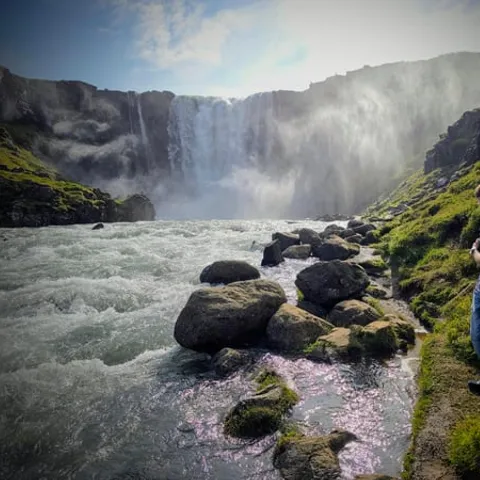
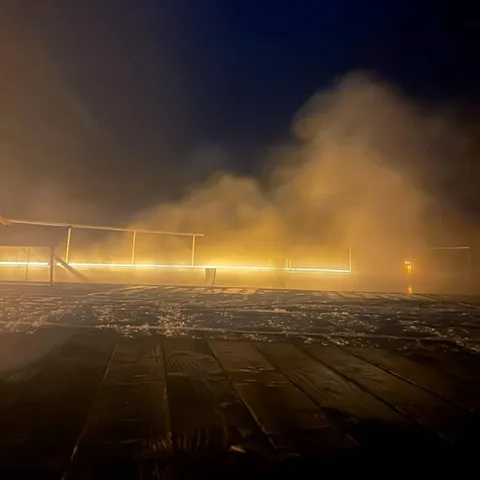
The Norrona ferry by Smyril Line is the only passenger and car ferry between Iceland and mainland Europe. The ferry sails from Denmark via the Faroe Islands before it docks in the small town of Seydisfjordur in the Eastfjords .
Is the Puffin & Gufufoss tour worth packing for?
What to wear
Things people forget to pack
Footwear for wet rock and spray zones
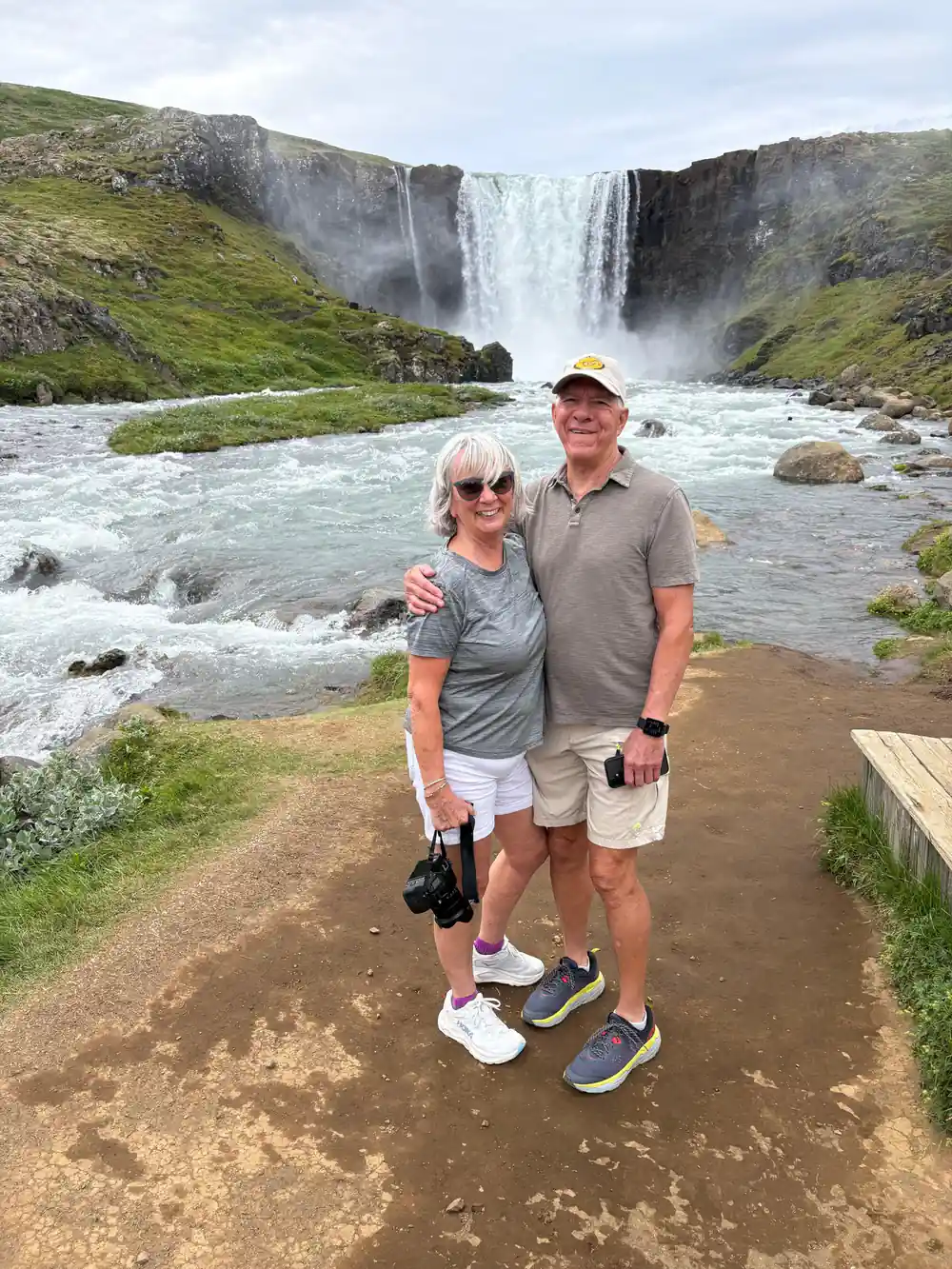
Most of this shore day is spent standing and walking short distances rather than hiking, so comfort matters more than technical kit. The walk from the Gufufoss car park to the waterfall is no more than 150 meters, takes a minute or two and is completely flat.[2] What catches people out is the ground beside the water, where spray drifts across the path and wet rock can feel greasy underfoot.
Bring shoes with a deep tread, a closed toe and a little ankle support. Trail trainers or light hiking boots are ideal, while smooth-soled trainers, thin sandals and flip flops struggle on wet boards and gravel. If your footwear is not waterproof, pack spare socks in a dry bag, and carry a plastic bag for wet boots so the rest of your day bag stays dry on the ride back to town.
At Hafnarholmi the paths and viewing platforms sit above a working harbour, with uneven gravel, wooden edges and a few steps between viewpoints. Shoes with grip and a firm sole let you watch the birds at the railings instead of watching your feet, and good footwear is one thing most people are glad they thought about before the day starts.
Layering for wind on the northeastern coast
Icelandic layers are less about extreme cold and more about change. In July, a summer month in Seydisfjordur, the average daily temperature ranges from a high of 51°F (11°C) to a low of 43°F (6°C), and those numbers feel cooler once the wind arrives.[1] A thin base layer, a warm fleece or wool mid layer and a windproof shell cover almost every hour of the day.
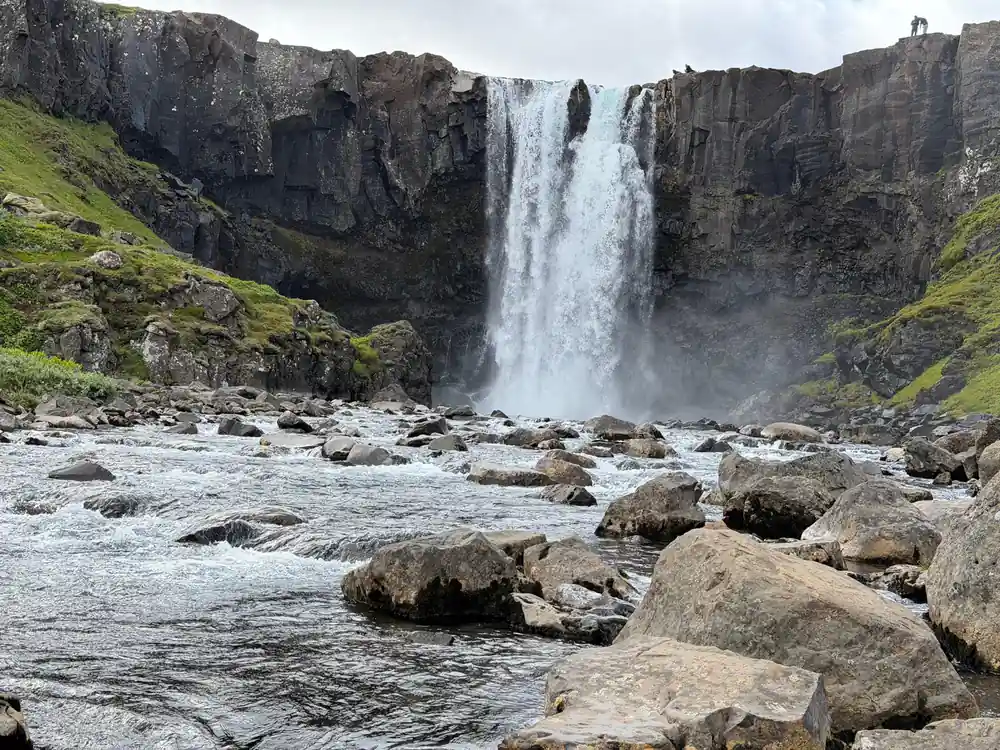
Waterproof and windproof outer layers earn their place here. Gufufoss stands approximately 88 feet (27 meters) tall, and the air around the falls stays damp even on a bright afternoon.[7] Along the open coast at Hafnarholmi the breeze comes straight off the sea, so a hood that stays put beats an umbrella you have to fight all day.
Gloves and a light hat take up almost no space and make a real difference when you are standing still watching birds, so pack them even in midsummer. If you run warm, one thin merino layer under the shell is plenty; if you feel the cold, add a second fleece and you will still be comfortable on the coach.
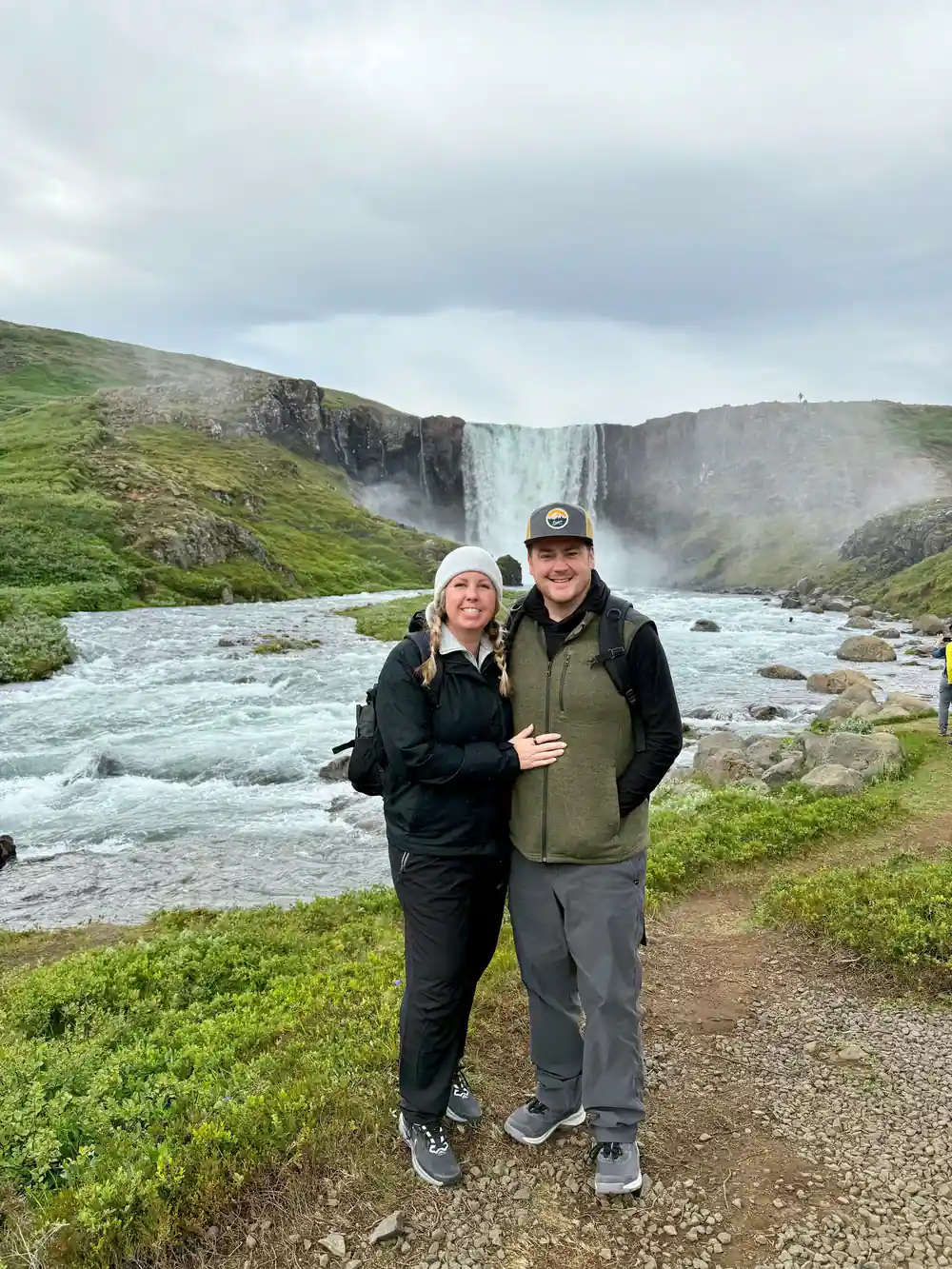
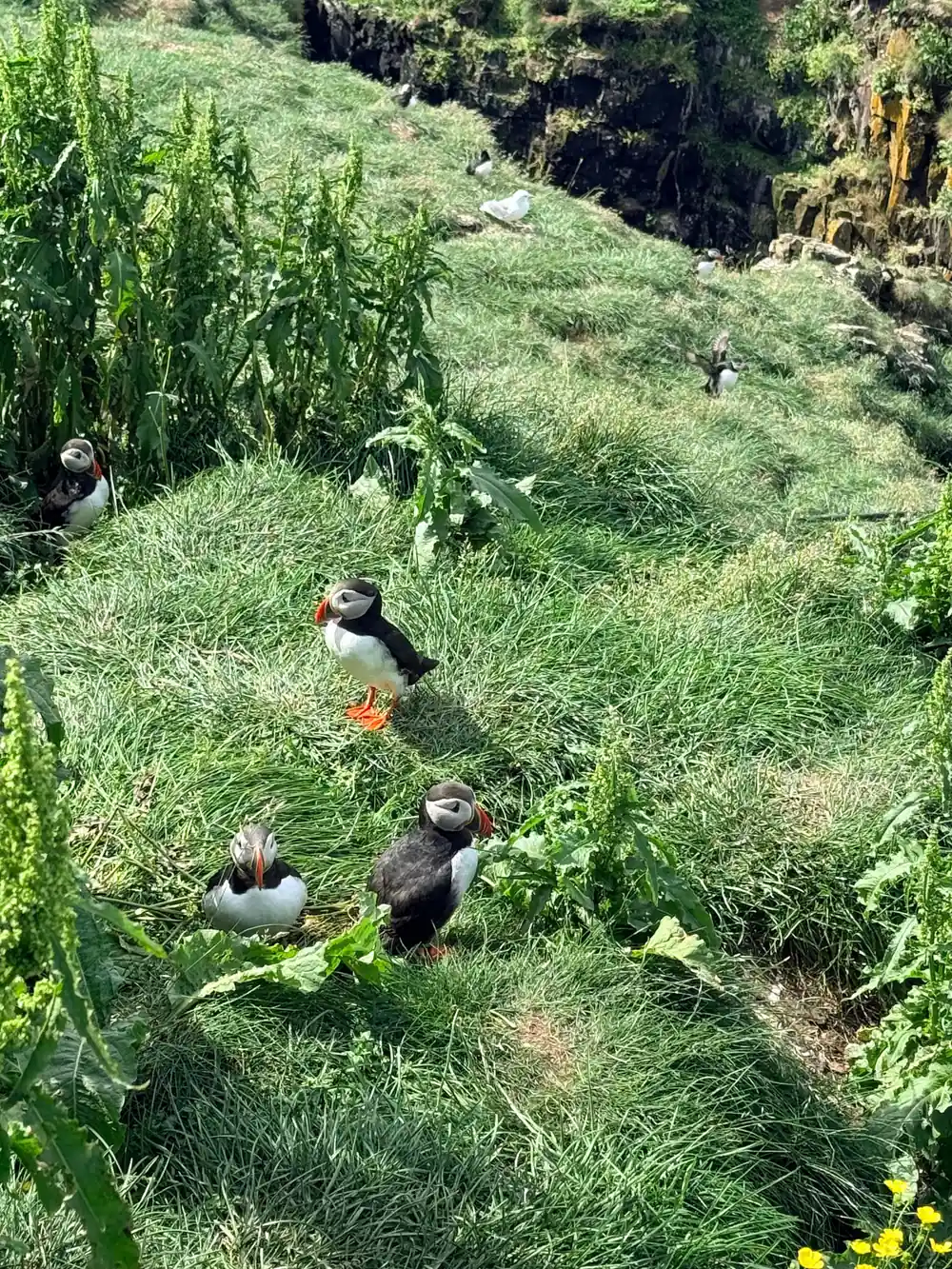
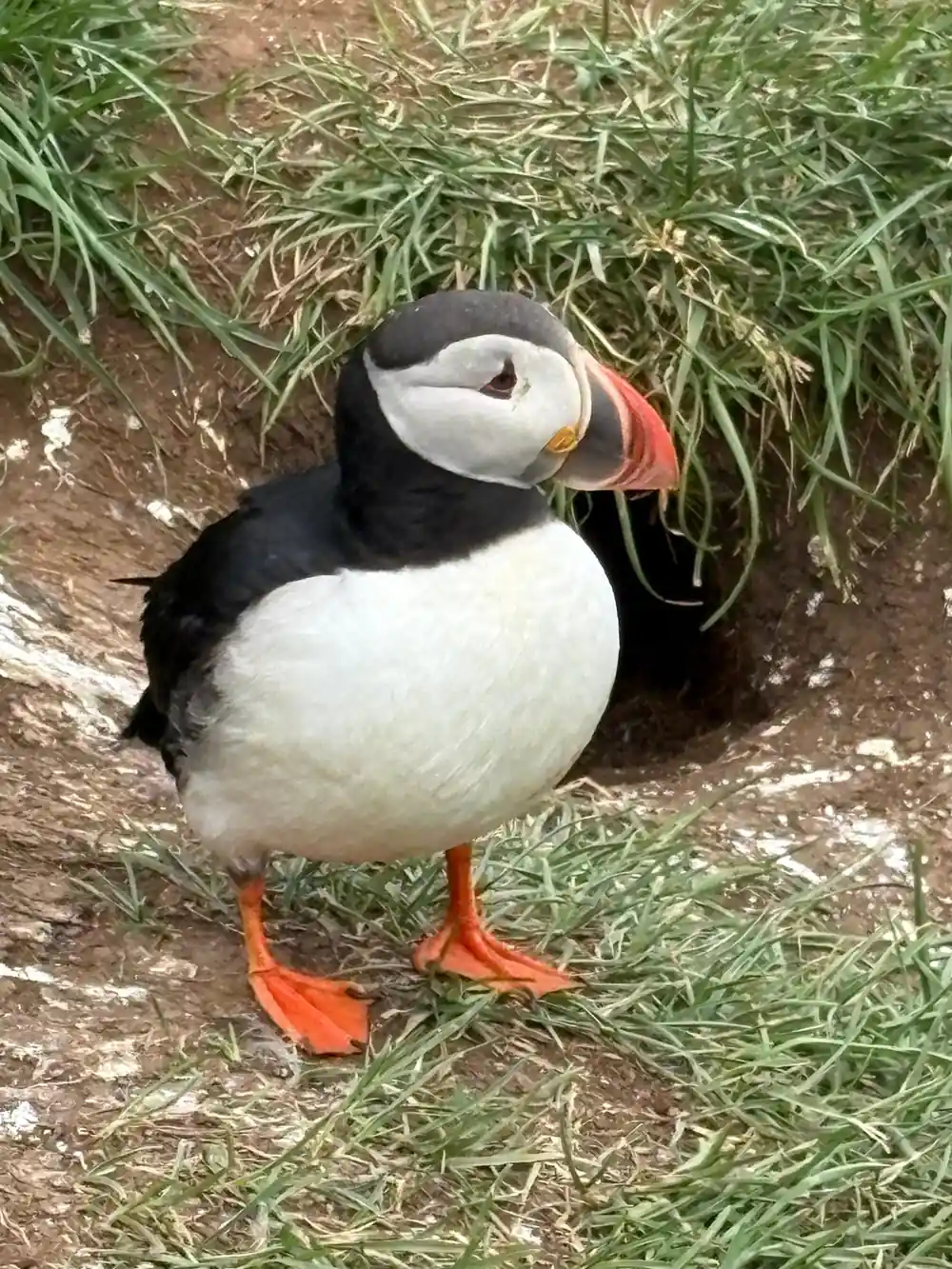
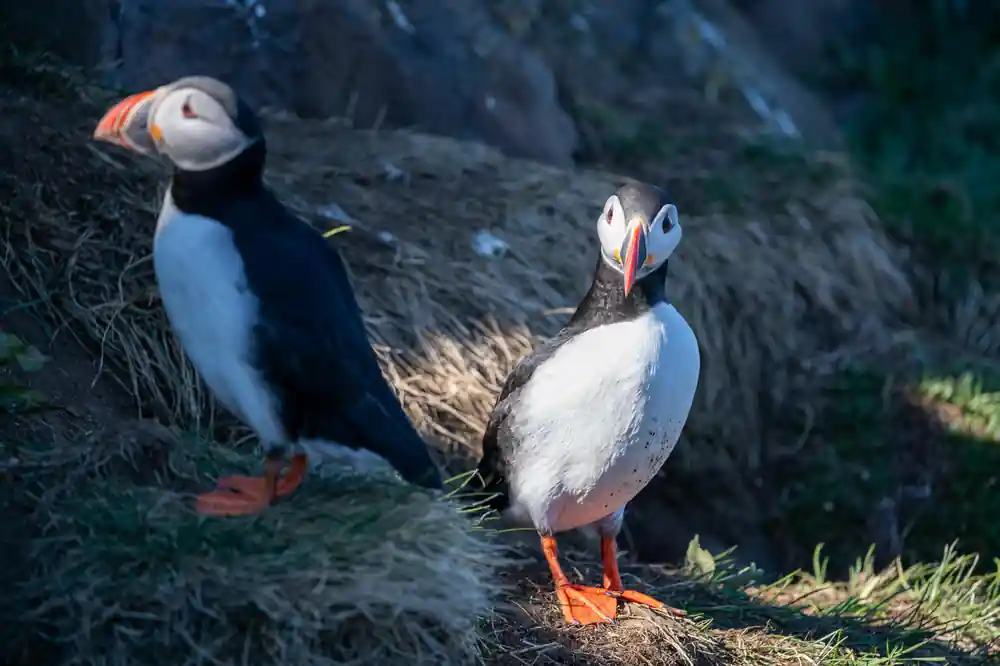
Puffins gather on the rocky slopes above the harbour at Hafnarholmi.
Optics and close-range puffin photography
Puffins are small and quick, so optics matter more than a long lens. Binoculars of any size bring out the details of bills and wing beats, and a modest zoom on a camera or phone is enough for birds that sit near the viewing platforms. Keep a lens cloth in a pocket, because sea air and spray put a fine film on glass within minutes.
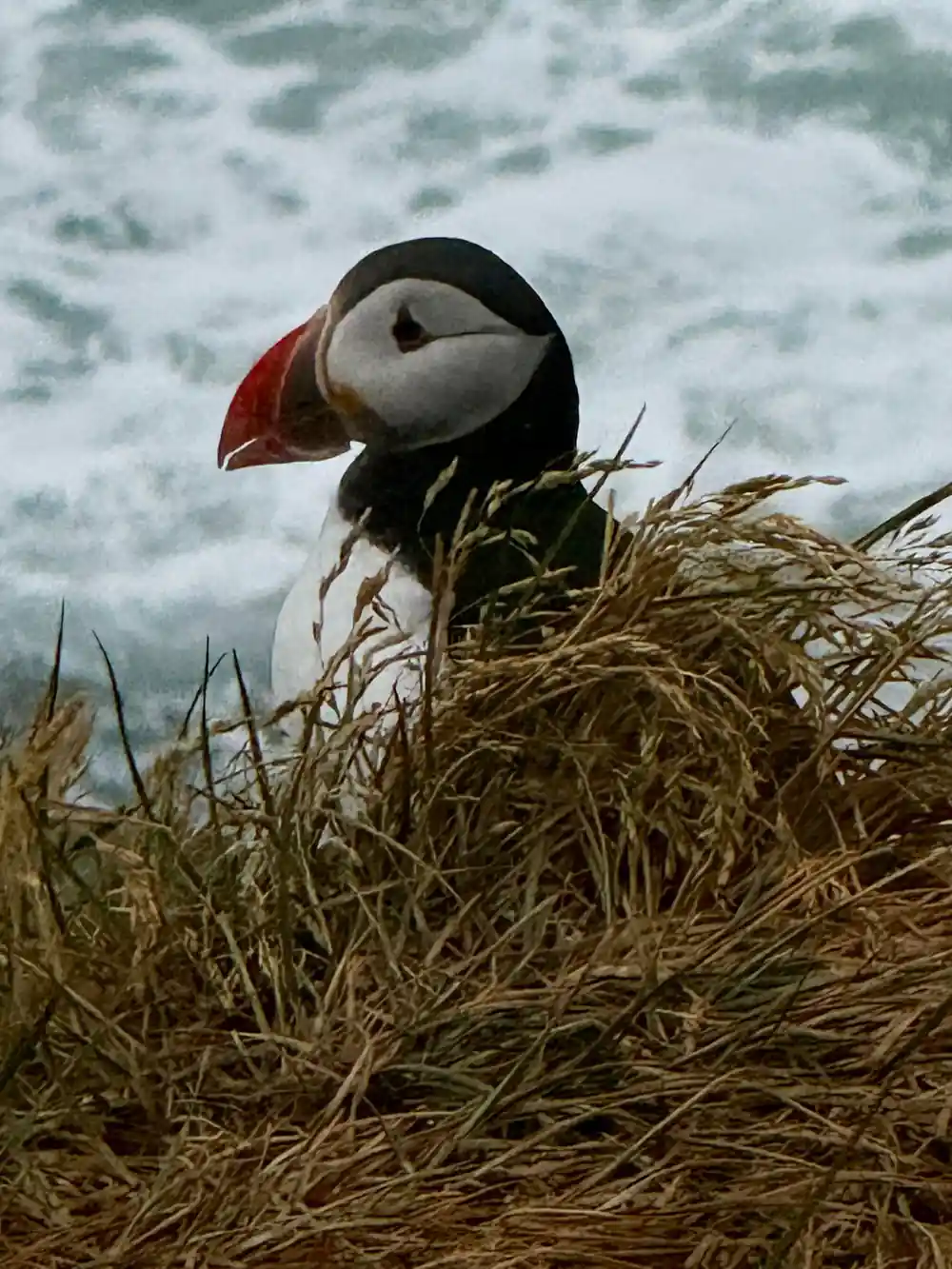
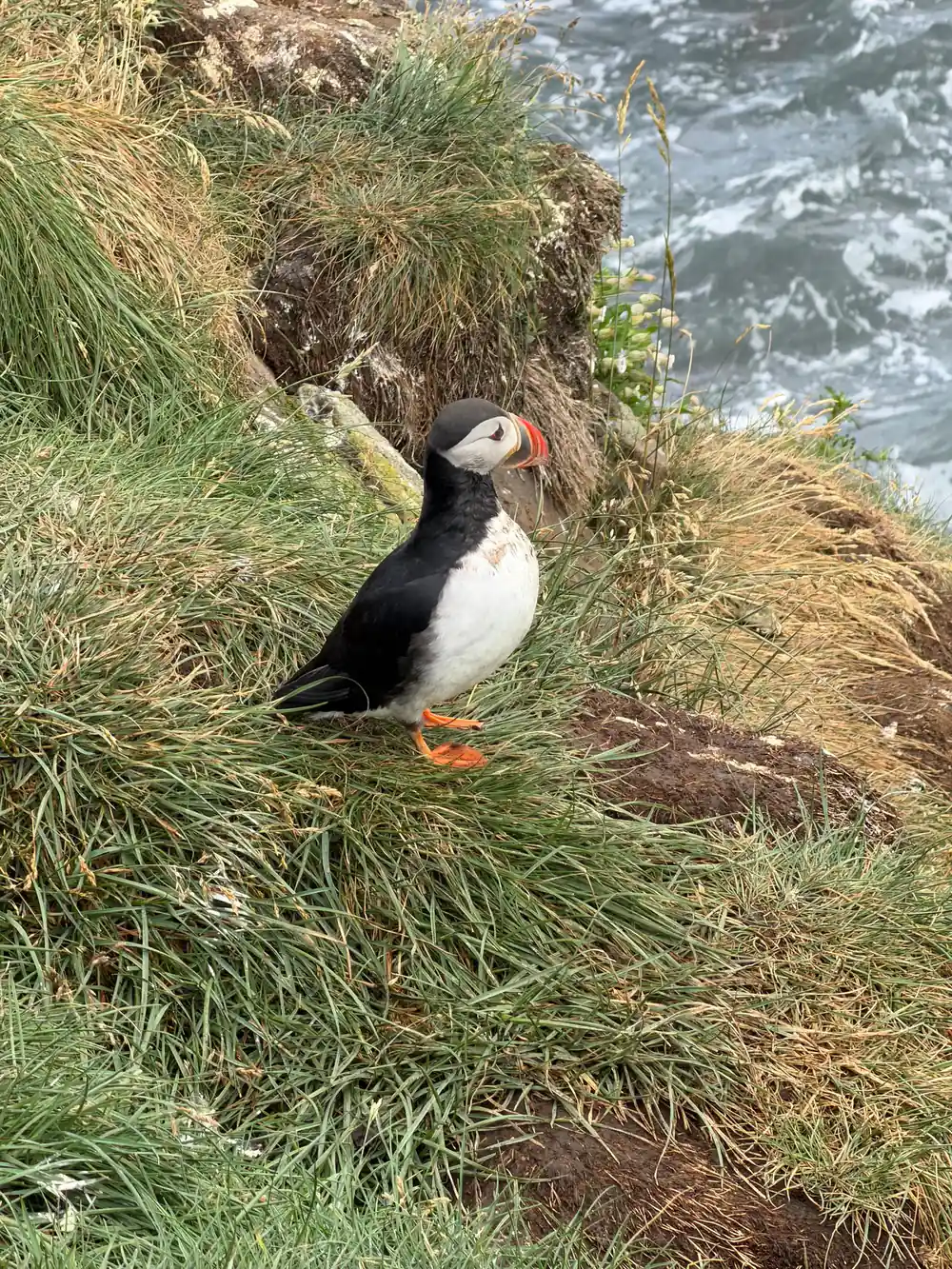
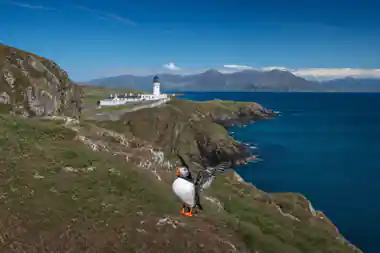
Puffins nest at Hafnarholmi in Borgarfjordur Eystri every year from the middle of April to the beginning of August, and that window is the one to aim for if watching them is the whole point of your day.[3] Spare batteries and a spare memory card are small insurance, since the day runs far from the shops in Seydisfjordur.
Shoot in short bursts, shield the lens with your body when the wind picks up, and check your focus before moving on. A phone camera held steady at the edge of a platform does surprisingly well for birds that sit close to the path, and it stays warm and dry in a pocket between stops.
Food and water for a long day out
The Puffin & Gufufoss Waterfall Tour from Seydisfjordur Port runs for 5 hours, so plan for a long stretch away from town.[4] Pack a refillable water bottle and food that is easy to eat outdoors, such as a sandwich, fruit, nuts or a few biscuits. Wind makes people hungrier than they expect.
A small flask of something hot fits neatly in a day bag and is lovely to have at a viewpoint with the sea below you. Keep everything wrapped and weighted down, because loose packets and open bags do not last long in an Icelandic breeze, and a handful of napkins never goes to waste.
Small practical items are the ones usually left behind: a bag for rubbish, hand sanitiser and any medication you might want while you are away from the port. There is no need to overpack food, because the bus is never far away and you are never truly out of reach of your own bag.
from US$229
The Puffin & Gufufoss Waterfall Tour from Seydisfjordur Port lasts 5 hours with an English guide and a stop at Gufu Waterfall.[4]
Cash, cards and connectivity in the Eastfjords
Seydisfjordur is a small town and the day runs through even smaller places, so carry a card and a little Icelandic krona in a zipped pocket for any stop along the way. A thin wallet in an inside pocket is easier to manage than a bag you have to open each time.
The day takes you away from town and its services for long stretches, so download offline maps, a screenshot of your booking and anything else you want to read before you leave the port, because signal in the valleys comes and goes. A paper copy of your confirmation folded into a wallet is a simple backup that never runs out of battery.
Ferry passengers arriving on the Norrona, run by Smyril Line, dock right in the small town of Seydisfjordur.[8] If you have time before or after the tour, the Rainbow Street is a popular spot for photos and is lined with old historic houses, and it ends at the church known as Blaa kirkjan, the Blue Church.[9]
Wind-resistant bags and gear protection
Wind is the quiet thief of a shore day. It tips tripods, lifts unzipped flaps and turns a loose rain cover into a sail. Choose a day bag with a zip that closes properly, ideally one with a chest strap, and pack the heaviest items at the bottom so the bag sits still while you walk.
Inside the bag, group things by how wet they are likely to get: camera and phone in a dry bag or a sealed pouch, spare layers in a second bag, and wet gloves or a damp map in an outside pocket. Zipped pockets beat open ones, and a strap you can tighten keeps a camera safe when both hands are busy at a railing.
If you carry a tripod, keep it folded until you are standing somewhere sheltered and hold it firmly when the wind gusts. A carabiner or a short strap lets you clip a bag to your body while you take photos, which leaves both hands free and keeps your gear off wet ground.
Skin and eye care for coastal light
Coastal light is deceptive. Even under cloud, water and wet rock bounce glare upwards, so sunglasses with decent coverage make the hours outside far more comfortable. A sunscreen stick for your face and hands takes up almost no room in a pocket and is easier to use than a bottle when your hands are full.
Wind dries skin and lips faster than cold does, so pack a lip balm and a simple moisturiser and use them at each stop rather than at the end of the day. A thin buff or scarf protects your face on open stretches and doubles as a warm layer if the breeze picks up.
If you wear contact lenses, take saline and your glasses as a backup. Spray at the falls and grit blown along the coast are both reasons to have a second option in your bag, and you will be glad of it on the ride home.
How long shore tours from Seydisfjordur run
Listing durations for five Seydisfjordur area tours, from 1.5 hours to 7 hours.[4][6][10][11][12]
What a Seydisfjordur shore day costs
From-prices in US dollars taken from each tour listing.[4][5][6][10]
When to plan your Gufufoss day
Packing for the shore day
Start with footwear
Choose grippy, closed shoes. The walk from the Gufufoss car park is flat and no more than 150 meters, but wet rock near the falls is slippery.[2]
Add warm layers
July averages a high of 51°F (11°C) and a low of 43°F (6°C) in Seydisfjordur, so bring a warm mid layer and a windproof shell.[1]
Pack rain protection
A waterproof outer layer and a small dry bag keep you and your camera comfortable at the falls and along the open coast.
Bring water and snacks
The tour lasts 5 hours, so a refillable bottle and something easy to eat in the open air make the day easier.[4]
Check your dates
Puffins nest at Hafnarholmi from the middle of April to the beginning of August, so line your shore day up with that window.[3]
Ready to pack for the Puffin & Gufufoss tour?
from US$230Reserve now & pay later