In a nutshell
- Puffins nest at Hafnarholmi in Borgarfjordur Eystri every year from the middle of April to the beginning of August.[1]
- Puffin & Gufufoss Waterfall Tour from Seydisfjordur Port: 5 hours from US$229 with a live English guide.[2]
- From the car park at Gufufoss the walk is flat and no more than 150 meters, and the waterfall stands around 88 feet (27 meters) tall.[3][4]
- Free cancellation up to 24 hours in advance for a full refund, and you can reserve now and pay later.[2]
- Vok Baths entry from US$61, a Stuðlagil and reindeer tour from US$228, or a Studlagil shore excursion from US$229.[5][6][7]
- Top choice Puffin & Gufufoss Tour from US$229 Duration5 hours[2]GuideLive tour guide: English[2]Rating4.63 from 270 reviews[2]CancellationFree cancellation up to 24 hours[2] Check availability
- Vok Baths Entry from US$61 Duration1.5 hours[5]GuideHost or greeter: English, Icelandic[5]Rating4.69 from 386 reviews[5]CancellationFree cancellation up to 24 hours[5] See this tour
- Studlagil Canyon Excursion from US$229 Duration5 hours[7]GuideLive tour guide: English[7]Rating4.46 from 336 reviews[7]CancellationFree cancellation up to 24 hours[7] See this tour
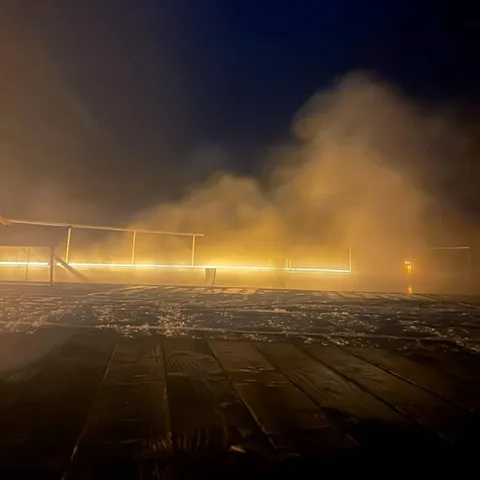
Studlagil Canyon is a basalt rock formation located in Jokuldalur Valley in East Iceland.
Is the Hafnarholmi puffin tour worth it?
Worth knowing first
Hafnarholmi: A Puffin Headland in East Iceland
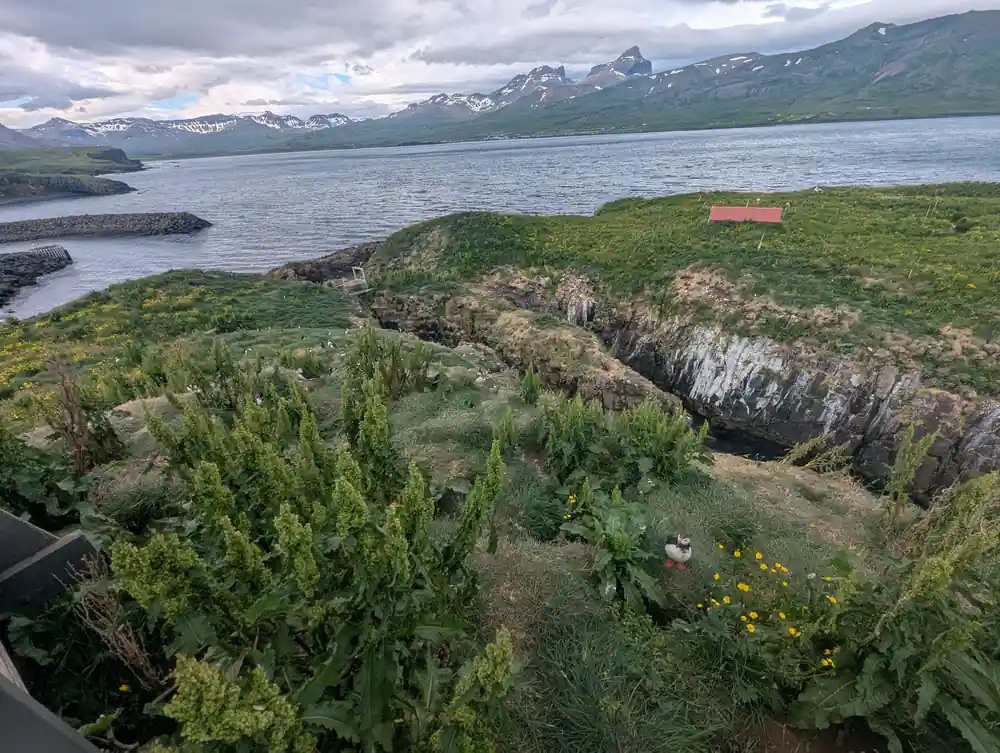
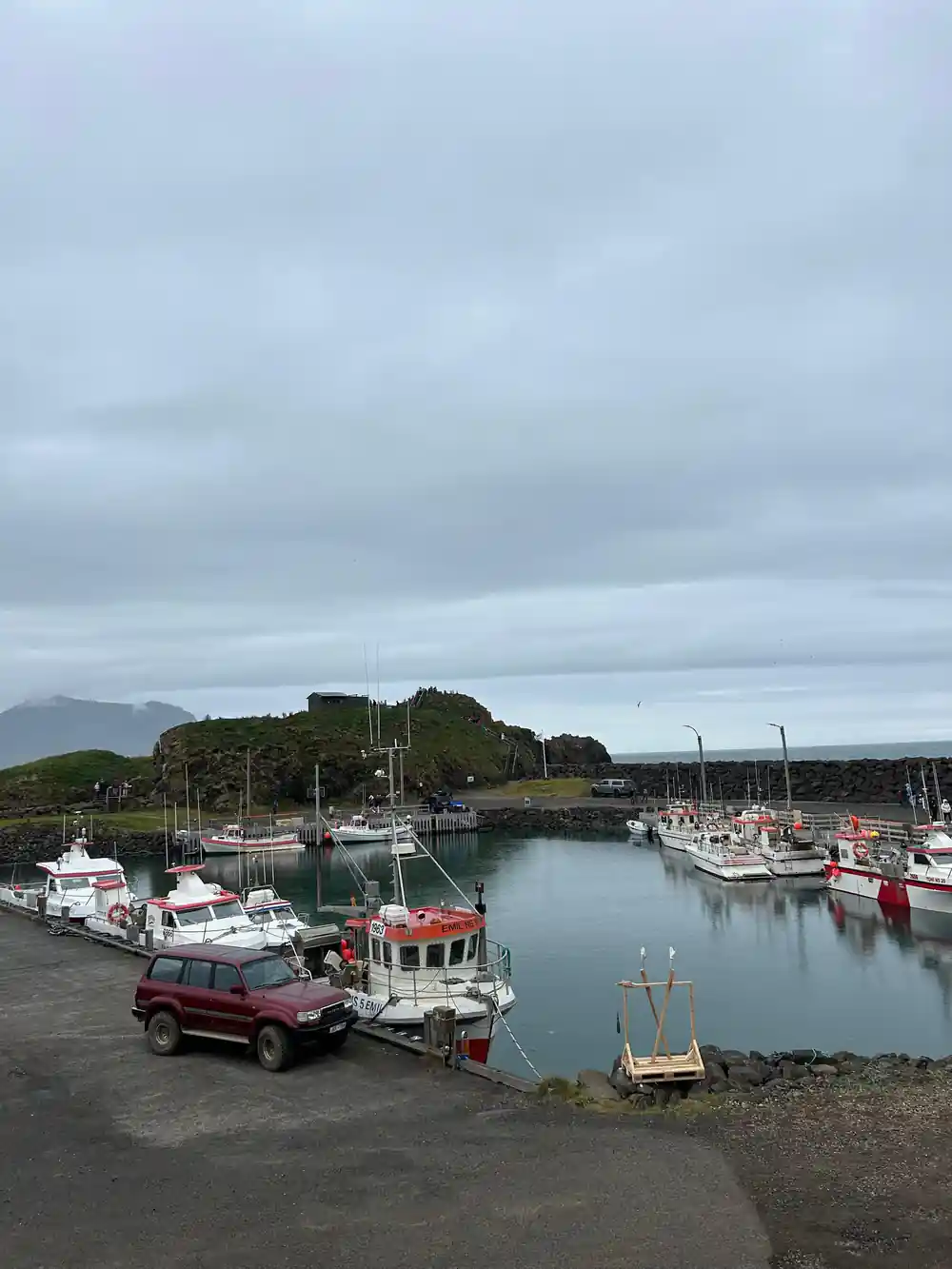
Hafnarholmi is a low, grassy headland wrapped around a small working harbour at Borgarfjordur Eystri, on the outer edge of Iceland's Eastfjords. The path runs along the top of the rock, the sea sits directly below, and the whole place is small enough to walk in a few minutes. You are standing on the same shelf of land the birds use, rather than peering at them from a distant cliff edge across a bay.
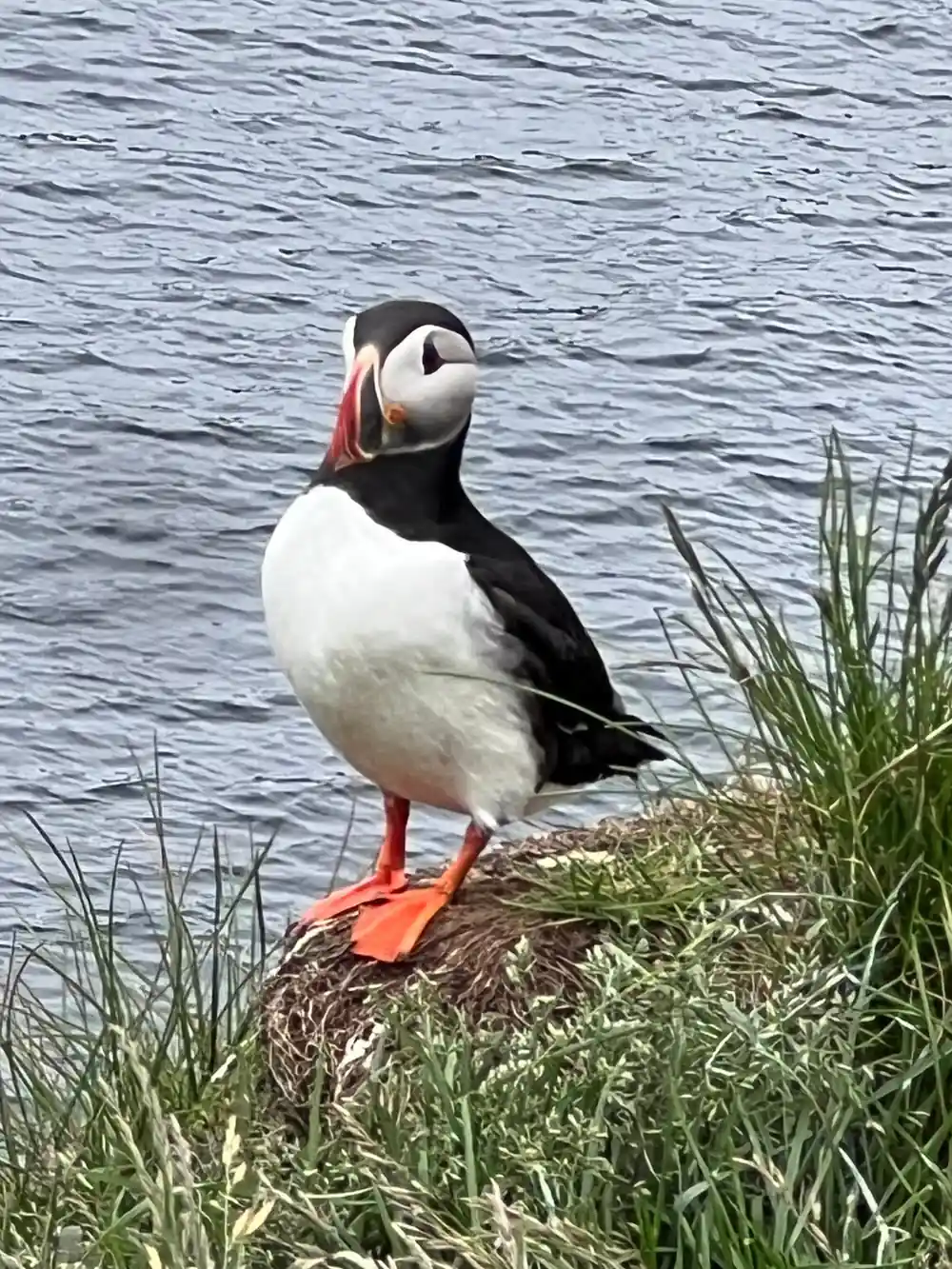
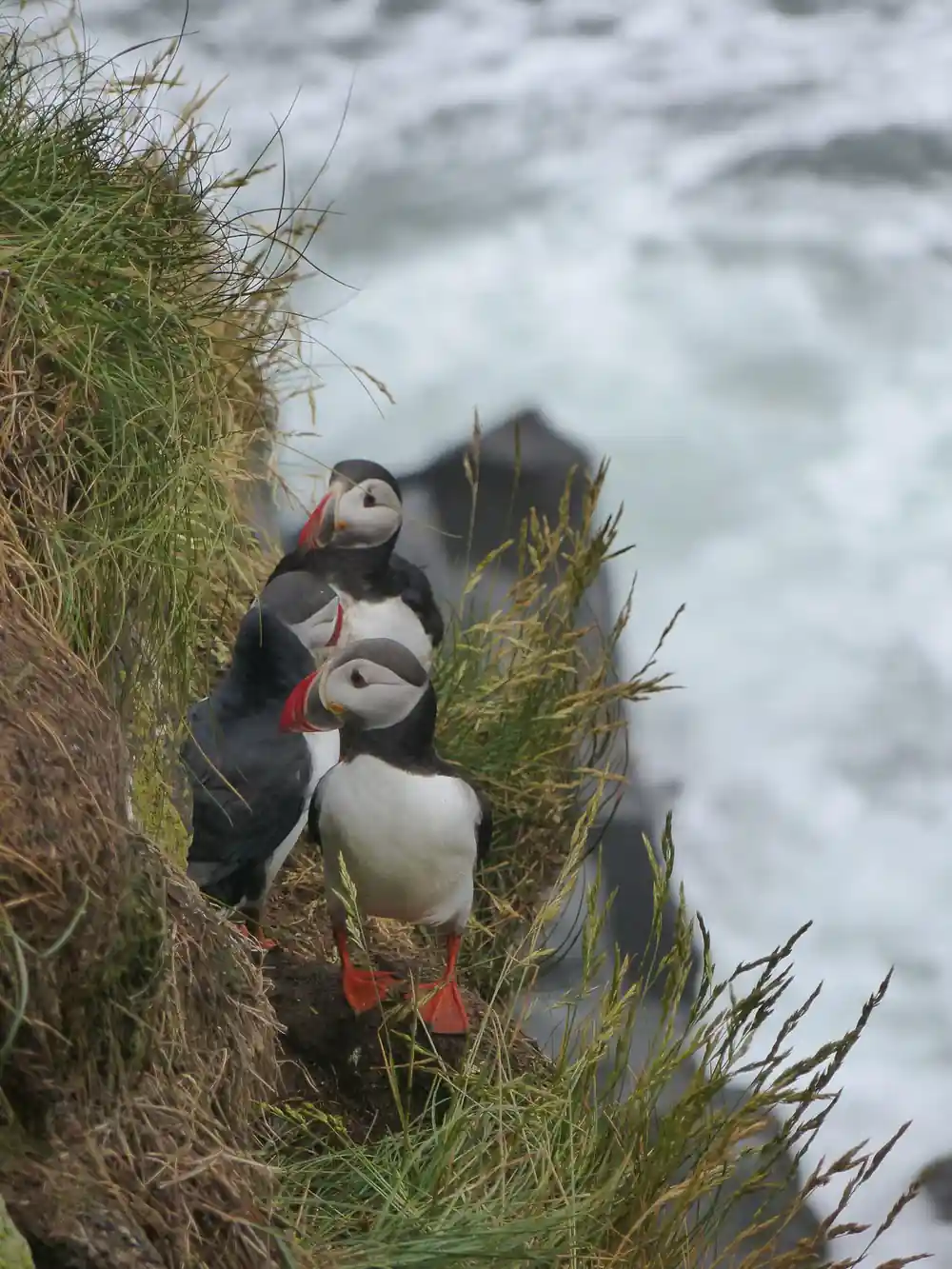
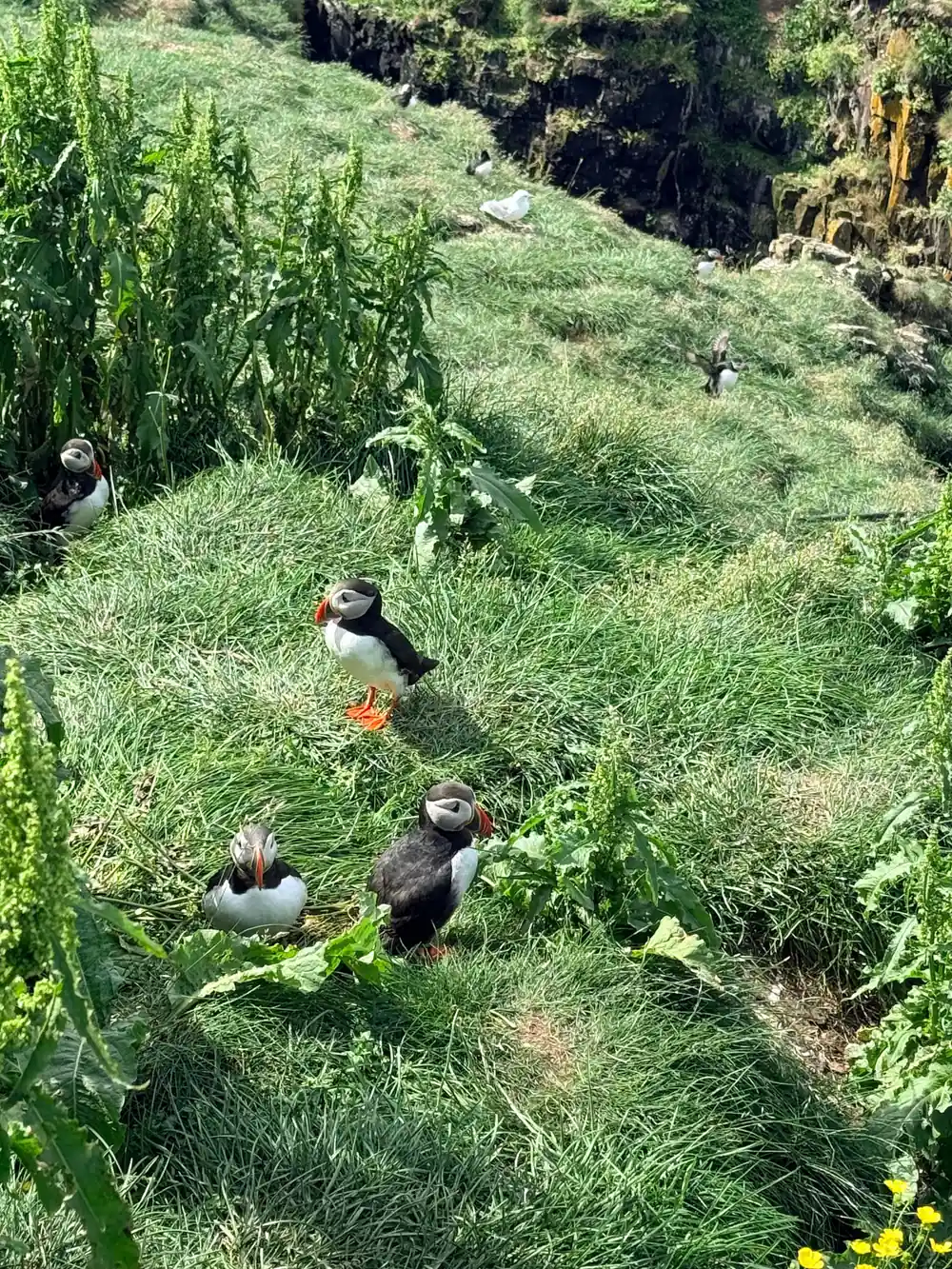
Puffins nest at Hafnarhólmi in Borgarfjörður Eystri every year from the middle of April to the beginning of August.[1] They dig their burrows into the soft turf on top of the headland, and the grass keeps the soil loose enough to work with. The result is a colony at eye level, a few steps from the harbour buildings and the car park, with no rope line or viewing platform between you and the birds.
If you are putting together a puffin map of East Iceland, this headland is the name to remember. It sits just outside the village of Bakkagerdi, and it slots neatly into a coach loop from the port at Seydisfjordur. The walking is gentle: grass, gravel and a few low steps, with the sea keeping you company the whole way.
When Puffins Are at Hafnarholmi
The season is the whole story here. Puffins nest at Hafnarholmi in Borgarfjordur Eystri every year from the middle of April to the beginning of August.[1] Outside those months the burrows stand empty, and the headland belongs to gulls, wind and the occasional seal in the harbour.
July sits in the middle of that window and is the mildest part of the local summer. Average daily temperatures for the month run from a high of 51°F (11°C) to a low of 43°F (6°C).[8] Those are averages for one month rather than a forecast, so pack for cool air off the water and warm sunshine in the same afternoon.
Late in the season the colony changes character. Birds spend more time rafting offshore and less time standing on the turf, and by the beginning of August the nesting period is over.[1] A call in the middle of the summer usually gives you the busiest headland, with adults flying in low over the grass and pufflings hidden in the burrows.
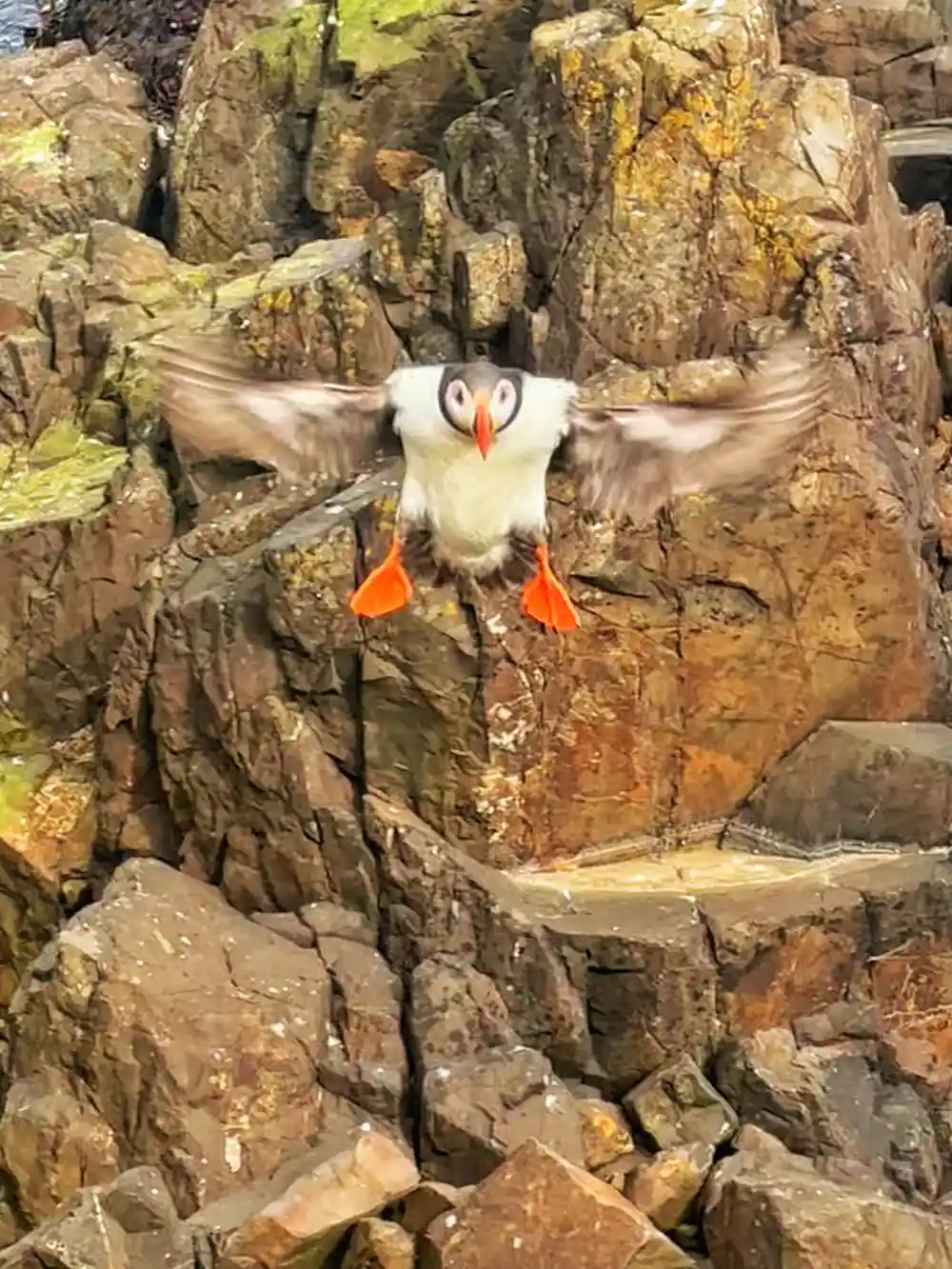
Puffins on the grassy slopes above the harbour at Hafnarholmi.
How the Tour From Seydisfjordur Port Works
The Puffin & Gufufoss Waterfall Tour from Seydisfjordur Port is listed from US$229 and runs for 5 hours with a live tour guide in English.[2] The coach leaves the port, crosses the Northeastern Region, then stops at Hafnarholmi, Lindarbakki and Gufu Waterfall before heading back.[2]
Booking is flexible. The listing lets you reserve now and pay later, and free cancellation applies up to 24 hours in advance for a full refund.[2] Starting times appear when you check availability, which is worth doing early when your ship has a fixed all-aboard time.
If you arrive in Iceland by sea, the Norrona ferry, run by Smyril Line, is the ferry that docks in the small town of Seydisfjordur.[9] The harbour is compact, so meeting a coach there takes minutes rather than an hour of walking. A guided loop also takes care of the driving, which leaves you free to watch the landscape instead of the road.
Watching Puffins Without Disturbing Them
Puffins on a busy headland are surprisingly relaxed, but relaxed is not the same as tame. Stay on the marked paths, keep a sensible distance from the burrows, and let the birds come to you. Sitting still at the edge of the grass often shows you more than hurrying around the loop.
As for puffins, how to see them up close is mostly a matter of timing and patience. Early and late light is kind to photographs, and calm weather keeps the water clear enough to watch birds rafting offshore before they fly in with beaks full of fish.
Never stand over a burrow entrance, keep food and wrappers out of the wind, and leave drones in the bag. The headland is a working nursery through the summer months, and quiet visitors are rewarded with birds that carry on as if nobody were standing there at all.
from US$229
The Puffin & Gufufoss Waterfall Tour runs from Seydisfjordur port and calls at Hafnarholmi, Lindarbakki and Gufu Waterfall.
Lindarbakki and Gufufoss on the Same Day
The tour also calls at places that have nothing to do with seabirds. Lindarbakki is a colorful turf house in the village of Bakkagerdi, and the coach pauses there between the headland and the drive back.[10] It is a small, photogenic piece of old Iceland, and a good place to stretch your legs.
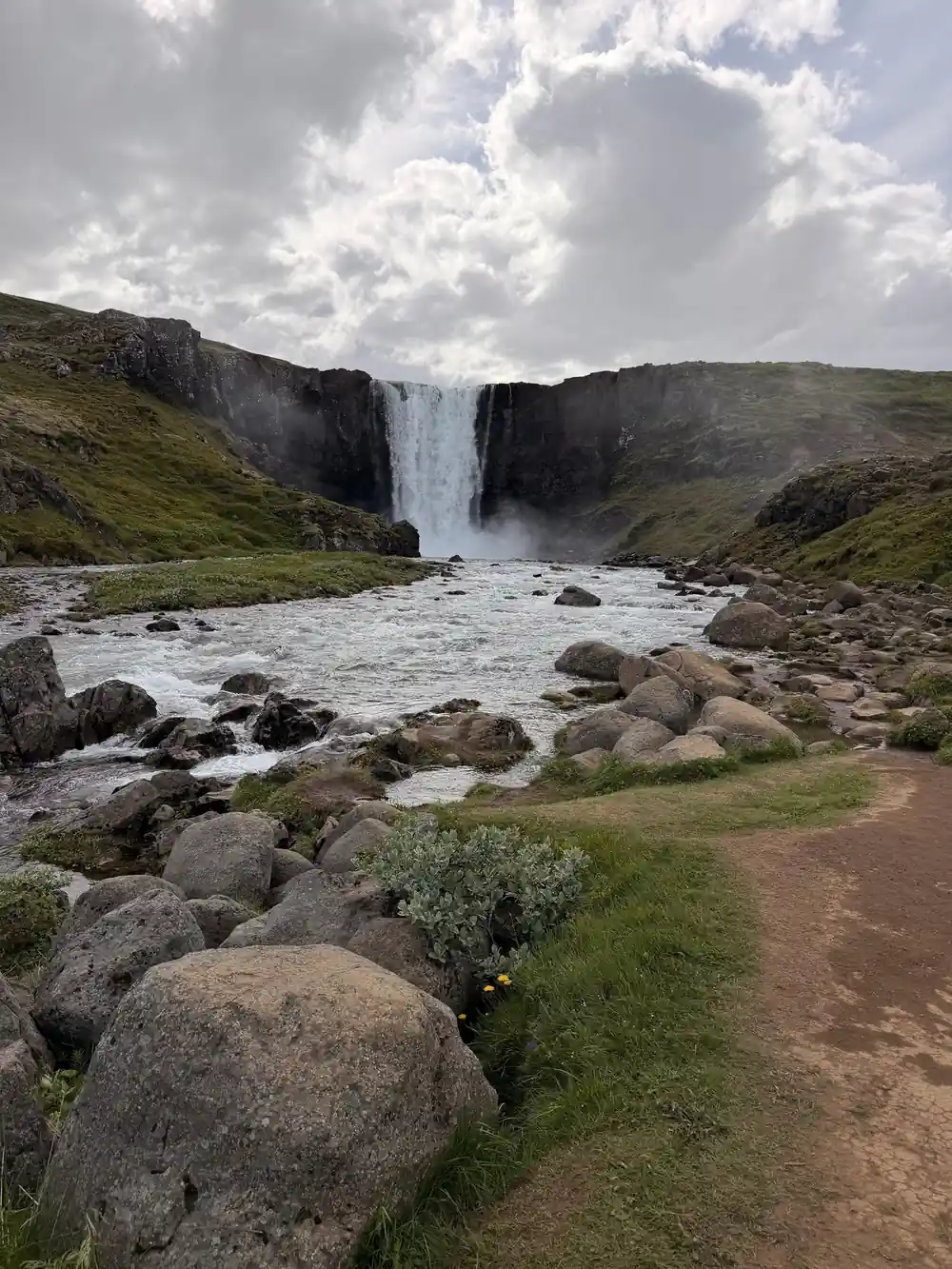
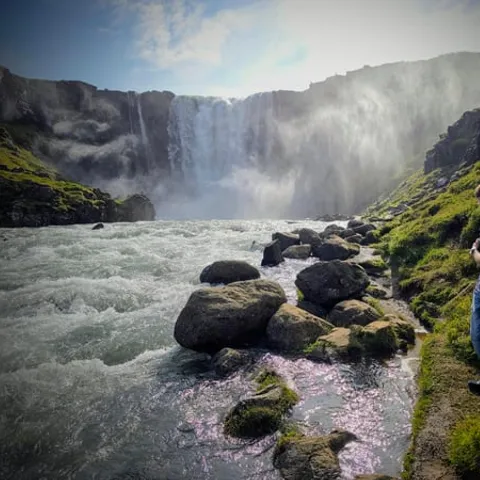
Gufufoss comes near the end of the loop. The waterfall stands approximately 88 feet (27 meters) tall.[4] From the car park the walk is completely flat and no more than 150 meters long, taking a minute or two at an easy pace.[3] Mossy rock, a narrow gorge and a steady curtain of water make it a generous reward for very little effort.
Other operators run longer days in the region. The Studlagil Canyon shore excursion spends its hours at a basalt rock formation in Jokuldalur Valley in East Iceland.[7][11] If your ship stays long enough to allow a longer drive, that is the alternative to weigh against the puffin headland.
What to Wear and What to Bring
Eastfjords weather changes quickly, so layers do the work. A windproof, waterproof shell over a warm mid-layer covers most days, and thin gloves earn their place on a breezy headland even in midsummer. July averages a high of 51°F (11°C) and a low of 43°F (6°C), which is cool rather than cold.[8]
Footwear matters more than anything else in the bag. Grass on the headland is often wet, and the path beside Gufufoss can be slick after rain. Trainers with grip are plenty for this kind of day, and the walking is short enough that heavy boots are optional rather than required.
Binoculars help with birds on the water, and a camera with a longer lens is a bonus rather than a necessity, because the burrows are so close. Bring a refillable bottle, a snack, and a dry bag for anything you would rather not get rained on.
Planning the Rest of Your Port Day
Back in Seydisfjordur, the Rainbow Street ends at the town's church, commonly called Bla kirkjan, or the Blue Church.[12] Colourful timber houses and steep mountains frame the whole street, and it is worth an hour even if you only walk it once.
If you drive yourself, the mountain pass over the hills is the usual route between Egilsstadir and the fjord, and conditions at the top can be very different from the town below. Check the road report before you commit to the crossing, and leave margin in the day for a stop where the view opens out.
For a second outing from the same port, the Vok Baths geothermal baths entry is listed from US$61, the hidden Stuðlagil Canyon and reindeer tour from US$228, and the Studlagil Canyon shore excursion from US$229.[5][6][7] A long port call can hold one of these alongside a wander through town.
How long Eastfjords tours from the port run
Tour durations in hours, each stated by the fact cited:[2],[5],[7],[6],[13].
From-prices for a Seydisfjordur port day
From-prices from GetYourGuide listings[2],[5],[7],[6].
When puffins are on the headland
Plan a puffin port day
Pick your dates
Puffins nest at Hafnarholmi from the middle of April to the beginning of August, which sets the window for a visit.[1]
Book the tour
The Puffin & Gufufoss Waterfall Tour leaves from Seydisfjordur port and runs 5 hours with a live guide in English.[2]
Pack the layers
July averages a high of 51°F (11°C) and a low of 43°F (6°C), and the headland is breezy, so bring a windproof layer.[8]
Walk to the waterfall
From the Gufufoss car park the path is flat and no more than 150 meters long, a minute or two of easy walking.[3]
Fill the rest of the day
Rainbow Street in Seydisfjordur ends at the church called Bla kirkjan, the Blue Church.[12]
See the Hafnarholmi puffin colony on your Seydisfjordur port day
from US$230Reserve now & pay later