In a nutshell
- The bright orange, yellow and blue-grey bill is breeding-season dress; the plates that build it are shed after the season ends.
- Puffins dig with the bill and shovel soil with their feet, then line a chamber with grass. At Hafnarhólmi they nest from the middle of April to the beginning of August.[1]
- Spines on the roof of the mouth and a rough tongue hold each sandeel in place while the beak opens for the next one.
- Puffin wings are short and stiff, fast underwater and fast in the air, and landings often end in a stumble through the grass.
- The Puffin & Gufufoss Waterfall Tour from Seydisfjordur Port runs 5 hours with a live guide in English and costs from US$229.[2]
- Top choice Puffin & Gufufoss Tour from US$229 Duration5 hours[2]Rating4.63 from 270 reviews[2]GuideLive tour guide: English[2]CancellationCancel free up to 24 hours ahead[2] Check availability
- Stuðlagil Canyon Tour from US$229 Duration5 hours[3]Rating4.46 from 336 reviews[3]GuideLive tour guide: English[3]CancellationCancel free up to 24 hours ahead[3] See this tour
- Vök Baths Entry from US$61 Duration1.5 hours[4]Rating4.69 from 386 reviews[4]GuideHost or greeter: English, Icelandic[4]CancellationCancel free up to 24 hours ahead[4] See this tour
The Norrona ferry by Smyril Line is the only passenger and car ferry between Iceland and mainland Europe. The ferry sails from Denmark via the Faroe Islands before it docks in the small town of Seydisfjordur in the Eastfjords .
Puffins repay a slow look
Worth knowing first
On the day
- Stops include Hafnarholmi, Lindarbakki and Gufu Waterfall[2]
- Live tour guide in English[2]
- July averages a high of 51°F (11°C) and a low of 43°F (6°C)[5]
- Reserve now and pay later[2]
Why a Puffin's Beak Changes Colour
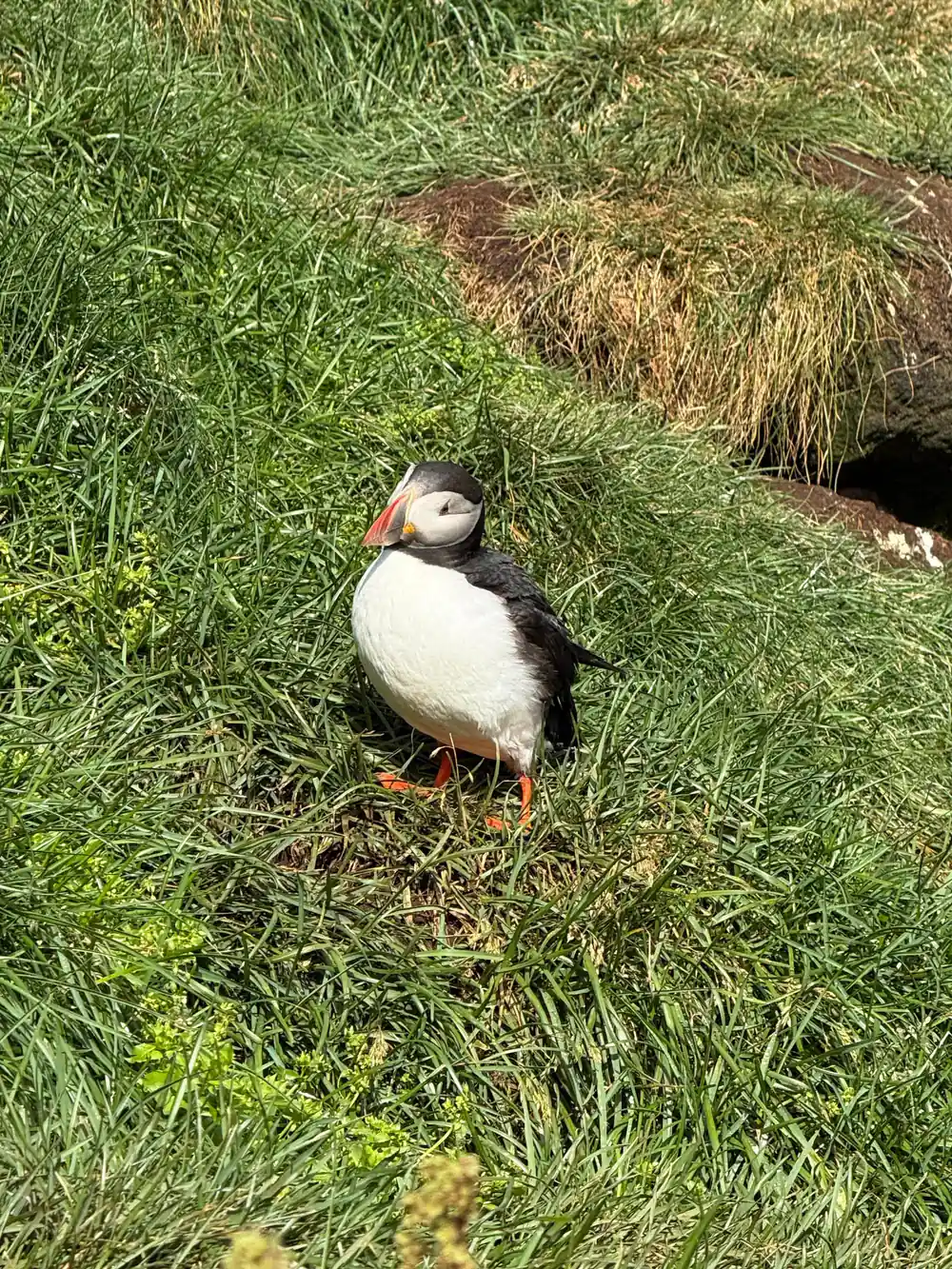
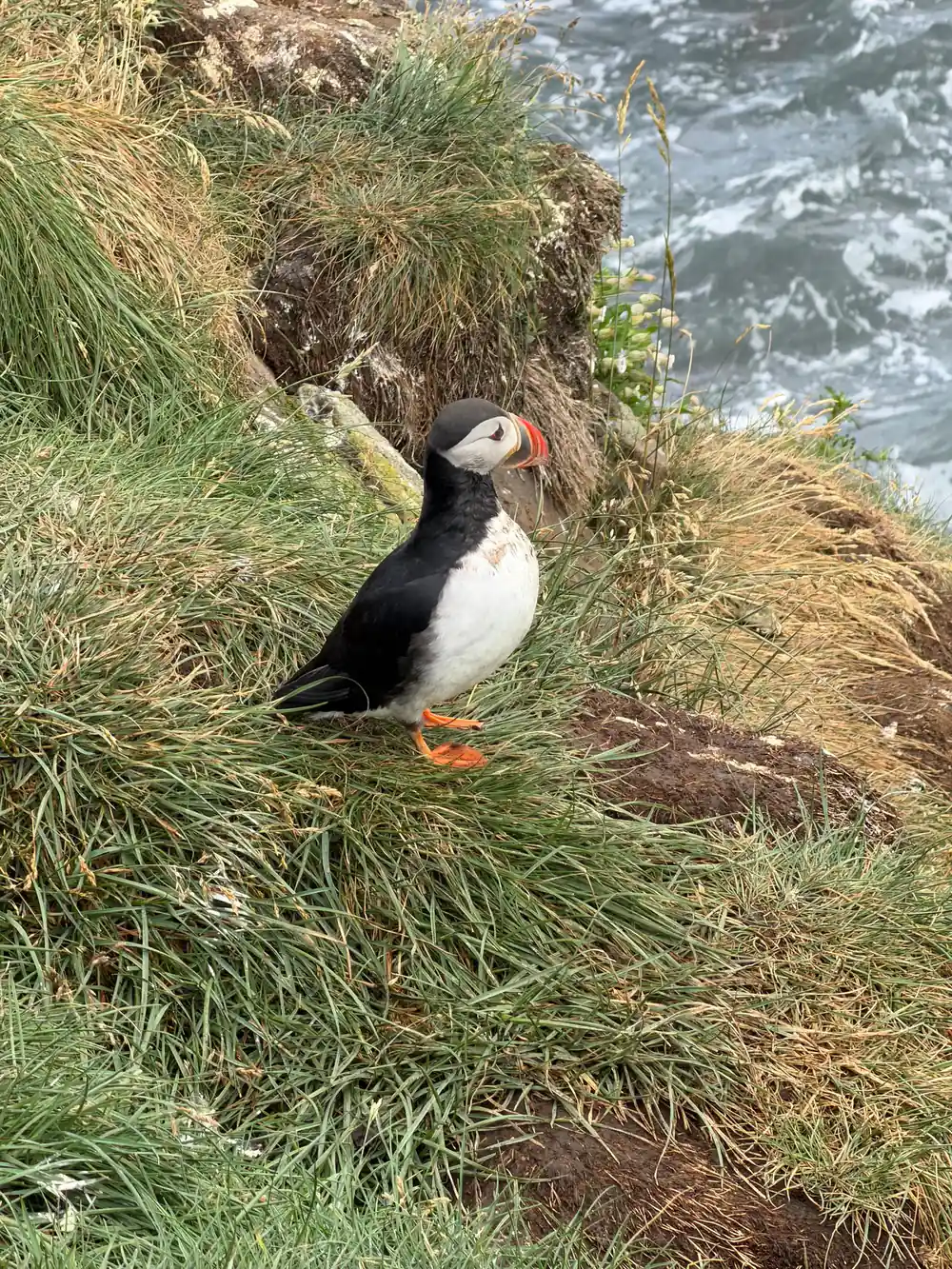
For most of the year an Atlantic puffin has a muted, greyish face and a heavy-looking beak. As the breeding season comes round, fresh plates of keratin grow over the bill and the face, and the bird turns into the one people travel to Iceland to see: a triangular beak banded in orange, yellow and blue-grey, a pale cheek patch and a dark line drawn back from the eye.
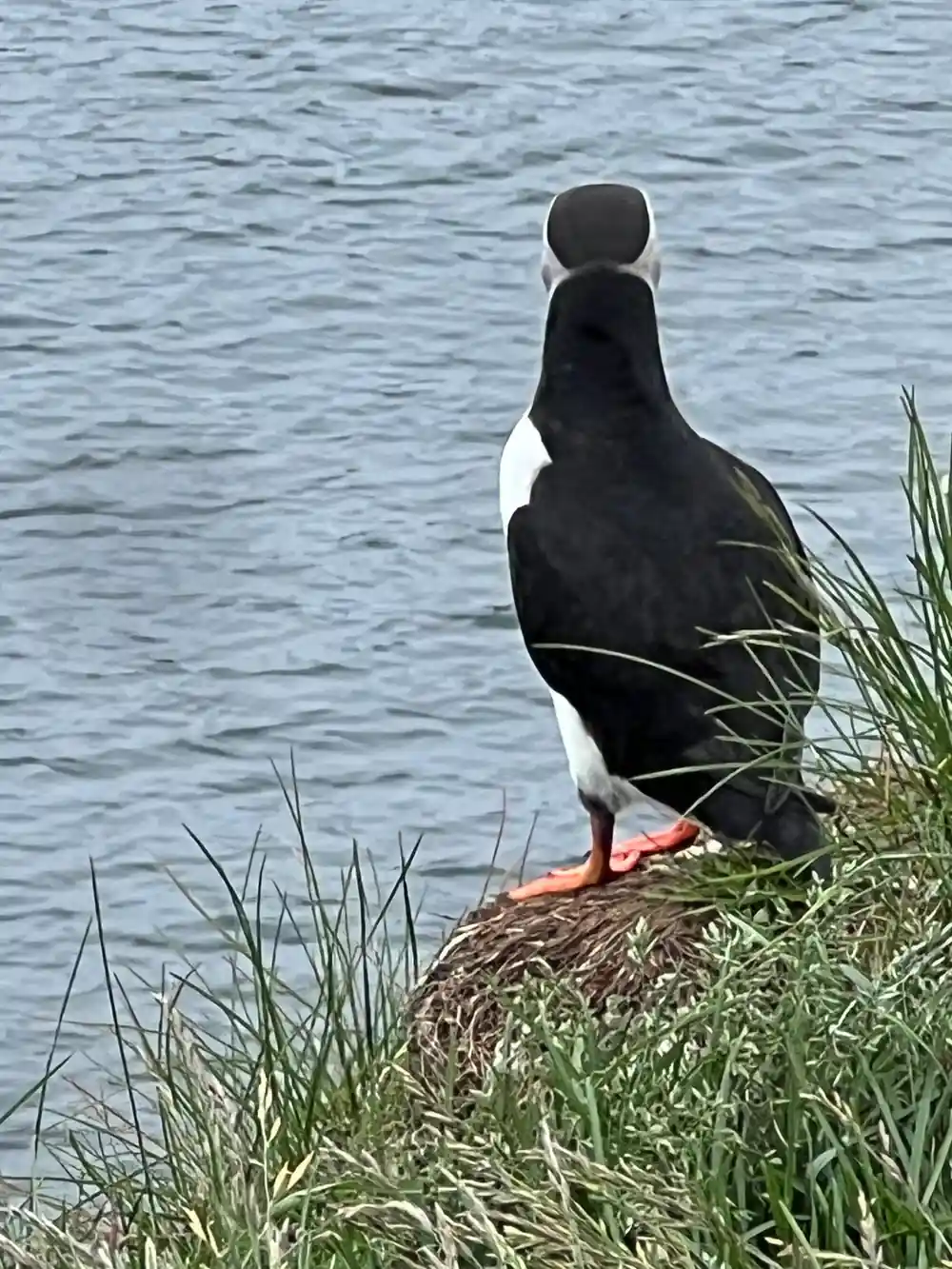
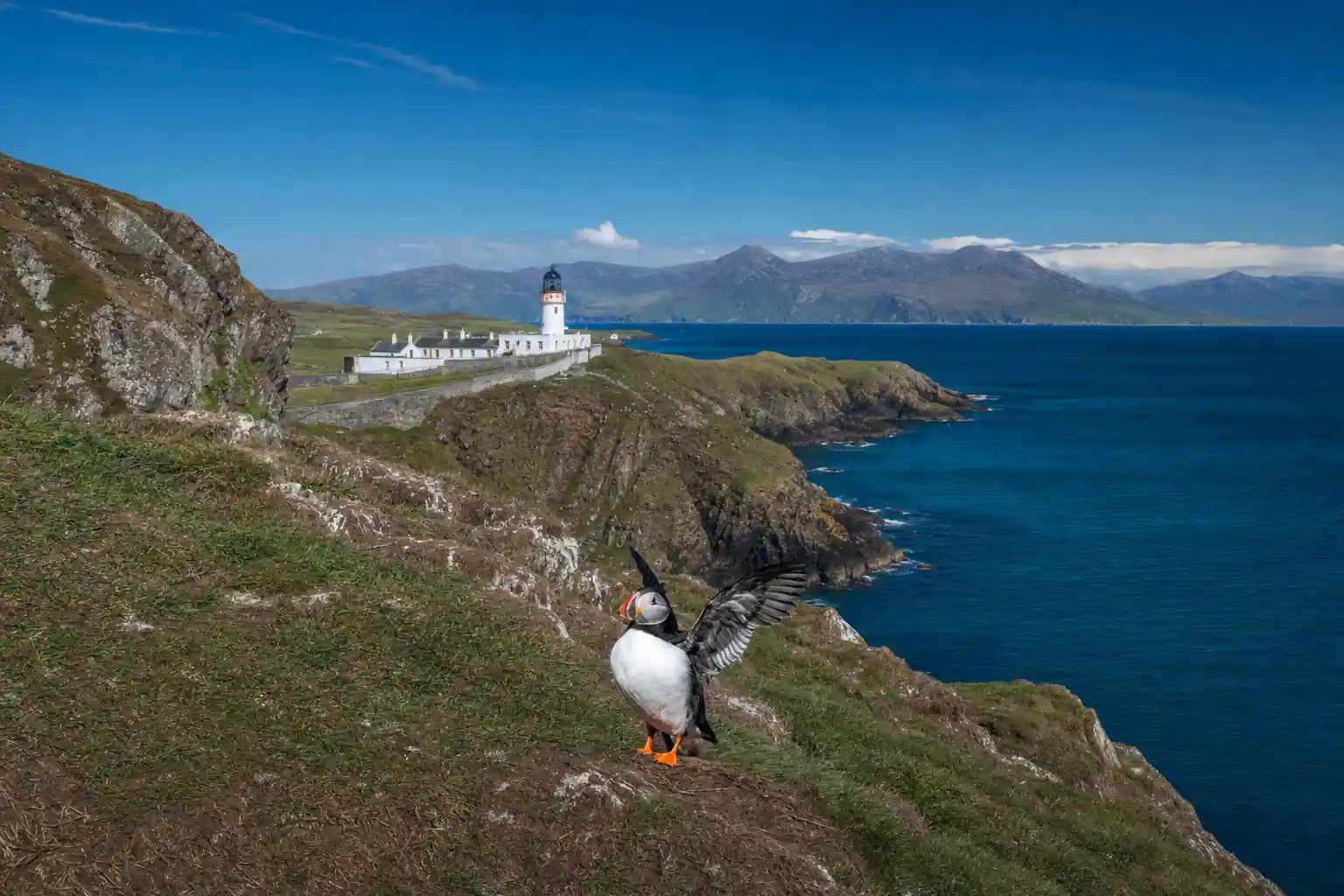
Atlantic puffin size is easy to misjudge from a photograph, because a long lens flattens everything behind the bird. On the headland the puffin looks compact and low, built close to the ground. What changes most between seasons is not the shape at all, but the colour: the summer face is breeding dress, and later in the season the outer plates are shed and the bird goes back to a plainer, quieter look.
Watch a colony for a while and the beaks start to mean something. Birds in full colour are on business, holding ground at a burrow, greeting a mate or carrying food. The greyer birds out on the water are the same species in winter dress. Reading those two states is a good first step towards watching puffin behaviour rather than just photographing it.
Inside a Puffin Burrow
From the outside a burrow is easy to miss, just a hole in the turf, usually on a slope above the water where the soil is soft and a bird can get airborne. Puffins dig with the bill and shovel the loose soil out with their feet. They will reuse an old tunnel, take over a rabbit hole or squeeze into a gap between rocks, and at the end of it they line a chamber with grass and feathers.
Iceland is one of the best places in the world to watch this at close range, and the east coast is particularly easy. At Hafnarhólmi in Borgarfjörður Eystri, puffins nest every year from the middle of April to the beginning of August, and the colony sits on a headland that visitors can walk around.[1]
Once you find a burrow in use, the day becomes a series of small events. An adult appears low over the water, circles, lands with a skid, looks about, and drops down the tunnel. A minute later it is gone and the slope is quiet again. Multiply that by a few hundred birds and you have the whole colony running the same routine.
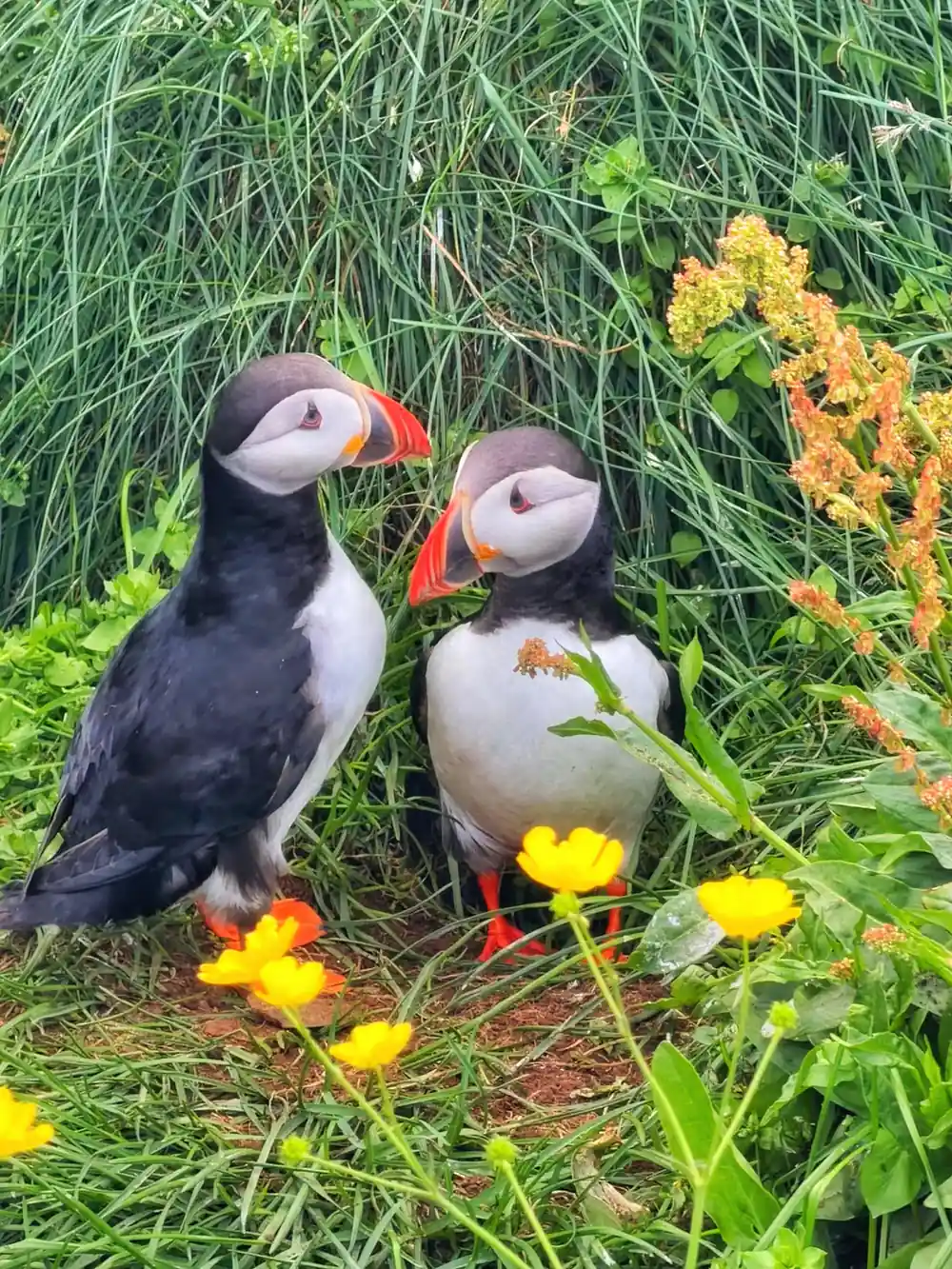
Puffins gather on grassy slopes above the water, close to the paths.
How a Beak Holds a Row of Fish
Puffins are pursuit hunters. Underwater they flap their wings to drive forward and steer with their feet, chasing small schooling fish in short bursts. Around Iceland the staple catch is sandeel, with young herring and capelin taken when they are about. A bird often makes several dives before it has anything worth carrying back to the burrow.
The famous picture of an adult with a beak like a loaded shelf depends on the inside of the mouth. A rough tongue and small spines on the roof of the mouth hold each fish while the beak opens for the next one, and the adult works the catch round until the fish lie head to tail. That arrangement lets a puffin carry a full load without losing the ones it caught first.
At the burrow the fish are handed over one at a time. This is the moment that tells you how the season is going for the colony: birds coming in with a good load are feeding chicks that are growing fast, while birds coming in with a single small fish are working harder for less. Watching the loads over an hour says more than watching one bird.
Wings Built for Water, Not for Gliding
The puffin is an animal shaped by water. It spends most of its life at sea and comes ashore to breed, and its body reflects that split: compact, dense-feathered and front-heavy. Puffin wings are short and stiff, closer to flippers than to a gull's long gliding blades, which is exactly what a bird needs when it is chasing fish through cold water.
In the air the same wings beat fast and continuously. There is no soaring, no long glide and very little turning on a coin, so a puffin crosses the water low and straight, usually in a hurry and often in the company of others heading the same way. If you see a line of small dark shapes skimming the surface, follow the direction they are going.
Landings are where the shape of the bird shows most clearly. A puffin comes in into the wind, brakes hard with its feet, and often arrives with a stumble, a hop and a short slide through the grass. Stand back from the burrows and let the arrivals happen around you, and you will see the same tumbling approach a dozen times over.
88 ft (27m)
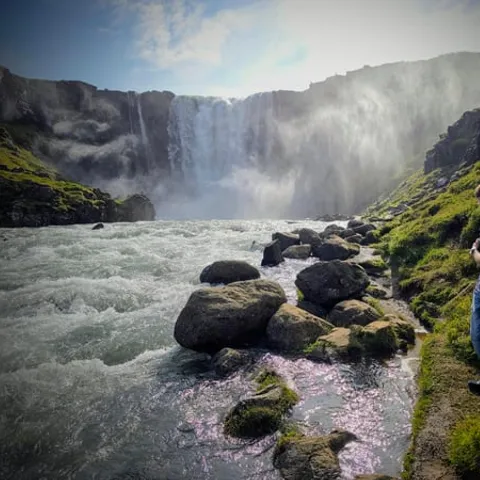
Gufufoss waterfall stands approximately 88 feet (27 meters) tall, and the flat walk from the car park out to it is no more than 150 meters.[7][8]
Pairs That Come Back to the Same Burrow
Puffin pairs tend to stay together, and they tend to return to the same burrow. In spring the two birds meet again on land, and the greeting is a bout of beak tapping, head rubbing and neck stretching at the burrow mouth. Both share the work: one sits while the other is out at sea, and later both carry fish in to the chick.
The pull back to the colony is strong. Young birds spend their early years at sea, and when they are ready to breed they usually come back to the headland where they hatched. That habit keeps a slope occupied across the decades, with the same burrows in use season after season.
For a visitor this is good news. The birds are not wandering far; they are committed to a small patch of ground, so the same headland gives you a repeatable show. If you have an hour at a colony, spend part of it watching a single burrow instead of scanning the whole cliff, and you will see a pair's working day play out in front of you.
The Puffling Leaves at Night
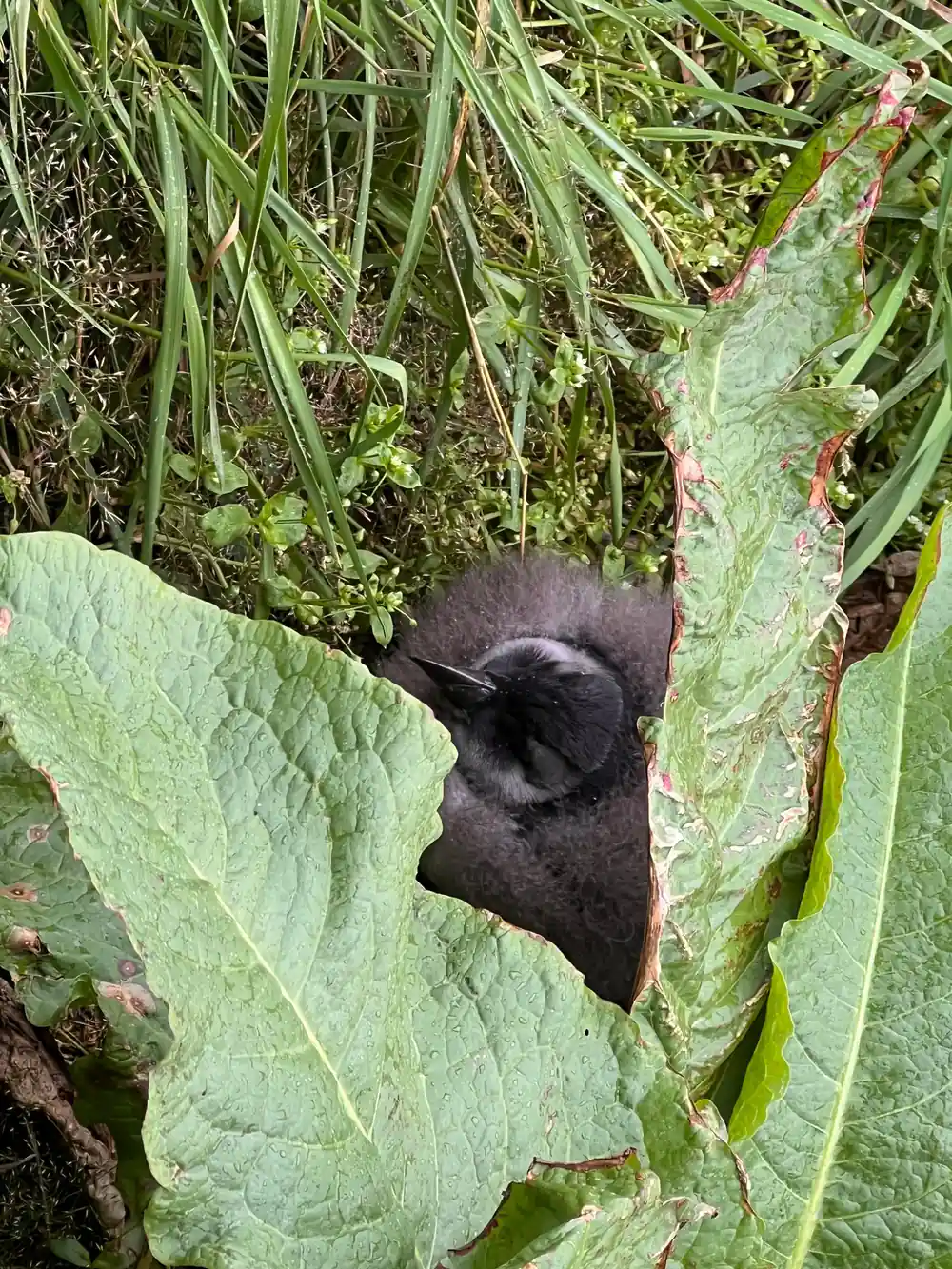
A puffin's young, called a puffling, grows up alone at the end of the burrow. It is fed by its parents on fish brought in from the sea, and it grows fast during that time. Then the visits stop, and the chick is left in the dark to finish growing its feathers and wait for the right moment to leave.
That moment comes at night. The puffling scrambles out of the burrow under cover of darkness, works its way down the slope and heads for the sea. It will not come back to land for years. All that time is spent on the open ocean, riding out winter weather far from any cliff. Most of a puffin's life happens out of sight, and the bird on the cliff is only the visible part of it.
The night departure shapes the rhythm of a colony: busy at dusk, quiet at dawn. If you are staying nearby, watch the edges of the path after sunset, but keep your distance and keep torches low. The young birds are heading for the water, and a crowd or a bright light in the wrong place turns a short walk into a hard journey.
Seeing Puffins Near Seydisfjordur
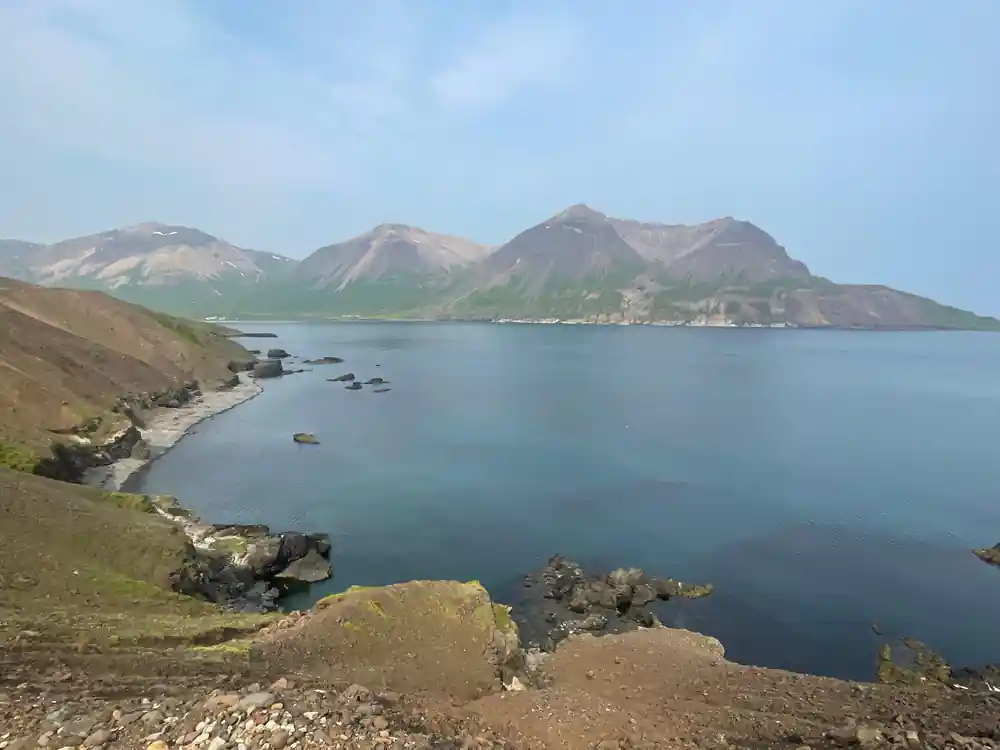
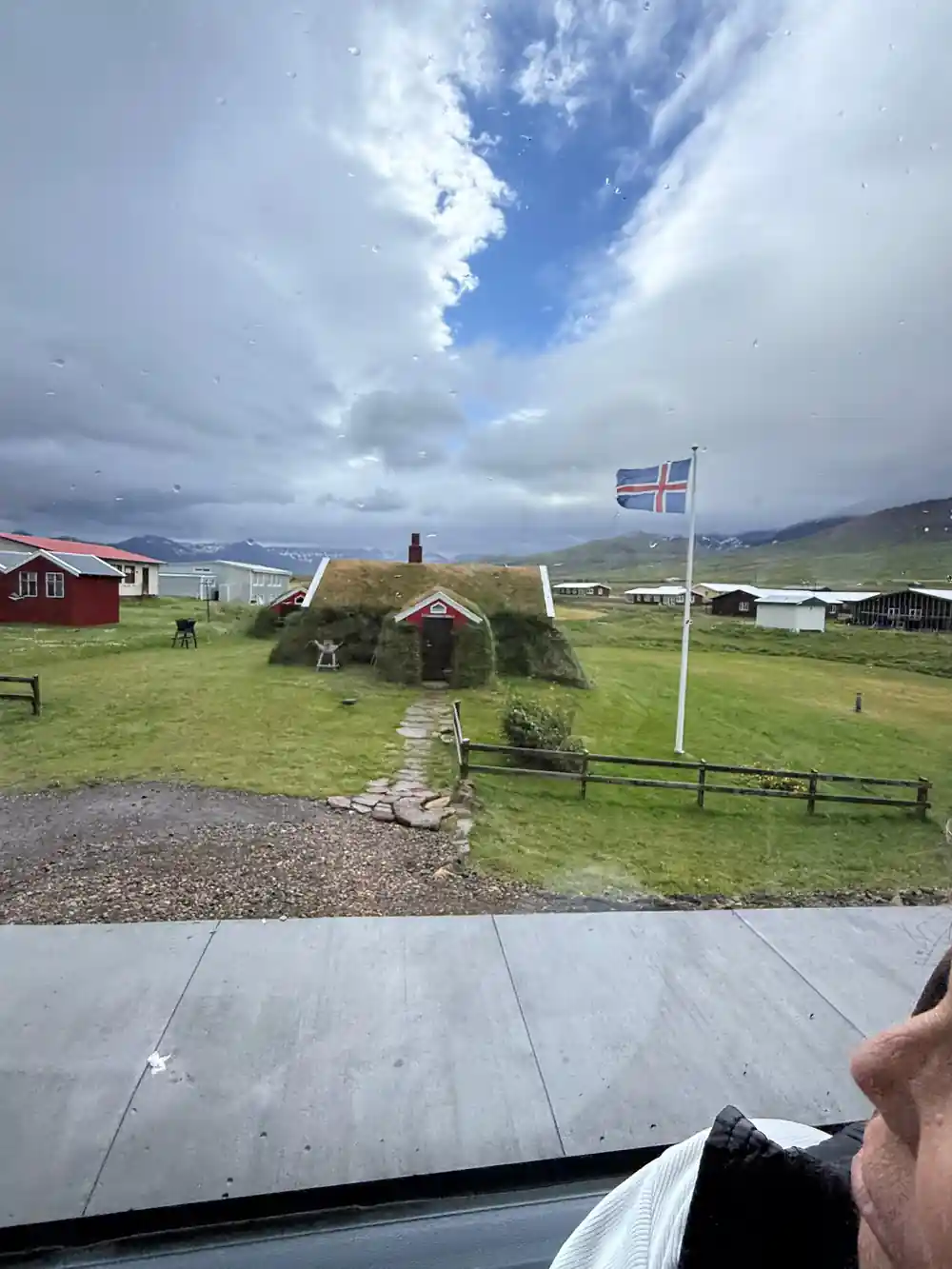
Seyðisfjörður works well as a base for a puffin day. The nesting season at Hafnarhólmi in Borgarfjörður Eystri runs from the middle of April to the beginning of August, so a summer port call falls inside the window when the birds are on the headland.[1] The shore excursions from the harbour use that colony, and the same run also stops at Lindarbakki, a colourful turf house in the village of Bakkagerði.[6]
The other half of the day is Gufufoss. The waterfall stands approximately 88 feet (27 meters) tall, and the walk from the car park is no more than 150 meters long, completely flat and done in a minute or two.[7][8] Pack for July weather: the month averages a high of 51°F (11°C) and a low of 43°F (6°C).[5] A windproof shell, a warm layer and shoes that can handle wet grass will do more for you than anything heavier.
The Puffin & Gufufoss Waterfall Tour from Seydisfjordur Port takes 5 hours with a live tour guide in English.[2] It can be cancelled free of charge up to 24 hours in advance, and places can be reserved now and paid for later, which suits a port call whose timings can shift.[2] If you arrive by sea, the Norrona ferry docks in the town itself, and the Rainbow Street ends at the church usually called Bláa kirkjan, the Blue Church.[9][10]
How long the shore tours run
Durations in hours as stated on each GetYourGuide listing:[2],[3],[11],[4].
What the Seydisfjordur shore tours cost from
US dollar from-prices per person from GetYourGuide listings[2],[3],[4] and[11].
When to go and when to book
Watching puffins well
Go in the nesting season
Puffins nest at Hafnarhólmi from the middle of April to the beginning of August, which is when the colony is at its busiest.[1]
Take the shore excursion
The 5-hour Puffin & Gufufoss tour covers Hafnarholmi, Lindarbakki and Gufu Waterfall with a live guide in English.[2]
Watch the burrow, not the sky
Choose a hole that is in use and follow the traffic. Arrivals, greetings and food runs all happen within a few steps of the path.
Stay on the marked ground
Burrows are fragile, and pufflings leave at night. Keep to the paths and keep your distance from anything that looks like a tunnel entrance.
Do not rush the headland
The birds are close and the light changes fast. An hour of slow watching shows more behaviour than a quick walk past with a camera.
Puffins, turf houses and Gufufoss on one shore day
from US$230Reserve now & pay later