In a nutshell
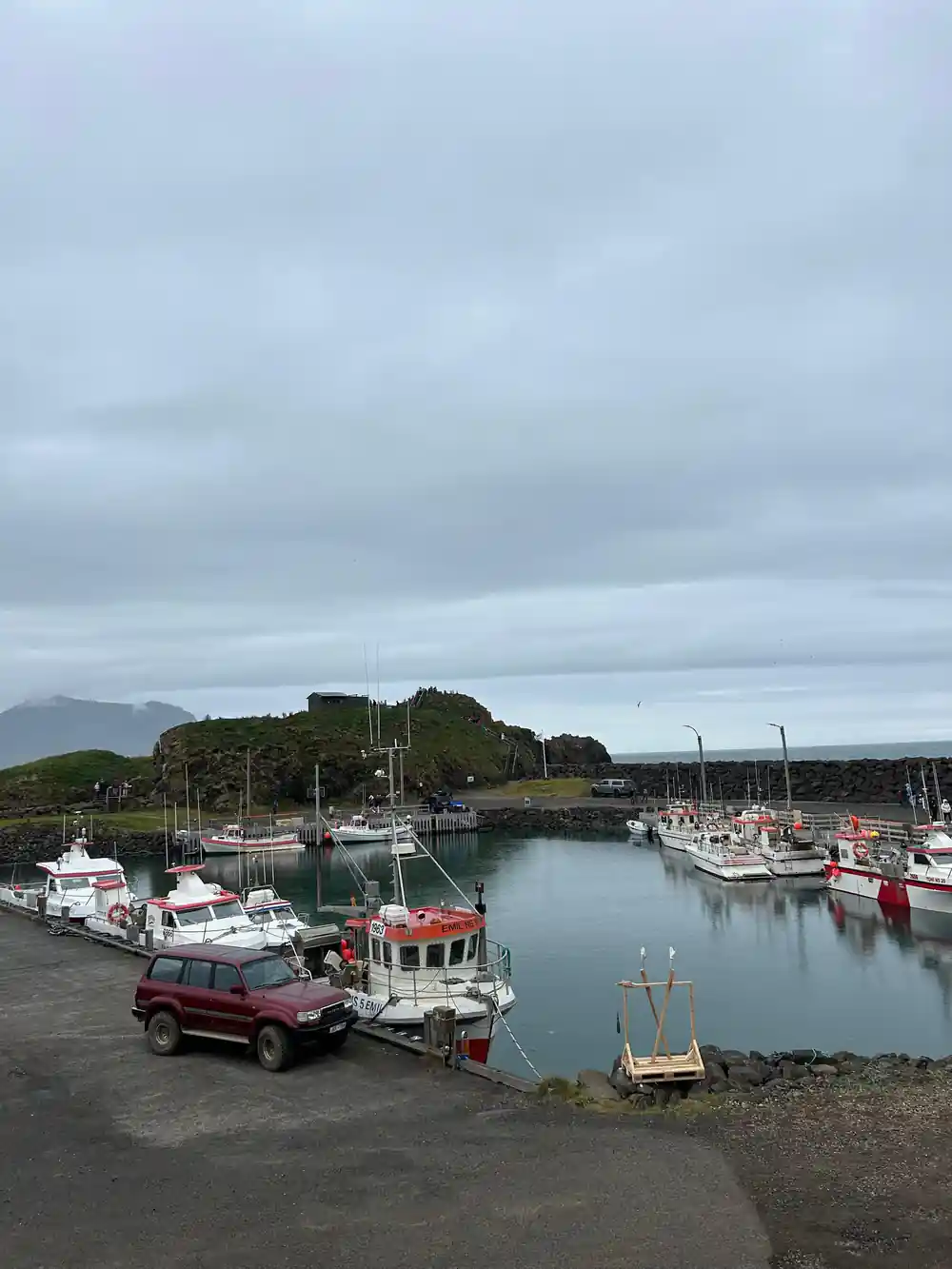
- Hafnarholmi is a small working harbour in Borgarfjordur Eystri, on a headland at the mouth of the fjord in East Iceland, with a nesting slope right behind the quay.
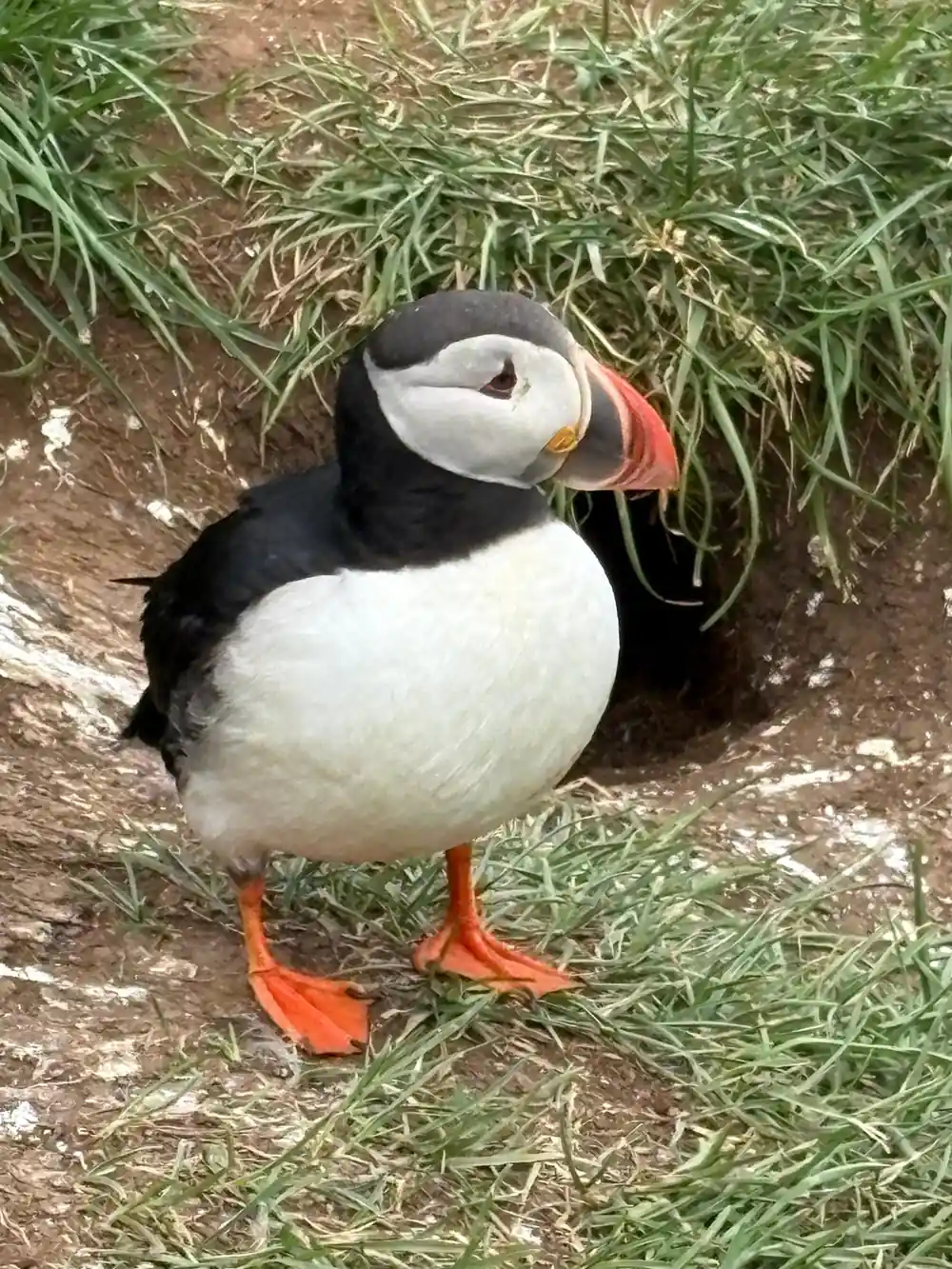
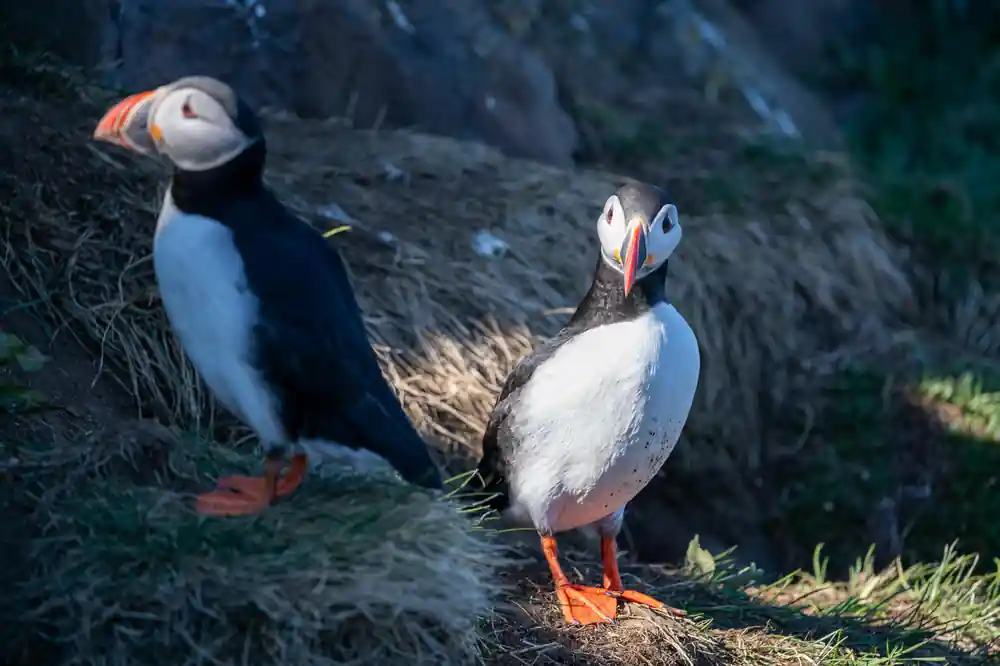
- Puffins nest at Hafnarholmi in Borgarfjordur Eystri every year from the middle of April to the beginning of August.[1]
- The harbour sits north of Seydisfjordur, reached by road that climbs over the mountains and follows the fjords round to Borgarfjordur Eystri.
- The Puffin & Gufufoss Waterfall Tour leaves from Seydisfjordur port, lasts 5 hours and stops at Hafnarholmi, Lindarbakki and Gufu Waterfall.[2]
- In July the average daily temperature in Seydisfjordur ranges from a high of 51 degrees F (11 C) to a low of 43 degrees F (6 C), so bring a windproof layer.[3]
- Top choice Puffin & Gufufoss Tour from US$229 Duration5 hours[2]GuideLive tour guide: English[2]Rating4.63 from 270 reviews[2]CancellationFree up to 24 hours in advance[2] Check availability
- Vok Baths Entry from US$61 Duration1.5 hours[4]GuideHost or greeter: English, Icelandic[4]Rating4.69 from 386 reviews[4]CancellationFree up to 24 hours in advance[4] See this tour
- Studlagil Canyon Excursion from US$229 Duration5 hours[5]GuideLive tour guide: English[5]Rating4.46 from 336 reviews[5]CancellationFree up to 24 hours in advance[5] See this tour
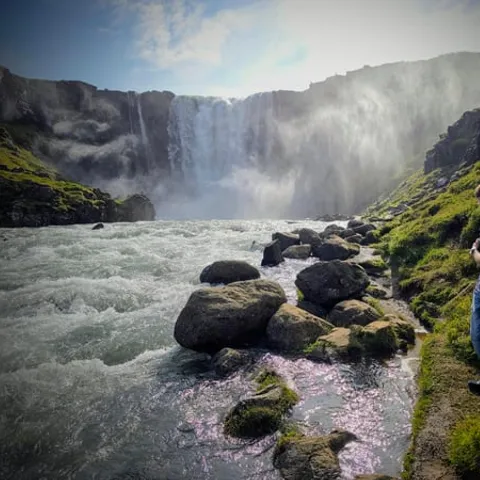
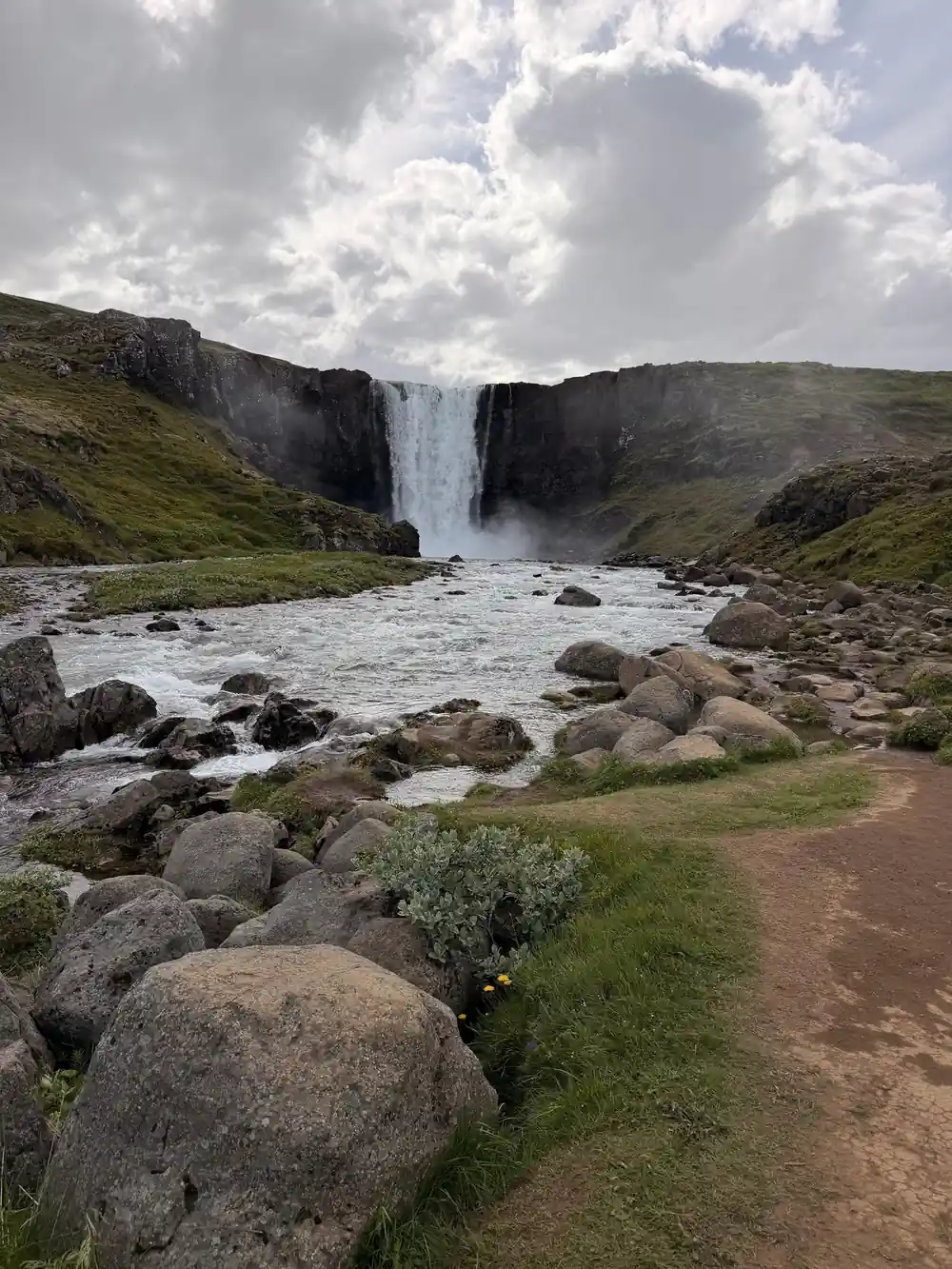
Standing at approximately 88 feet (27 meters) tall, Gufufoss is one of the striking waterfalls along the Fjarðará River , a waterway known for its excellent fishing spots.
Verdict: a working harbour worth the detour
Getting there and booking
What to bring and know
- Long daylight in summer lets you walk the headland in the evening after the boats are in.
- July averages run from a high of 51 degrees F (11 C) to a low of 43 degrees F (6 C).[3]
- Prices are listed in US dollars; the Puffin & Gufufoss tour is from US$229.[2]
- Walkways and steps keep visitors off the fragile nesting turf.
Hafnarholmi: A Harbour Shared With Birds
The road to Hafnarholmi usually begins for visitors in Seydisfjordur, where a single road leaves town and climbs steeply over the mountains before dropping north toward Borgarfjordur Eystri. From the top the route runs north and east around the fjord, past driftwood fences and sheep on open ground, until the valley closes in and the harbour appears at the water's edge, small and very exposed.
The harbour itself is unfussy. There is a short quay, a few bollards, stacks of crates and coiled rope, and the low shoulder of a breakwater taking the run out of the swell. Gulls work the gutting tables, eider ducks bob about in the shallows, and on a calm day the whole place smells of salt, cold stone and diesel.
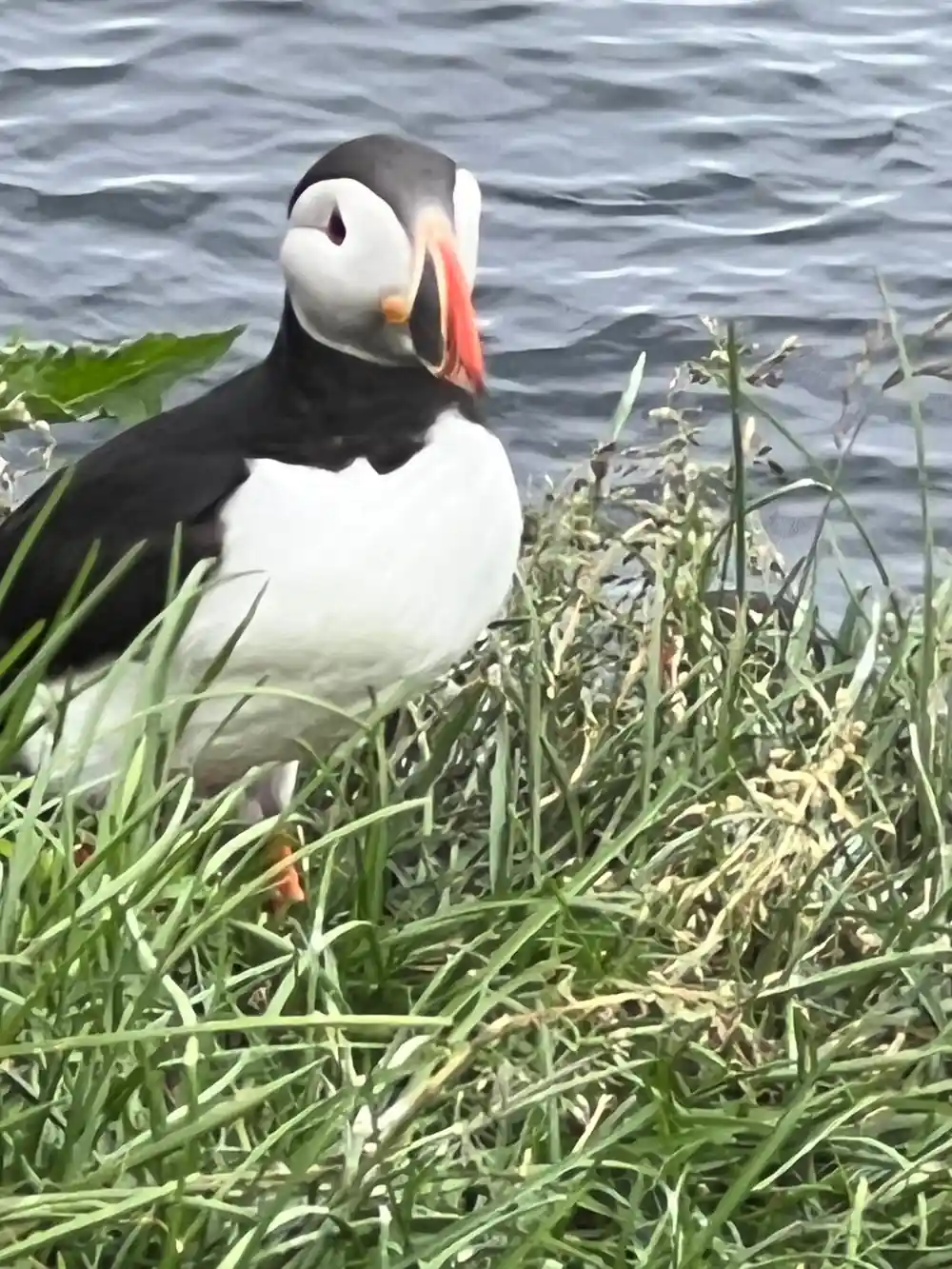
Puffins are what bring many travellers round the fjord in the first place. Puffins nest at Hafnarholmi in Borgarfjordur Eystri every year from the middle of April to the beginning of August.[1] Outside that window the headland belongs to the boats, the wind and the weather, and the birds are somewhere out on the open sea.
What the Boats at Borgarfjordur Eystri Land
Fishing here follows the weather rather than a timetable. Inshore boats slip out for a few hours, work grounds they know well, and come back with the catch boxed and iced before the wind builds. Everything happens within sight of the houses at Bakkagerdi, and the village feels tightly tied to the water.
You tend to see the gear before you see the boats. Coils of rope, net floats, rubber boots drying on a railing, and wooden frames used for hanging fish out to dry. This is a working waterfront rather than a visitor attraction, so keep clear of vehicles reversing, do not wander onto private quays, and treat the sheds as somebody's place of business.
If you arrive by sea, the harbour at Seydisfjordur is the one you land in. The Norrona ferry, run by Smyril Line, docks in the small town of Seydisfjordur.[6] From there the road climbs over the mountains and runs north along the fjords toward this stretch of coast, which is how cruise passengers and ferry travellers reach the harbour on a port day.
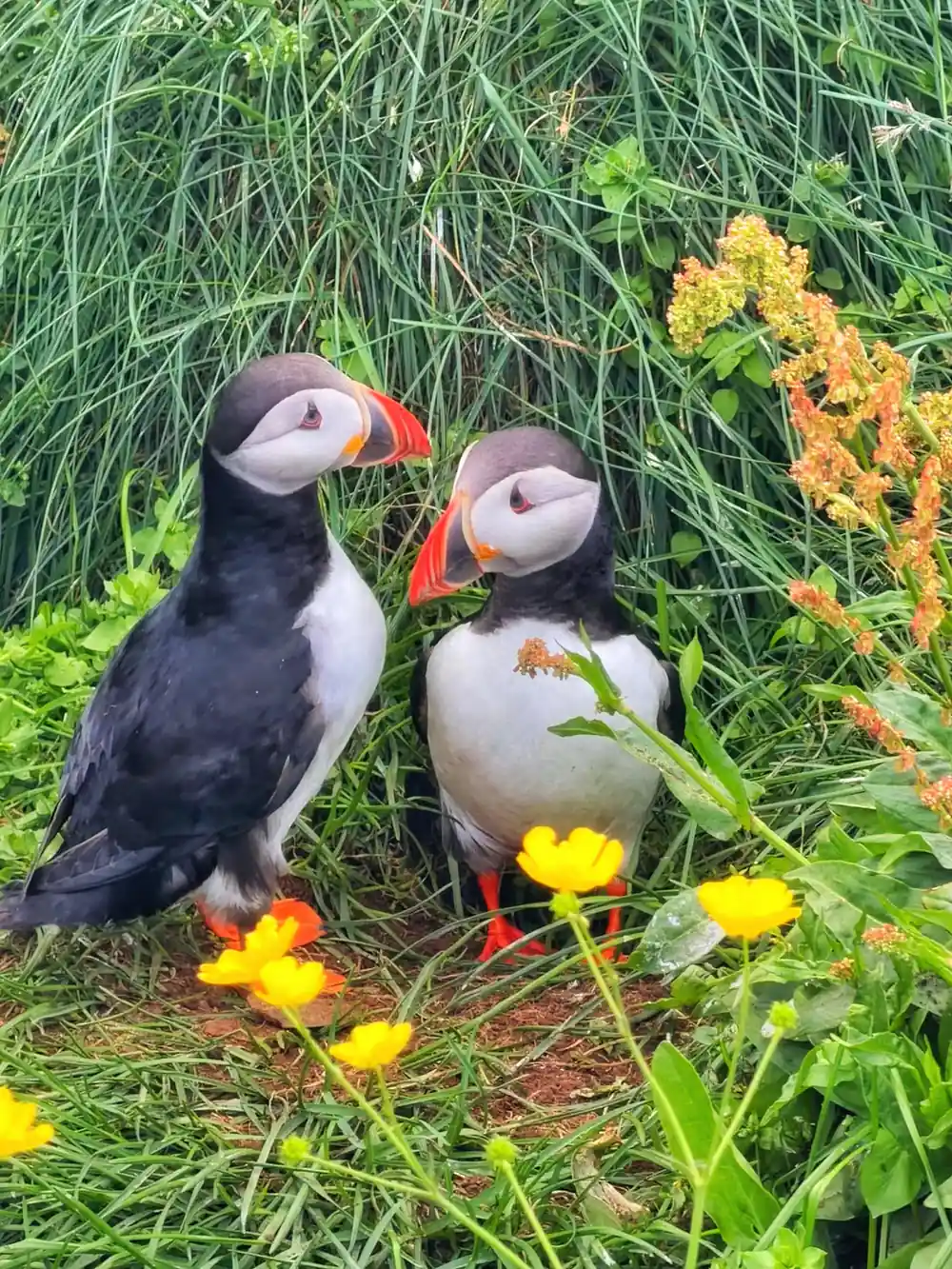
Puffins crowd the grassy slope above the harbour wall through the nesting season.
Sandeels: The Food the Puffins Depend On
Sandeels are the reason a puffin colony sits beside a fishing harbour. They are small, slim, silver fish that gather in shoals over sandy seabeds and bury themselves in the sediment when something threatening passes overhead. For a seabird feeding a chick, they are close to ideal food: quick to catch in numbers and rich enough to raise a young puffin through a short northern summer.
Puffins are not the only birds that rely on them. Arctic terns, kittiwakes, razorbills and guillemots all time their nesting around the same resource, and when sandeels are scarce or scattered, the effect travels up the food chain quickly. Chicks go hungry, adults fly further and for longer, and the cliff raises fewer young that year.
That is part of why the bird cliffs and the fishing grounds sit so close together along this coast, and why local conversation so often comes back to the state of the sea. Cold water, sandy bottom and enough small fish to go round is the whole equation. Walk the headland quietly in summer and you can watch it happen: birds streaming in from the open water with their beaks packed with silver.
How the Breakwater Shelters the Nesting Slope
A breakwater is a simple piece of engineering with a large effect. It is built out from the shore as a wall of rock, and it takes the energy out of the swell before that swell reaches the quay. Inside the wall the water is calmer, so boats can lie alongside and unload without being thrown about, and small craft can come and go on days when the open sea is unpleasant.
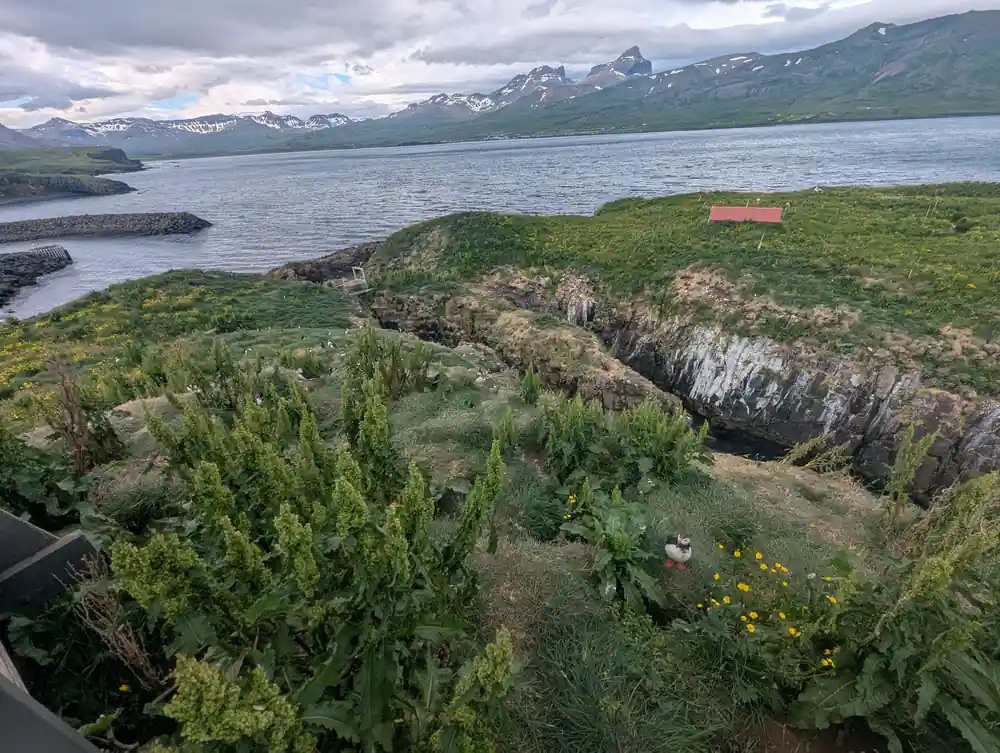
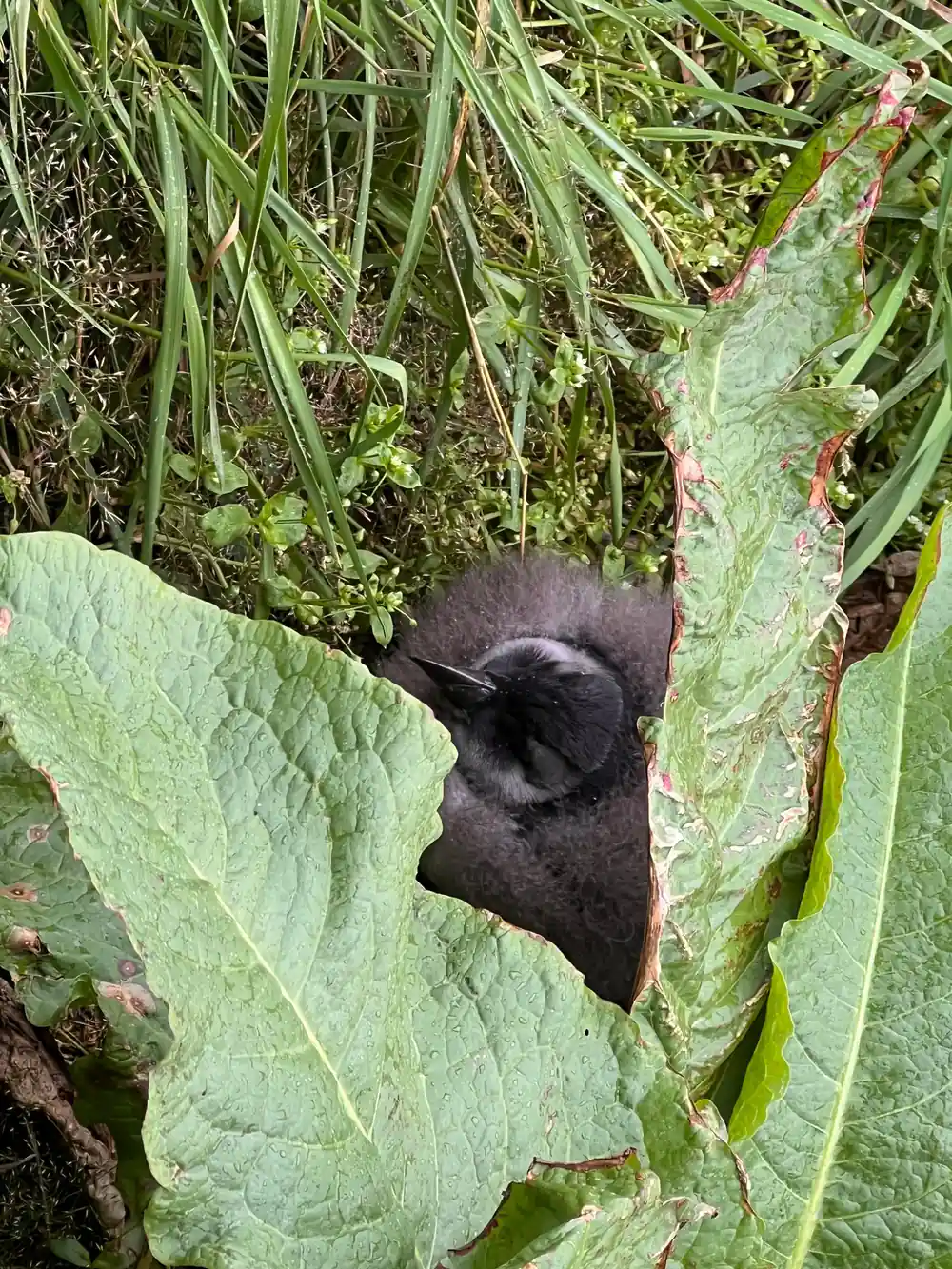
The land above the harbour works in much the same way. Behind the quay the slope rises quickly into grass and rock, and that is where the puffins burrow. Puffins dig shallow tunnels into turf and soil, and they favour ground they can work easily with feet and beak, close to the water but out of reach of the worst of the spray.
Wind is the constant on this coast. It combs the grass flat, keeps the air clean and cold, and decides whether a boat goes out at all. Stand on the headland for a few minutes in almost any weather and the logic of the place becomes obvious: a calm corner of coast matters to everything that lives and works here.
from US$229
The Puffin & Gufufoss tour starts from US$229, lasts 5 hours from Seydisfjordur port and stops at Hafnarholmi and Gufu Waterfall.[2]
Walkways and Steps Built for Visitors
Hafnarholmi is one of the easier seabird sites to visit because you do not need a long hike to see the birds. Wooden walkways, steps and viewing points keep feet off the most fragile turf and put you level with the nesting slope instead of looking down on it from above.
That matters more than it may sound. Turf burrows collapse under repeated foot traffic, and a colony that is trampled through the nesting months raises fewer chicks. Staying on the boards and behind any rope line is the single most useful thing a visitor can do at a place like this, and it costs nothing.
It also makes for better watching. A puffin that is not being chased will stand at its burrow mouth, wings folded, looking faintly ridiculous, and let you watch and photograph it for as long as you like. The Puffin & Gufufoss Waterfall Tour from Seydisfjordur port includes Hafnarholmi among its stops, along with Lindarbakki and Gufu Waterfall, across 5 hours.[2]
Winter Storms and How the Village Endures
Winter changes everything on this coast. Storms arrive off the open Atlantic with rain, sleet and wind strong enough to flatten grass and drive spray over the harbour wall. Boats stay tied up, roads are treated, and daily life moves indoors, into workshops and kitchens and the slow business of repairing gear.
Summer is gentler, but never warm in the way a visitor from a southern city expects. In July, a summer month in Seydisfjordur, the average daily temperature ranges from a high of 51 degrees F (11 C) to a low of 43 degrees F (6 C).[3] Pack a windproof layer, a hat and gloves even in midsummer, and you will enjoy the headland far more than you would in a thin jacket.
The village endures because the work is seasonal and the people here are used to reading the sky. Between the fishing, the ferry traffic and the summer visitors, there is enough going on to carry the place through the dark months, and the harbour keeps its shape because it has to. A coast like this does not offer many alternatives.
A Headland Where Work and Wildlife Coexist
The pleasure of Hafnarholmi is that nothing here has been tidied into a theme park. Fishing gear sits beside a nesting slope, the boats and the birds share the same small bay, and the puffins carry on regardless of who is watching them. A short drive away, Lindarbakki, a colourful turf house, stands in the village of Bakkagerdi.[7]
If you are based in Seydisfjordur, the town itself is worth an hour before or after your trip. The Rainbow Street, lined with old historic houses, ends at the town's church, commonly called the Blue Church.[8] It is a gentle way to start a day that finishes on a headland full of puffins and the smell of salt water.
Further inland, Gufufoss stands approximately 88 feet (27 meters) tall.[9] The walk from its car park is no more than 150 meters long and takes a minute or two over completely flat ground.[10] Two very different stops, one day, and a coastline that keeps changing between them.
How long shore excursions from Seydisfjordur run
From-prices for two Seydisfjordur shore options
When to go and when to book
Planning a Hafnarholmi day
Check the puffin window
Puffins nest here from the middle of April to the beginning of August, so aim your visit inside those months.[1]
Book the shore excursion
The Puffin & Gufufoss Waterfall Tour runs 5 hours from Seydisfjordur port, with free cancellation up to 24 hours in advance.[2]
Dress for wind
Take a windproof and waterproof outer layer, a hat and gloves, whatever the forecast says.
Stay on the walkways
Keep to the boards and steps at the headland; the grassy slope is full of nesting burrows.
Bring binoculars
Birds on the water and cliffs are easier to watch with binoculars, and they keep you from crowding the slope.
Ride from Seydisfjordur port to the puffins at Hafnarholmi
from US$230Reserve now & pay later