In a nutshell
- The Hidden Stuðlagil Canyon & Reindeer Tour runs 6 hours with a live tour guide in German or English, from US$228.[1]
- Atlantic puffins nest at Hafnarhólmi in Borgarfjörður Eystri every year from the middle of April to the beginning of August.[2]
- The Puffin & Gufufoss Waterfall Tour from Seydisfjordur Port runs 5 hours with a live tour guide in English, from US$229.[3]
- Gufufoss stands approximately 88 feet (27 meters) tall, and the flat walk from the car park is no more than 150 meters.[4][5]
- Vök Baths: East Iceland Geothermal Baths Entry is from US$61, rated 4.69 from 386 reviews, and wheelchair accessible.[6]
- Top choice Puffin & Gufufoss Tour from US$229 Rating4.63 from 270 reviews[3]Duration5 hours[3]GuideLive tour guide: English[3]CancellationFree cancellation up to 24 hours[3] Check availability
- Stuðlagil & Reindeer Tour from US$228 Rating4.86 from 7 reviews[1]Duration6 hours[1]GuideLive tour guide: German, English[1]CancellationFree cancellation up to 24 hours[1] See this tour
- Studlagil Canyon Tour from US$229 Rating4.46 from 336 reviews[7]Duration5 hours[7]GuideLive tour guide: English[7]CancellationFree cancellation up to 24 hours[7] See this tour
Hafnarhólmi is easily the most accessible Atlantic Puffin colony in Iceland where they nest every year from middle of April to beginning of August.
Is a wildlife shore day worth it?
Worth knowing first
Kittiwakes and Fulmars: The Other Cliff Dwellers
Puffins take the headlines, but the cliffs and sea stacks around Seyðisfjörður are shared with a whole cast of other seabirds. Kittiwakes are the small, neat gulls that nest in tight rows on the narrowest ledges, filling the rock with a chorus that sounds like their own name being called. Fulmars look heavier and greyer, gliding on stiff wings just above the swell. Both are birds of open water and vertical rock, and the best views come from the sea rather than from the roadside. No wildlife cruise is bookable through this site, so the cliffs at Hafnarhólmi, where the puffin tour stops, are the closest you will get to those ledges.[3]
Sea watching rewards patience more than equipment. Binoculars, a hood and a spot out of the wind will do more for you than a long lens, because birds move fast and the light on the water shifts every minute. Watch where the surface churns: feeding flocks gather over currents and upwellings, and where seabirds are working hard, seals and dolphins often are too. If the boat slows or stops, stay low and quiet, and let the wildlife come to you.
Telling Puffins, Guillemots and Fulmars Apart
On a rock face crowded with birds, the quickest way to sort them out is by shape. Puffins are small and dumpy, with a bright bill in summer and wings that whirr like clockwork. Guillemots stand upright and slim, chocolate brown with a pointed bill, packed shoulder to shoulder along the ledges. Fulmars stay in the air, banking in long arcs, and their grey and white plumage looks soft and gull-like until you notice the stiff, straight wings. Razorbills, shags and gulls fill in the gaps, so a bird book, or a guide talking you through the colony, is worth having.
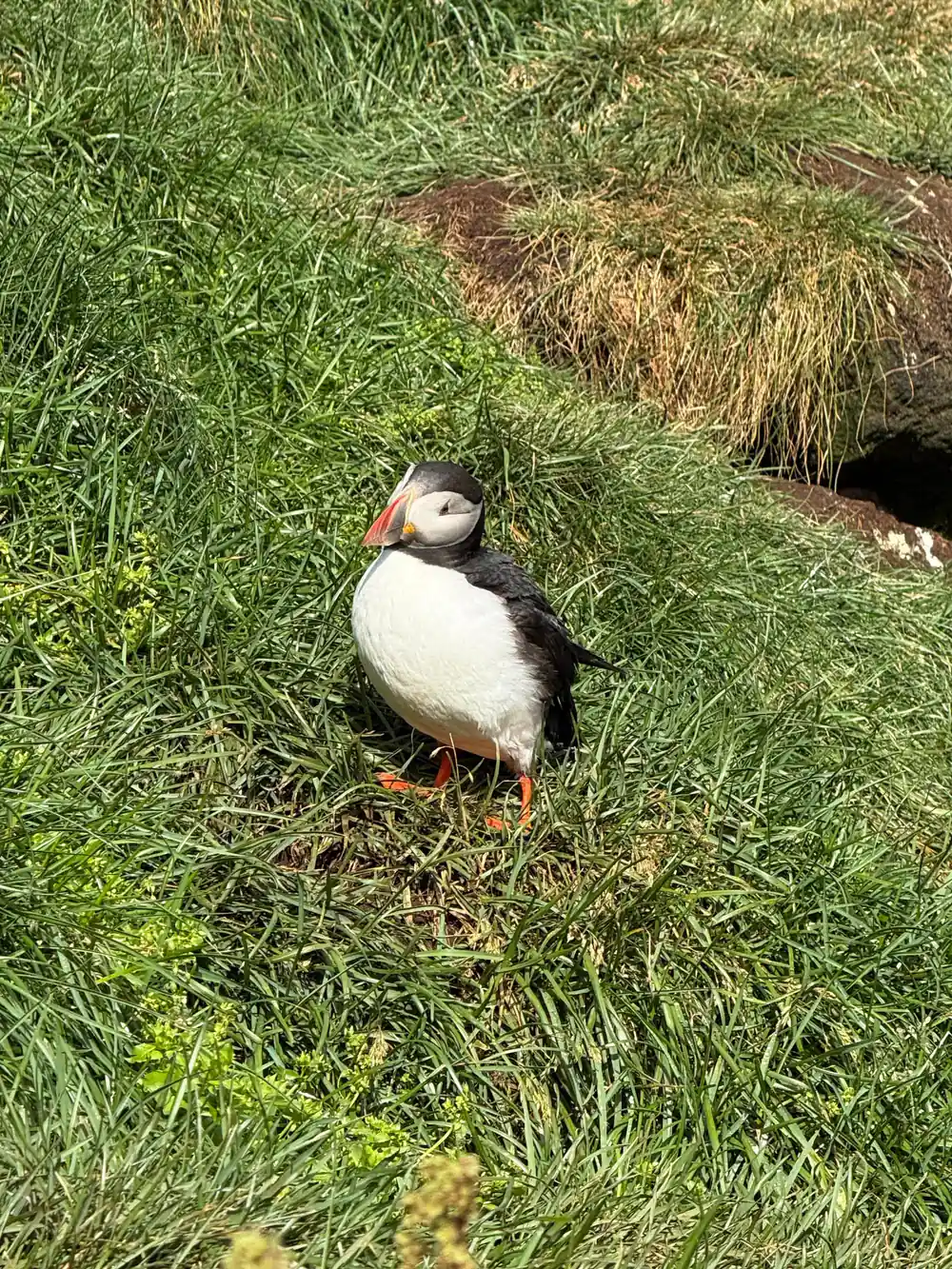
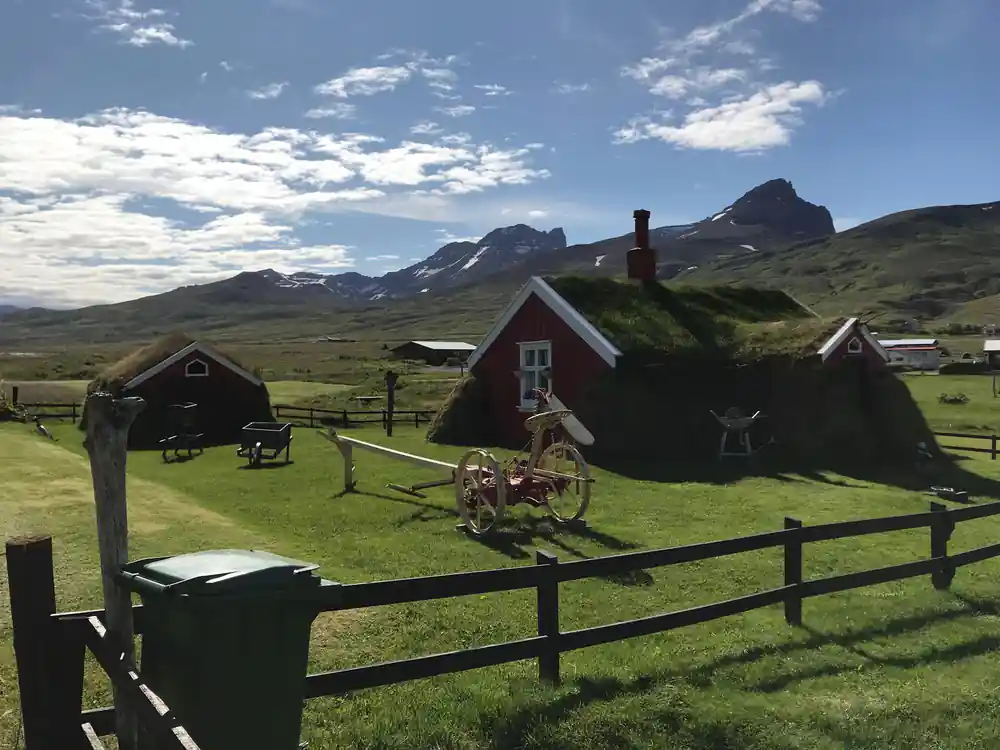
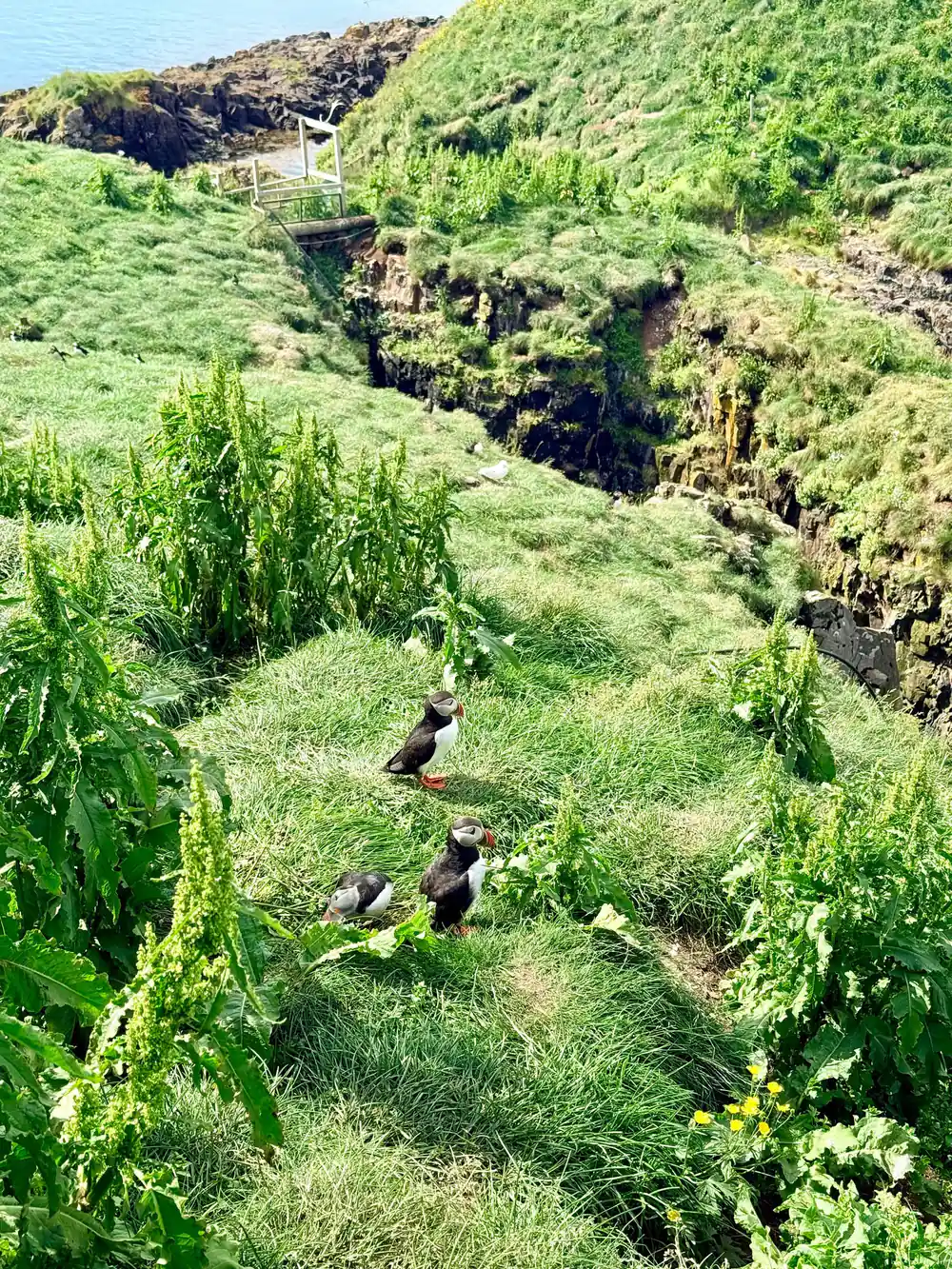
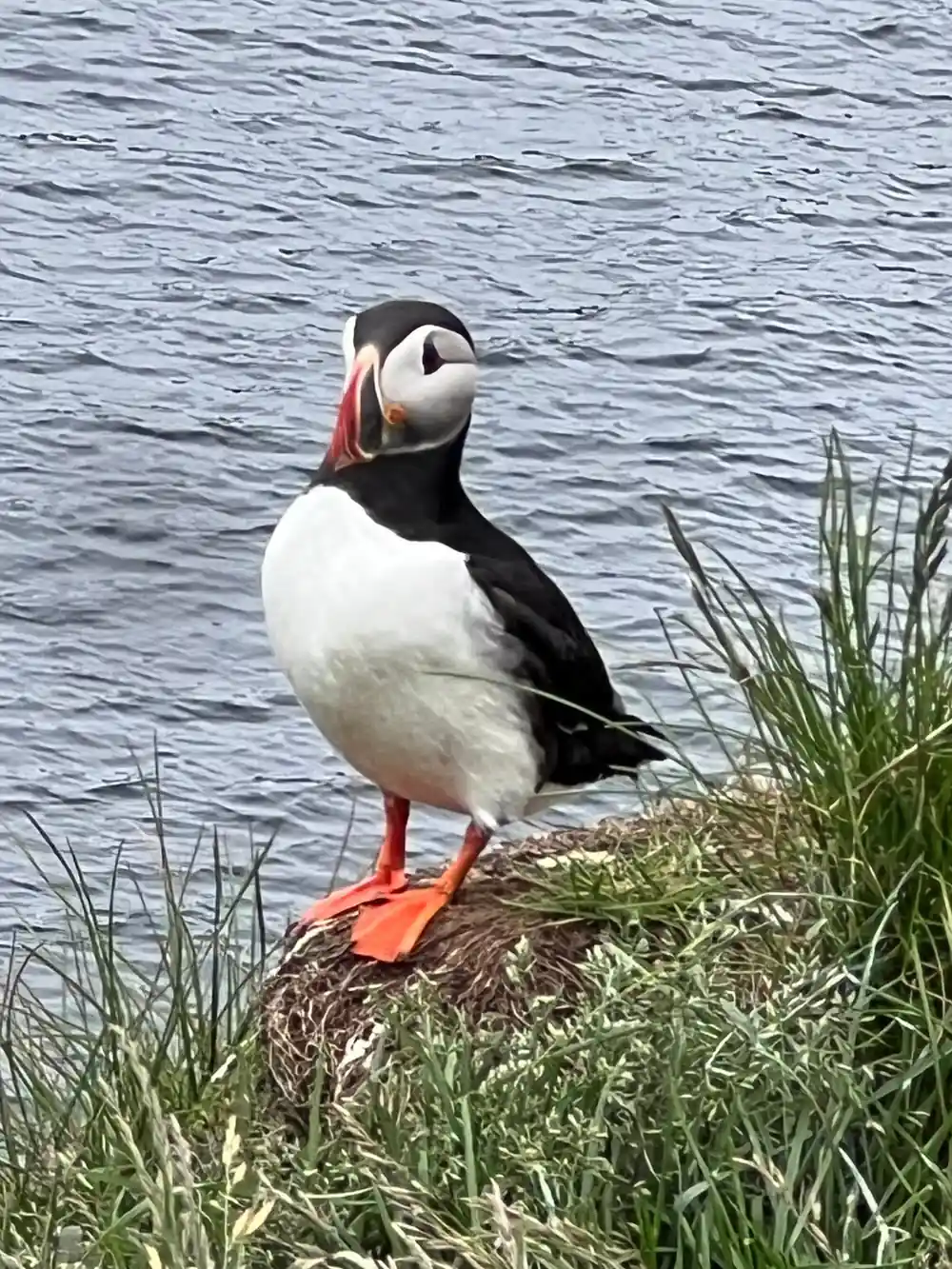
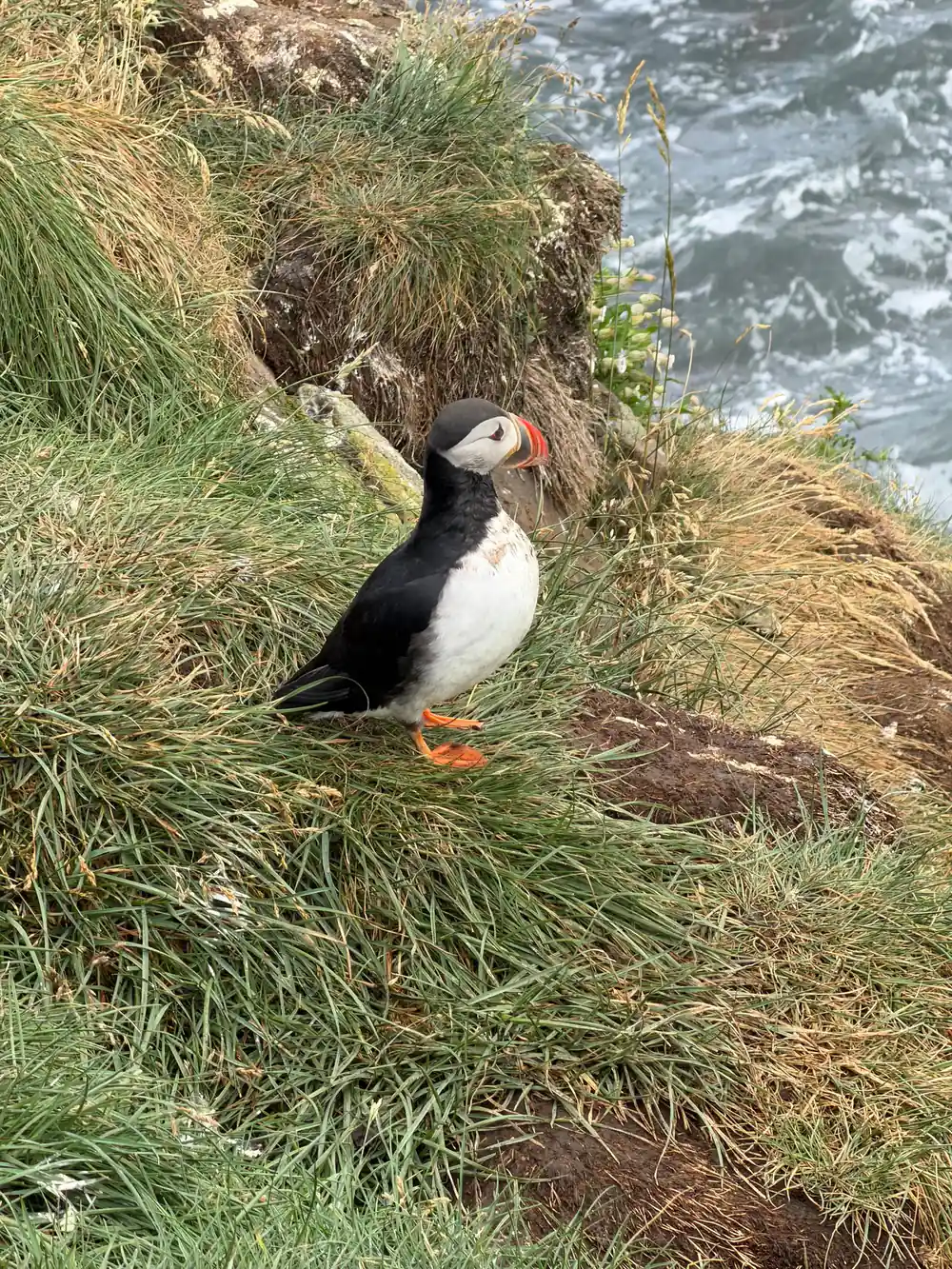
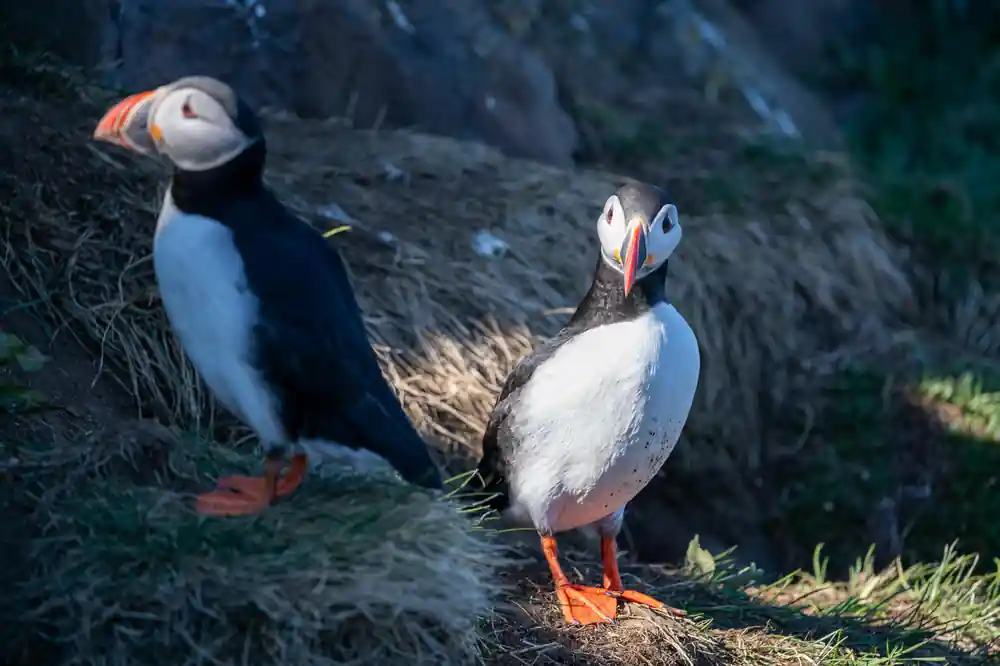
The star of the colony nests on the east side of the fjord. Puffins nest at Hafnarhólmi in Borgarfjörður Eystri every year from the middle of April to the beginning of August, and the little harbour there has walkways that keep feet off the burrows.[2] The Puffin & Gufufoss Waterfall Tour from Seydisfjordur Port stops at Hafnarholmi and Lindarbakki on its 5-hour run, along with Gufu Waterfall.[3] Lindarbakki is a colorful turf house in the village of Bakkagerði.[9]
Give the birds room and they will carry on as if you are not there. Stay on marked paths, never step onto a burrow, and keep drones away from cliffs and colonies. Photographers get better pictures by sitting still at a respectful distance than by edging closer, and a colony that is left undisturbed will still be busy when the next boat comes in.
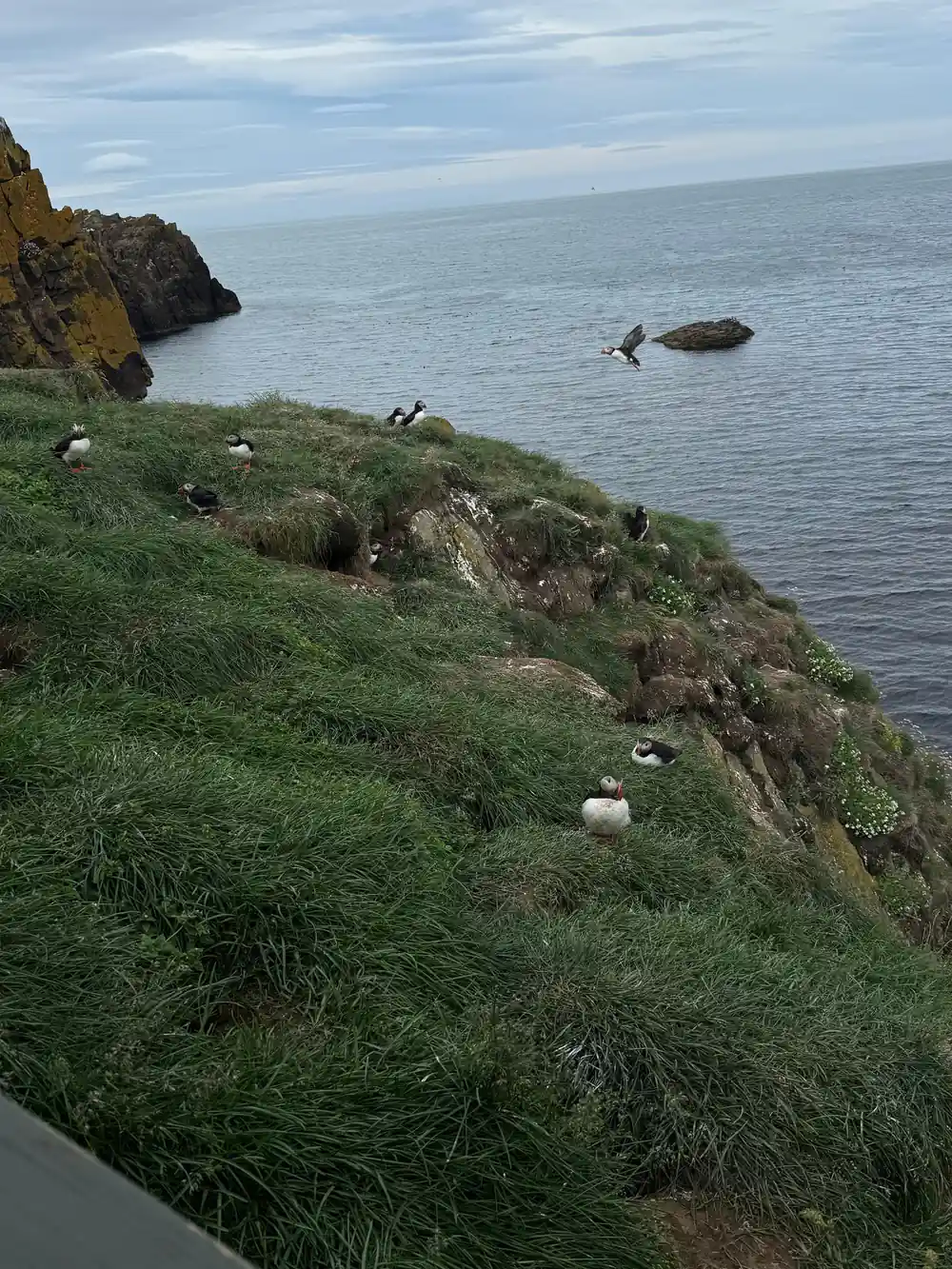
Puffins gather on the grassy slopes above the harbour in summer.
Arctic Terns: Aerial Performers and Protective Parents
Arctic terns arrive in Iceland for the short summer and nest in loose colonies on flat ground, sometimes frustratingly close to a path or a car park. They are elegant fliers, all forked tail and sharp wingbeats, hovering over the water before they plunge for a small fish. They are also fearless, and a tern colony will dive at anyone who walks through it, clipping hats and shoulders with a sharp beak. The old advice still holds: keep to the edge of the colony, do not linger near a nest, and hold a bag above your head if you have to pass.
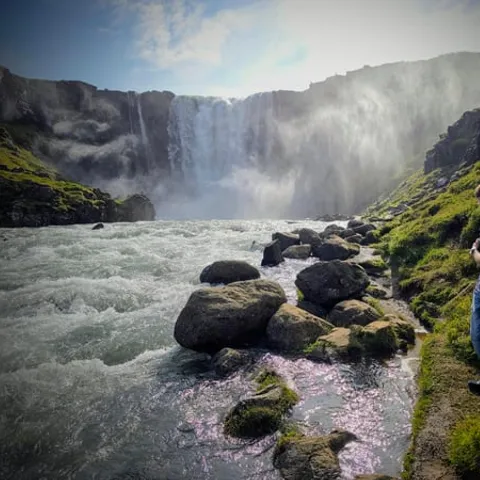
Terns are easiest to watch from a harbour wall or from the water, where you can follow their fishing flights without disturbing anything. A slow pass along a headland often turns up several species feeding on the same shoals of small fish. On the shore tour there is a stop at Gufufoss, the waterfall that stands approximately 88 feet (27 meters) tall.[4]
Eider Ducks and Iceland's Down Farming Heritage
Eiders are chunky sea ducks, the males black and white with a soft green patch at the nape, the females a warm brown that disappears against rock and seaweed. They sit low on the water and dive for mussels and other shellfish, and their call is a gentle, almost comic cooing that carries across a quiet bay. Around the Eastfjords, small groups loaf on the water, on the tide line and on flat rocks, often within sight of the road.
Iceland's eiderdown tradition grew out of the birds' habit of nesting close to farms. Farmers build small shelters, leave the ducks in peace while they incubate, and collect the down shed from the nest by hand once the chicks have gone. The work is slow and seasonal, and it is one reason the birds are so carefully protected here. If you come across a roped-off nesting area on a shoreline or in a field, walk around it: the sitting female will not move far, and she has only one job that month.
from US$228
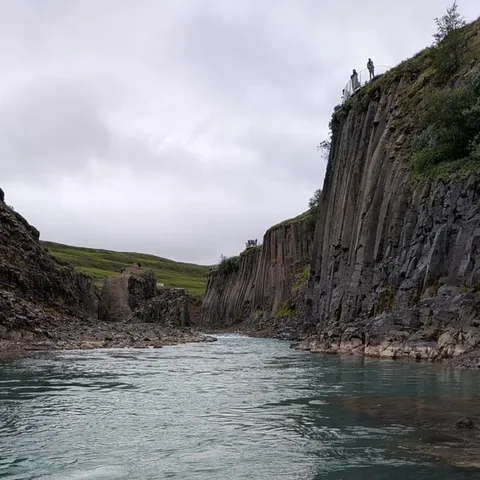
The Hidden Stuðlagil Canyon & Reindeer Tour: 6 hours, a live tour guide in German or English and free cancellation up to 24 hours ahead.[1]
Reindeer Herds in East Iceland's Highlands
Iceland's wild reindeer live in the east of the country, descendants of animals brought here from Norway long ago. They roam the high, open country inland from the fjords, moving with the weather and the grazing, and a herd can cover a lot of ground in a day. Seeing them is a matter of luck, patience and being in the right kind of landscape at the right time of day.
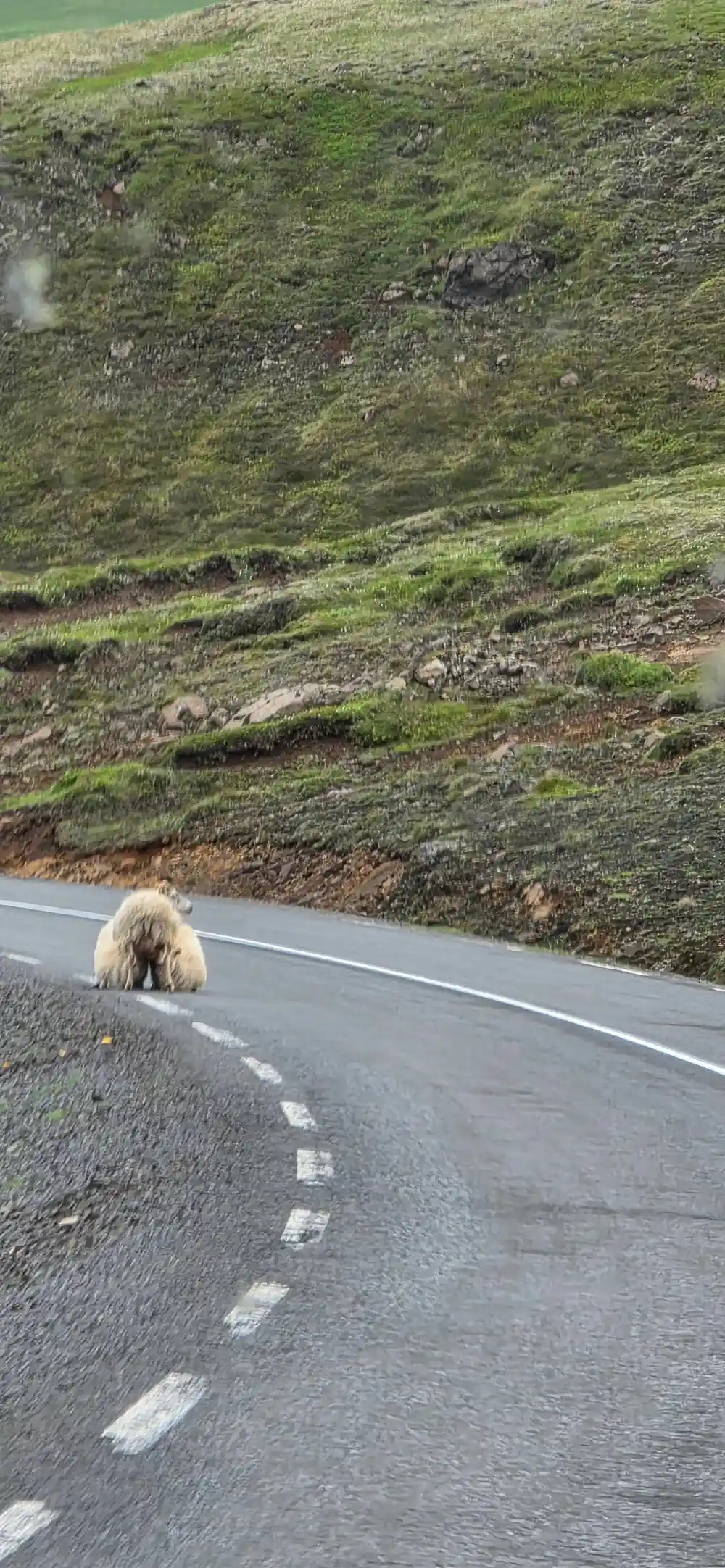
That high country is easiest to reach by road, over the pass that climbs inland from the fjord. The bare moorland along the top is the kind of open ground reindeer cross. Scan the slopes and the skyline, keep well back if a group is grazing near the road, and never chase an animal for a photograph. On a port day a coach does the climbing for you, so your eyes stay on the hillside instead of on the road.
Reindeer are not shy so much as indifferent, and a herd that is moving will usually keep moving. The best sightings tend to be at a distance, through binoculars, in flat grey light that hides their outlines until they shift. Patience beats speed here: stop the car in a safe place, switch off the engine, and let the herd drift past.
Whales and Seals in Seydisfjordur Waters
Harbour seals are the most reliable marine mammals in these waters. They haul out on skerries and rocky islets, often showing just a head and a pair of curious eyes above the surface, and they will follow a boat at a polite distance. Grey seals are bigger and less common. Minke whales, humpbacks and white-beaked dolphins all move through Icelandic coastal water in summer, but a sighting is never guaranteed, and the honest way to plan is to treat any whale as a bonus.
The fjord is deep and sheltered, with steep sides that keep boats close to the shore, and its wildlife tends to gather in a narrow band along the water's edge. Inland, the Hidden Stuðlagil Canyon & Reindeer Tour stops at a reindeer park on its way to the canyon, with free cancellation up to 24 hours in advance.[1] Dress for a cold wind even in midsummer, and keep a dry bag for your phone.
On land, seals often pick the same quiet corners that make a good picnic spot, so give any hauled-out animal plenty of room and keep dogs away. If you are travelling with a coach group, ask the guide where the local haul-out sites are: a short detour on the way back to port is often enough to add a few seals to the day.
Arctic Foxes: Elusive Residents of the North
The arctic fox is a small, compact animal, brown-grey in summer and white or pale blue in winter, with thick fur, short ears and a low, bounding run. Foxes live across Iceland, but they are shy and mostly active at dawn, dusk and through the night, so a sighting in the Eastfjords is a genuine piece of luck rather than something to plan around.
Look for them in quiet corners: the edge of a beach at low tide, the back of a valley, the far end of a farm track, the rough ground behind a golf course. Never feed a fox, keep food and rubbish sealed, and give any animal near a den a wide berth. If you do see one, stay still and let it decide; a fox that feels watched will simply vanish into the rocks.
Much of East Iceland's wildlife is best seen from a coach seat or a canyon rim, and both are easy to arrange from the harbour. The Puffin & Gufufoss Waterfall Tour runs 5 hours from US$229 with a live tour guide in English, and the Hidden Stuðlagil Canyon & Reindeer Tour runs 6 hours from US$228.[1][3] Between them you cover cliffs, a turf house, a waterfall, a canyon and a reindeer park, which is a fair summary of what lives out here.
How long the East Iceland tours run
From-prices in US dollars
From-prices per adult as listed:[1][3][6][7]
When to go for wildlife
Plan your wildlife day
Book the shore tour
The Puffin & Gufufoss Waterfall Tour runs 5 hours from Seydisfjordur Port, from US$229, with a live tour guide in English.[3]
Watch for puffins
Puffins nest at Hafnarhólmi from the middle of April to the beginning of August, and the coach stops there.[2][3]
Walk to Gufufoss
The walk from the car park to the waterfall is no more than 150 meters, completely flat, and takes a minute or two.[5]
Add the reindeer tour
The Hidden Stuðlagil Canyon & Reindeer Tour runs 6 hours with a live tour guide in German or English, from US$228.[1]
Pack for the coast
In July, average daily temperatures in Seydisfjordur range from a high of 51°F (11°C) to a low of 43°F (6°C).[8]
Make a puffin and waterfall tour your port day
from US$230Reserve now & pay later