In a nutshell
- Seyðisfjörður is usually read as the fjord of the seething water, a name that suits a town sitting where a river meets the sea at the head of a long inlet.
- Lindarbakki is a colourful turf house in the village of Bakkagerði, and it is a stop on the Puffin & Gufufoss Waterfall Tour.[1][2]
- Bakkagerði's elf hill, Álfaborg, sits above the village and belongs to the local stories about hidden people.
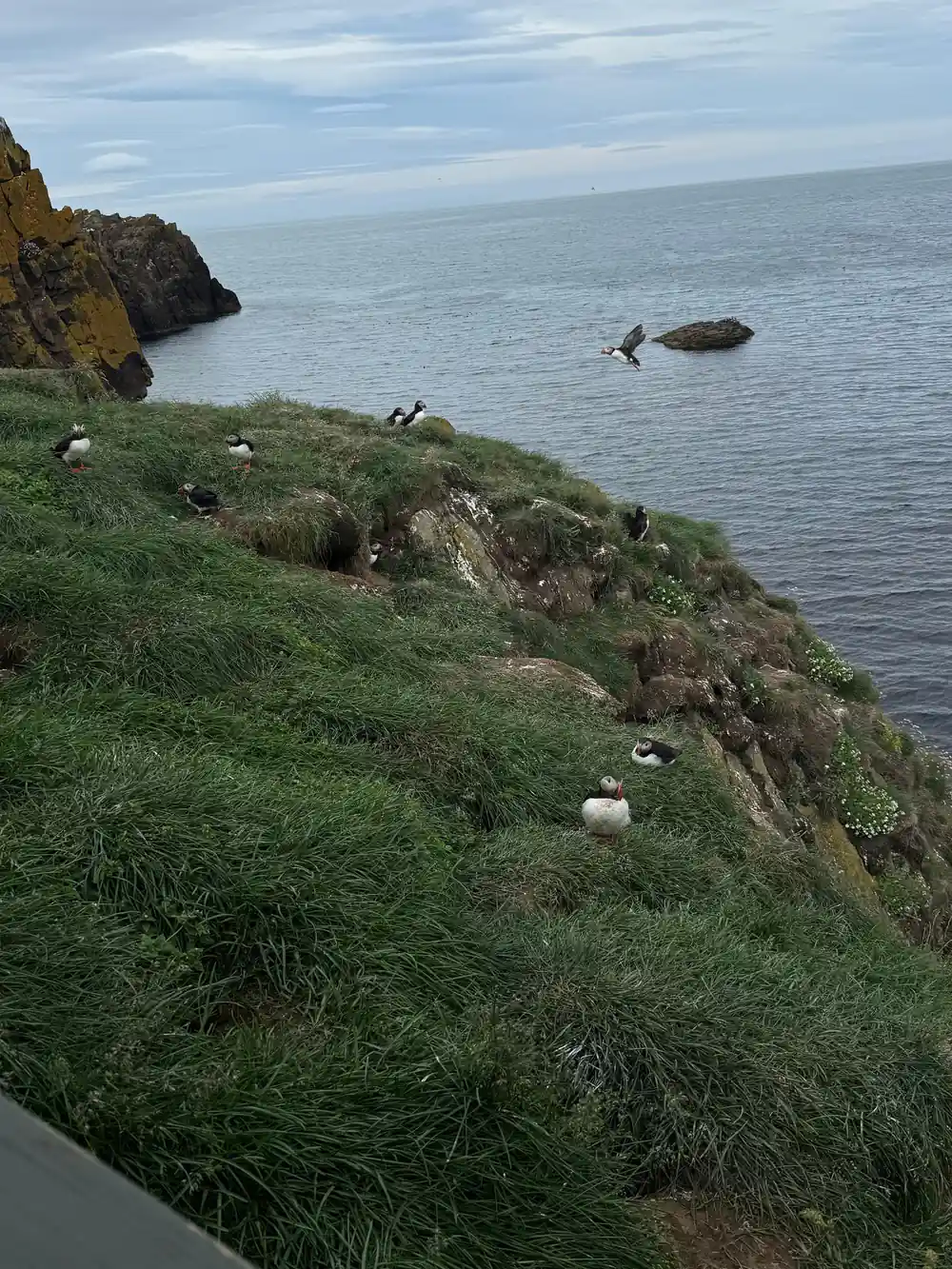
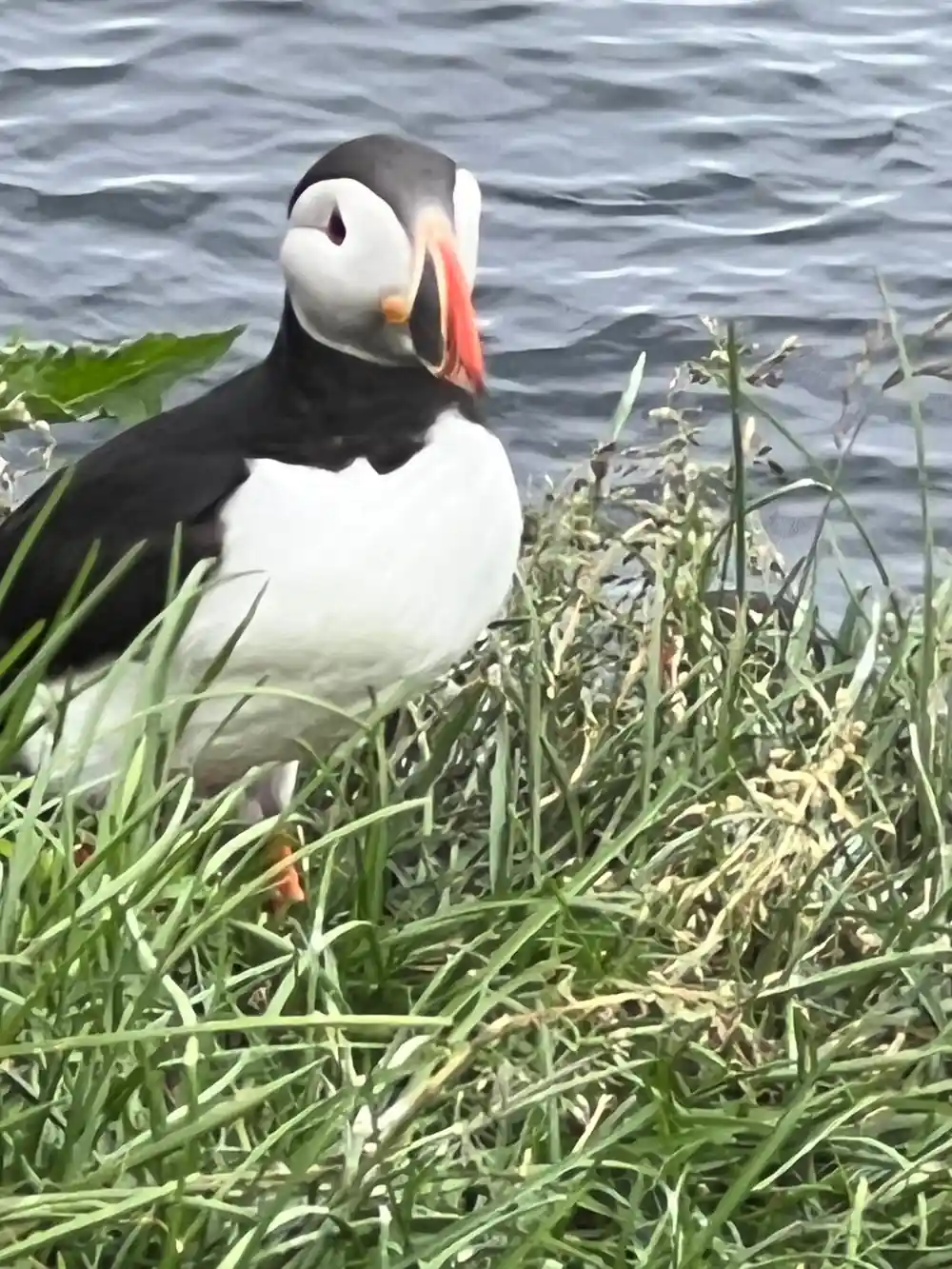
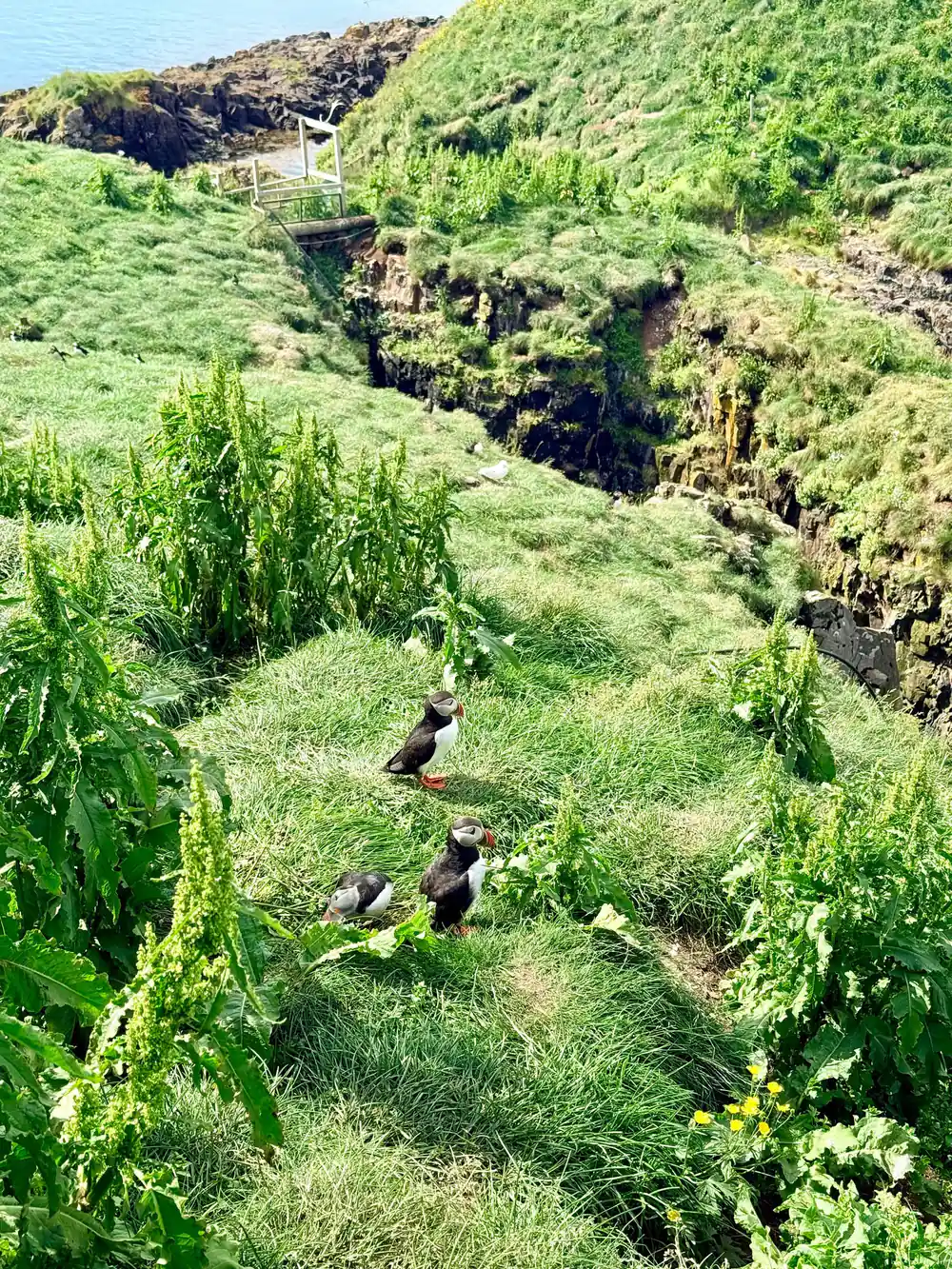
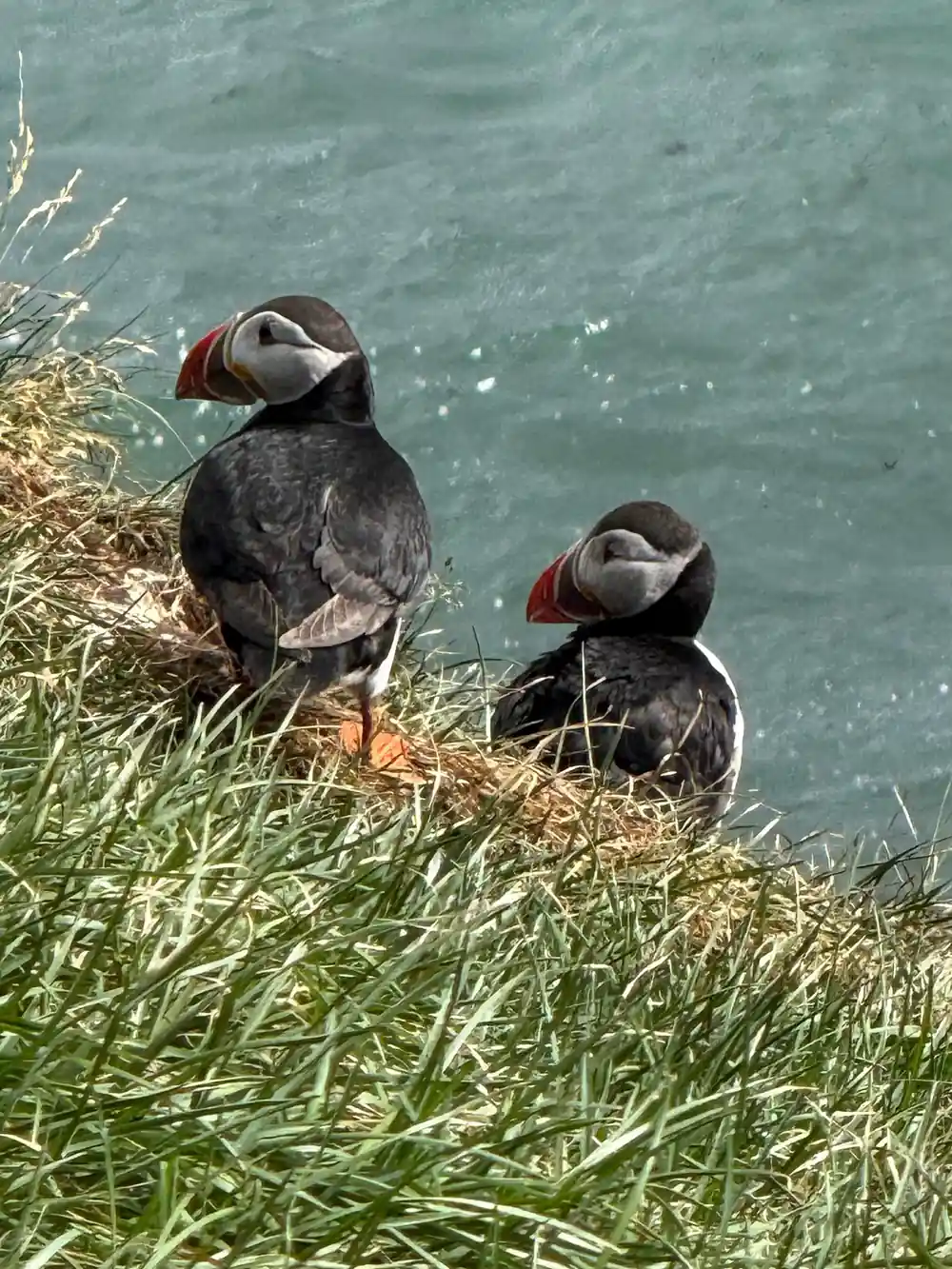
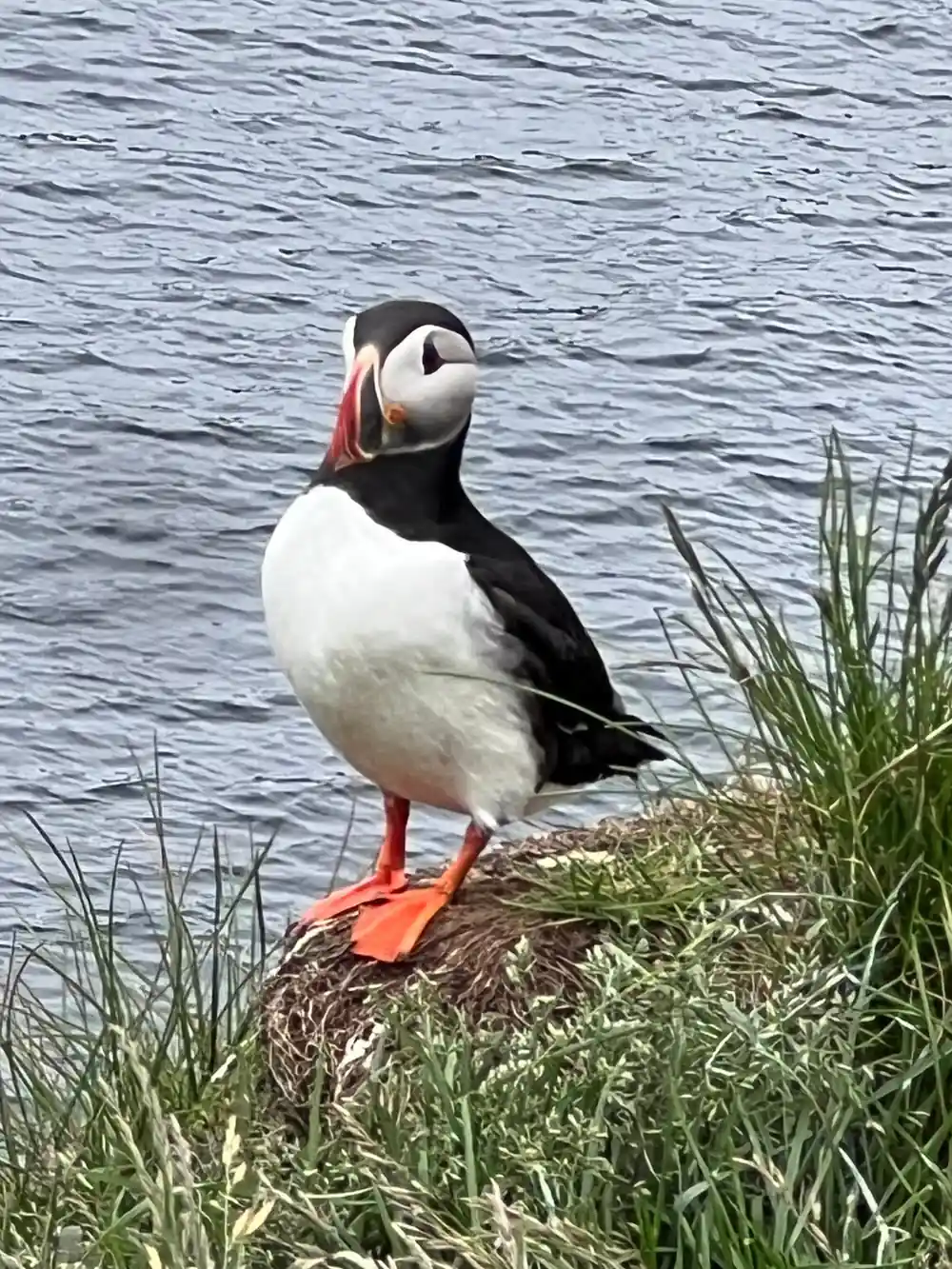
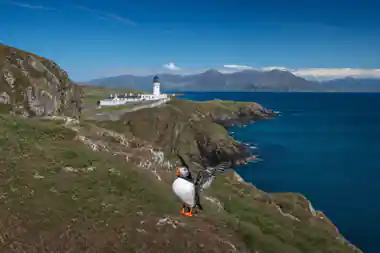
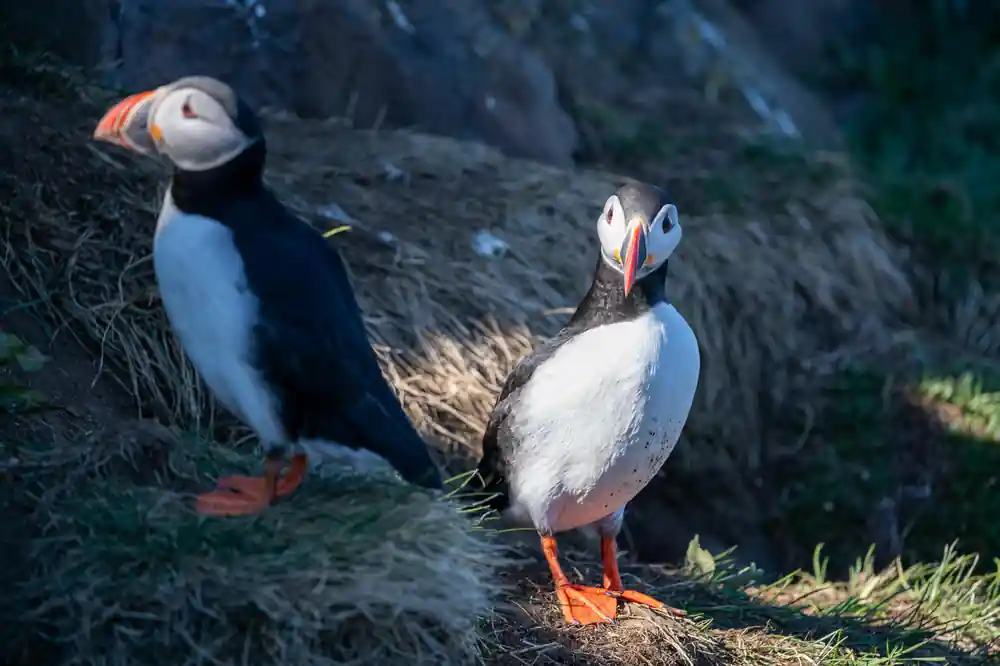
- Puffins nest at Hafnarhólmi in Borgarfjörður Eystri every year from the middle of April to the beginning of August.[3]
- The Norrona ferry, run by Smyril Line, docks in the small town of Seydisfjordur, and the other way in is the road over the mountains.[4]
- Top choice Puffin & Gufufoss Tour from US$229 Duration5 hours[2]Rating4.63 from 270 reviews[2]GuideLive tour guide: English[2]Free cancellationUp to 24 hours in advance[2] Check availability
- Vök Baths Geothermal Entry from US$61 Duration1.5 hours[5]Rating4.69 from 386 reviews[5]GuideHost or greeter: English, Icelandic[5]Free cancellationUp to 24 hours in advance[5] See this tour
- Studlagil Canyon Excursion from US$229 Duration5 hours[6]Rating4.46 from 336 reviews[6]GuideLive tour guide: English[6]Free cancellationUp to 24 hours in advance[6] See this tour
Year round, guests from all over the world come to visit the Rainbow Street in Seyðisfjörður to snap a "selfie" of themselves on this colourful street, surrounded with old historic houses which the town is also known for.
Turf, elves and puffins on one port day
Pre-trip notes
Turf: Building Without Trees in the North Atlantic
Iceland never had enough timber to build a country of wooden houses, so people built with what the ground gave them. A turf house starts with a stone footing, then a wooden frame, then walls of cut sods laid in courses, grass side down, until the wall is thick enough to hold a fire's warmth through a long winter. The roof is turf as well, so the building grows a skin of grass and sits low against the wind. From a distance, a farm like that looks less built than grown.
The method was practical rather than romantic. Sod insulates well, it costs nothing but labour, and it can be repaired by anyone with a spade and a strong back. When imported timber, concrete and corrugated iron arrived, most turf buildings were either clad over or simply abandoned, and the ones still standing today are usually the ones that stayed in use. That is what makes the survivors worth a detour: they show how ordinary life was lived here, not how a museum decided to display it.
Lindarbakki: The Turf House in Bakkagerði
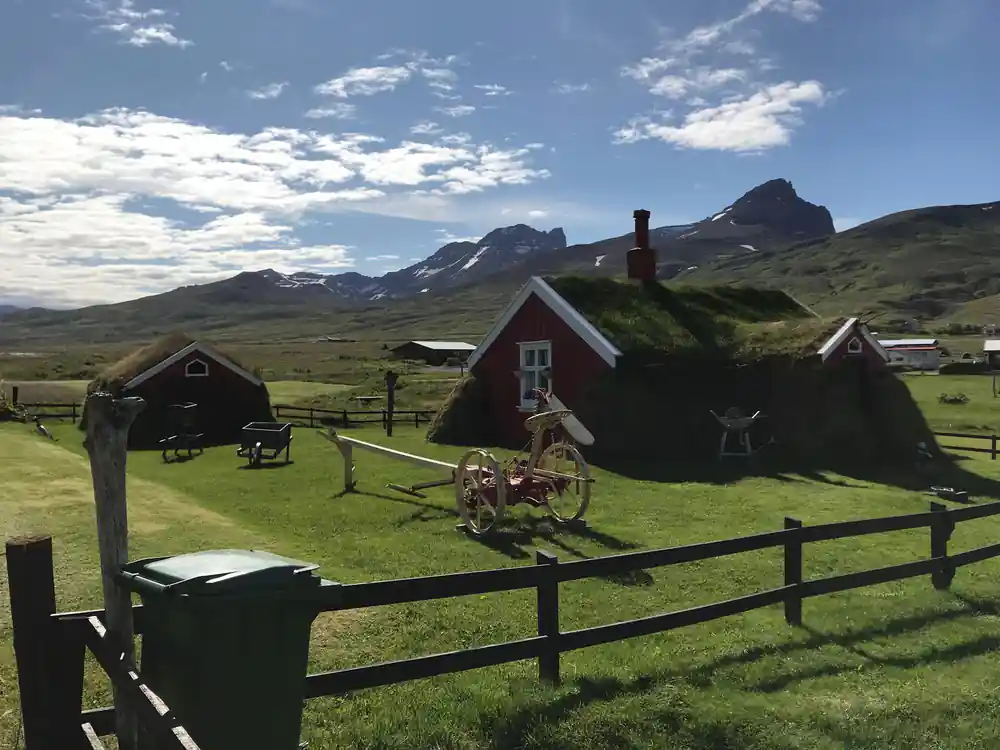
Lindarbakki is a colourful turf house in the village of Bakkagerði, in Borgarfjörður Eystri.[1] It is the image most travellers carry home from East Iceland: a bright painted face, a heavy turf roof, and the fjord rising behind it. It stands in the village rather than out on a remote farm, which makes it easy to reach on foot, and it is one of the stops on the Puffin & Gufufoss Waterfall Tour from Seydisfjordur Port.[2]
Treat the house as part of a working village rather than a monument in a park: photograph it from the road, keep off the turf roof, and leave gates as you find them. On a guided stop the time is short, so decide what you want from the picture before you step off the coach. The rest of Bakkagerði rewards the same slow attention, with a small harbour, a few lanes, and mountains that make the houses look tiny.
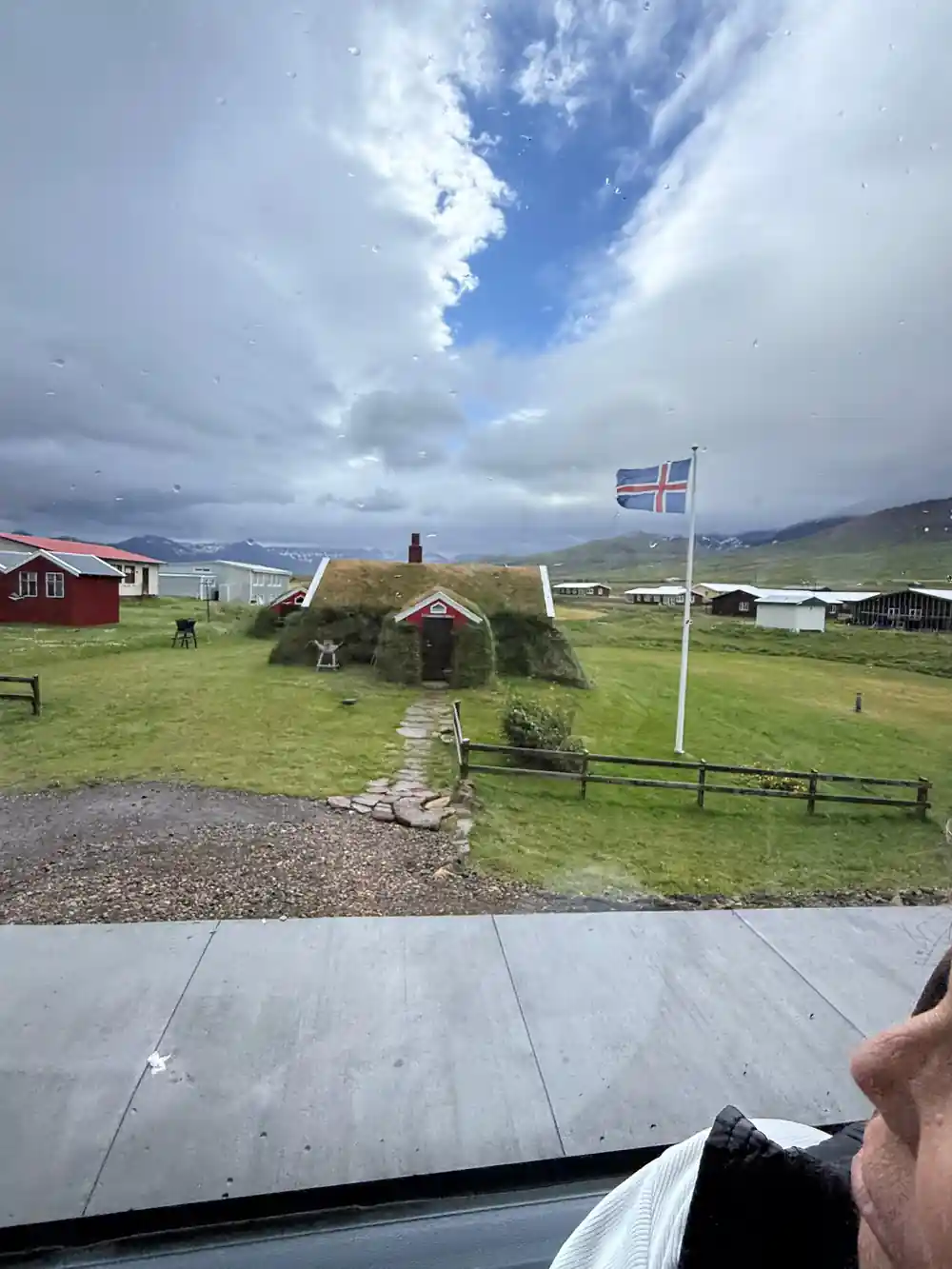
Turf roof, bright paint, fjord behind: the East Iceland look in one house.
Álfaborg: The Elf Hill Above Bakkagerði
Above the village, a small rocky knoll rises at the head of the fjord. Its name, Álfaborg, means the elves' rock or castle, and local stories have long placed the hidden people inside it. Icelandic folklore is not treated here as a tale for children. Roads have been routed around rocks said to belong to elves, and it is still thought bad manners to disturb certain stones or to mock the stories in front of people who grew up with them.
You can walk up to the hill in a short time from the village, and the paths are informal and uneven, so sturdy shoes help more than a map. Go quietly, take your photographs, and leave the stones where they lie. Whether or not you believe any of it, the hill explains something about how people here read the landscape: not as empty ground waiting to be used, but as somewhere that already has residents.
The Church Altarpiece in Bakkagerði
The village church holds an altarpiece painted by Jóhannes Sveinsson Kjarval, the Icelandic painter who came from this part of the country. Instead of a distant biblical scene, the picture belongs to the fjord: figures, boats and mountains that locals would recognise, painted in a style that sits between landscape and story. It is a small room, and the painting is the reason most people step inside.
Check opening before you build a day around the church; village churches keep ordinary hours and a service or a funeral can close the door without warning. If you do get in, give your eyes a minute to adjust, then notice how the altarpiece was made for this room rather than for a gallery. The walk between the harbour, the turf house and the church is short, with time to stand still and listen to the water.
from US$229
The Puffin & Gufufoss Waterfall Tour from Seydisfjordur Port runs 5 hours with a live tour guide in English.[2]
Seyðisfjörður's Norwegian Timber Heritage
The name Seyðisfjörður is usually read as the fjord of the seething or boiling water, a description that fits the churn where the river meets the sea at the head of the inlet. What surprises people is the town itself: a row of brightly painted wooden houses that looks more Norwegian than Icelandic. Timber was imported and much of the town was built in the Norwegian coastal manner, so the streets have a shape and a colour you will not find in the turf country inland.
The Rainbow Street is the best known of them, a popular spot for selfies lined with old historic houses, and it ends at the church usually called Bláa kirkjan, the Blue Church.[8] Visitors come here year round for that photograph, and it is easy to see why: the street gives you the whole town in one frame with the fjord behind. Walk up in the evening when the coaches have gone and the light softens.
Herring and the Rise and Fall of Fjord Prosperity
For a few decades, herring paid for East Iceland. Boats came from Norway and Scotland, and the fjords filled with shoals and with the salted barrels that followed. Seyðisfjörður grew warehouses, quays and merchant houses on the trade, and the wooden town you walk through today is largely a product of those years. Then the herring moved, the market turned, and the money went with it, leaving solid buildings that were meant to last and did.
The same pattern repeats along the coast: a boom, a bust, and a small population that stayed anyway. Villages here live on fishing, on services for the surrounding farms, and increasingly on travellers arriving in summer. In winter the roads empty. Learning a little of the herring history changes what you notice: the size of the warehouses, the width of the harbour wall, the way the town faces the sea rather than the mountains behind it.
East Iceland's Fjords: Where Settlements Survive Today
Getting between these villages still depends on a handful of roads and one ferry. The Norrona ferry, run by Smyril Line, docks in the small town of Seydisfjordur.[4] The road in from Egilsstaðir climbs over the mountains and drops steeply into the fjord, so the town feels like the end of the line, which is part of its charm. In July, average daily temperatures in Seydisfjordur run from a high of 51°F (11°C) to a low of 43°F (6°C).[7] Pack for a cool coast whatever the forecast promises.
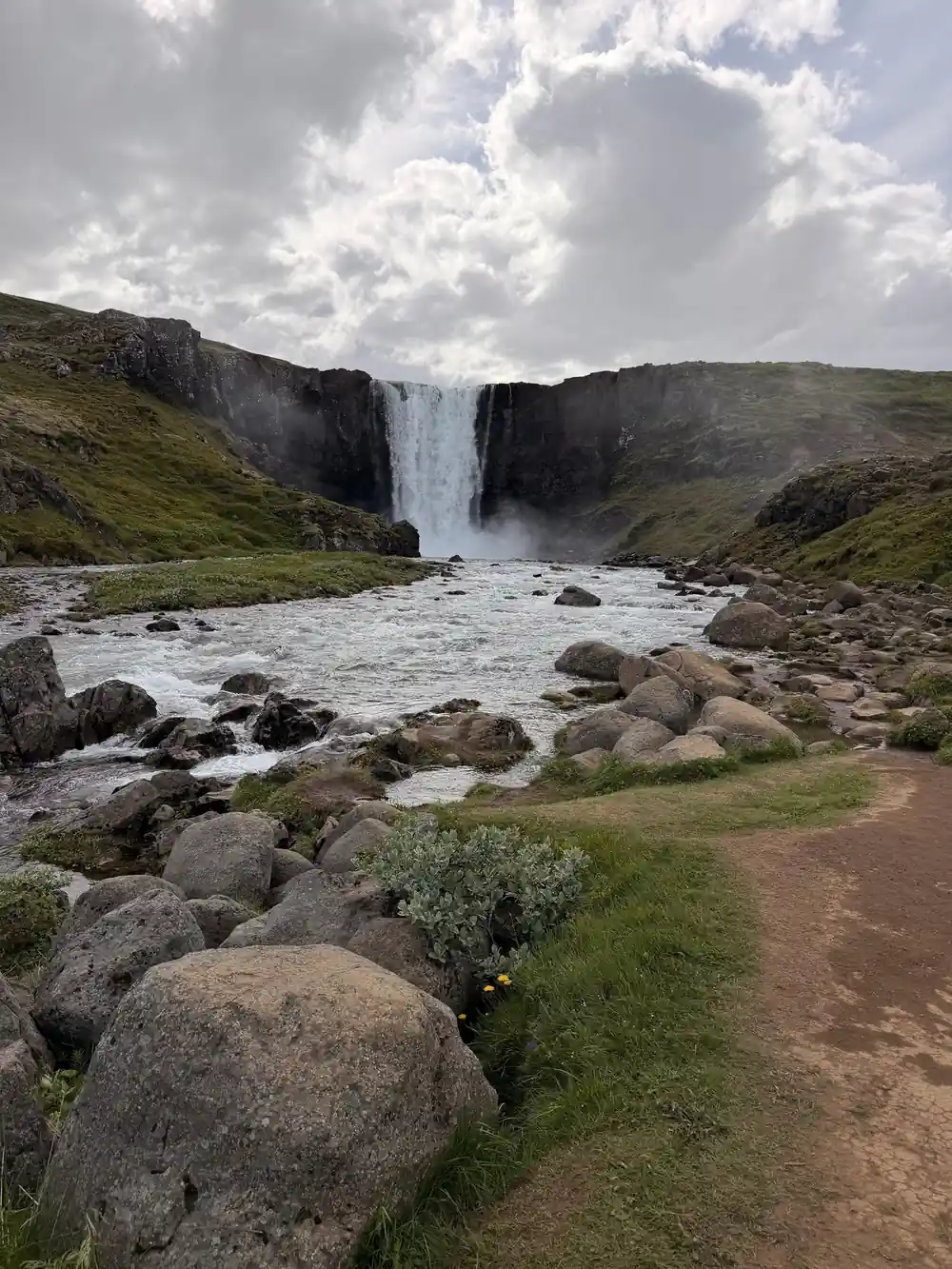
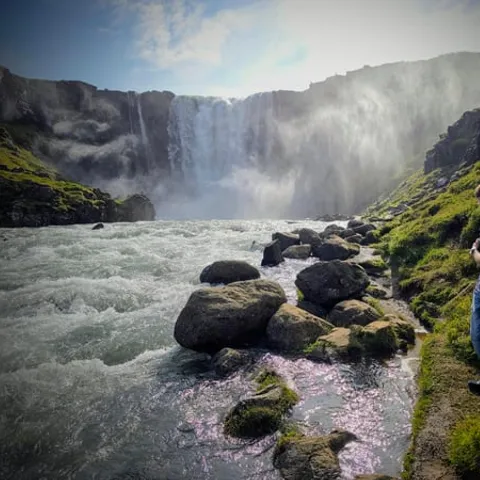
Wildlife is the other reason people come. Puffins nest at Hafnarhólmi in Borgarfjörður Eystri every year from the middle of April to the beginning of August.[3] Gufufoss waterfall stands approximately 88 feet (27 meters) tall, and the walk from the car park to the waterfall is no more than 150 meters, flat, and takes a minute or two.[9][10] The Puffin & Gufufoss Waterfall Tour from Seydisfjordur Port covers both in 5 hours with a live tour guide in English.[2]
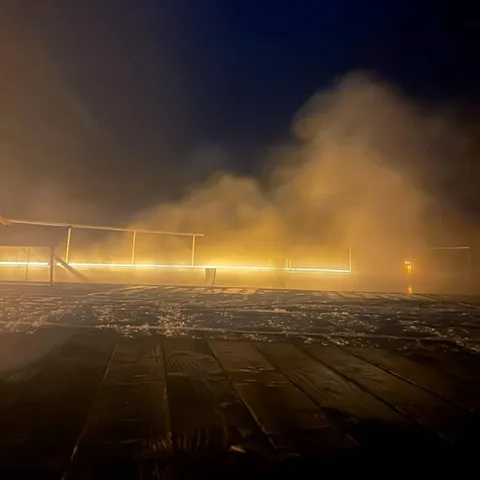
If you have more than one day ashore, the region spreads out quickly. Studlagil Canyon is a basalt rock formation in Jokuldalur Valley.[11] Vök Baths, further inland, offers geothermal water with wheelchair access and a host who speaks English and Icelandic.[5] Both are sold as separate shore excursions from the same port, which makes them easy to add when your ship stays long enough.
From prices for days out from Seyðisfjörður
What a day ashore can cost
US dollar from prices from these listings:[2],[6],[12],[5].
When to go
How to plan a port day
Check your hours ashore
The tour runs 5 hours, so compare that with your time in port before you book.[2] Everything else on this coast sits further out.
Book the tour before you sail
It covers Hafnarholmi, Lindarbakki and Gufu Waterfall with a live English guide.[2] Reserve early on busy summer calls.
Dress for a cool coast
July averages run from a high of 51°F (11°C) to a low of 43°F (6°C).[7] A warm layer, a waterproof shell and grip cover most days.
Walk to the waterfall
The path from the car park is no more than 150 meters, flat, and takes a minute or two, so it suits anyone steady on their feet.[10]
Add a soak or a canyon
The Vök Baths entry is wheelchair accessible[5], and Studlagil Canyon is a basalt rock formation in Jokuldalur Valley.[11]
Book the puffin and waterfall tour from the port
from US$230Reserve now & pay later